





Free written scope consultation - allowances, timeline, and change-order rules on paper before a single trade is scheduled
Styles & brands we work with
- Kitchen remodeling
- Bathroom remodeling
- Home additions & ADU
- Roofing
- Windows & doors
- Driveway & pavers
- Fence
See the difference
 Before
 After
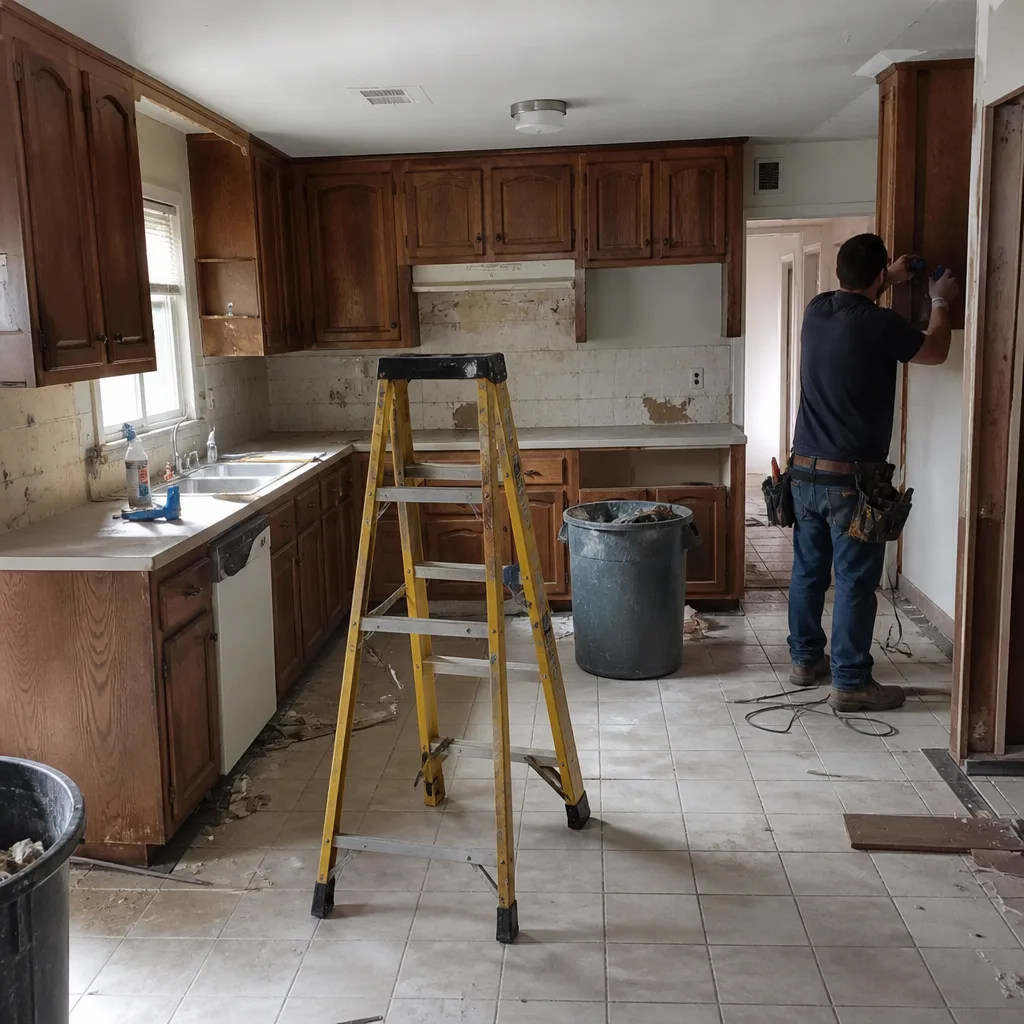 Before
 After
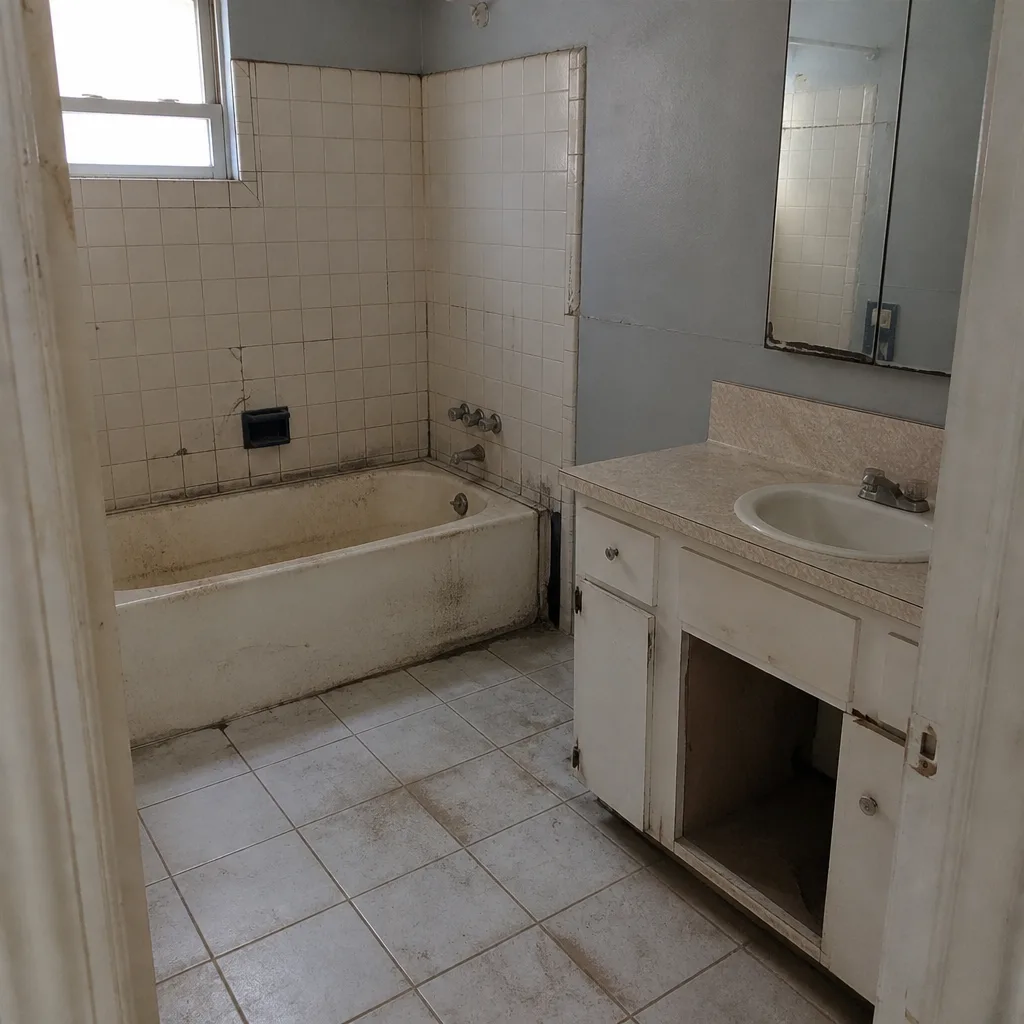 Before
 After
Roof Hail Damage Signs on a Spring Valley, NV Tile Roof
The signs of roof hail damage on a Spring Valley concrete tile roof are radial cracking at the impact point, corner spalling (chipped tile edges), hairline fractures you can only see under raking light or up close, and displaced tiles at hip joints where impact force concentrates. There are no dents. Spring Valley doesn’t get hail every year, but when a Mojave monsoon cell fires up over the Spring Mountains and drops marble-sized hail on a neighborhood near Rhodes Ranch, it hits concrete tile, and the damage signature is nothing like the dented-shingle pattern most people picture. If a storm just passed over your part of Spring Valley, call (888) 329-9414 and we’ll take a look before anything leaks.

Why Tile Roofs Fail Late After a Hail Event
The hardest part of hail damage on a concrete tile roof is the delay. A hairline fracture from a hail strike may sit there quietly for 12 to 18 months before it lets water through. Every summer day near 110°F expands the tile and the underlayment beneath it. Every near-freezing winter night contracts them back. That thermal cycling works a hairline crack open a little more each season until the felt underlayer is finally exposed, saturated, and rotting. By the time you see a stain on a ceiling in Spring Valley, the original impact is ancient history and the insurance window may already be closing.
That’s why the rule here is simple: inspect after any hail event, not after any leak. A roof that looks fine from the street after a monsoon cell drops ice on the western edge of Spring Valley can still be carrying dozens of fractured tiles. Our technicians have up to 12 years of experience reading that kind of damage, and we’ve learned that the roof almost never tells you on the day of the storm.
What Hail Damage Actually Looks Like on Concrete Tile
Walk your roof with a trained eye and the damage falls into a few recognizable categories. None of them involve a dent.
- Radial cracking at the impact point. A single hailstone strike sends cracks outward from a center point like a spiderweb. On dark tiles near Rhodes Ranch, you’ll often see a small pale spot at the center where the tile’s surface glaze was crushed.
- Corner spalling. Tile corners chip off in small flakes. On a hip roof, those corners are the most vulnerable spot because impact force concentrates there.
- Hairline fractures. These are the sneaky ones. A fracture may be a fraction of an inch wide and essentially invisible in flat afternoon light. Tilting a light source low and raking it across the tile face reveals them.
- Displaced or lifted tiles at hip joints. Hail doesn’t have to break a tile to damage the roof. Impact can shift a tile out of position, opening a gap that lets wind-driven rain under the field.
- Granule and surface loss. On the field tiles, look for a dull, scuffed patch where the protective surface has been knocked away. It won’t leak immediately, but it shortens the tile’s life.
It helps to remember how Spring Valley is built. Most of the housing here is 1990s-2000s tract construction with stucco walls and concrete tile roofs on slab foundations, and that housing stock is now 20 to 30 years old. The underlayment beneath those tiles has been cooking in brutal UV for decades. A hail event doesn’t just damage tile; it exposes the aging membrane underneath. If your roof is in that age range and a storm just rolled through, that’s the moment to get eyes on it. Our Roofing team handles tile repair and underlayment replacement across Spring Valley regularly.
The Proper Post-Hail Inspection Protocol
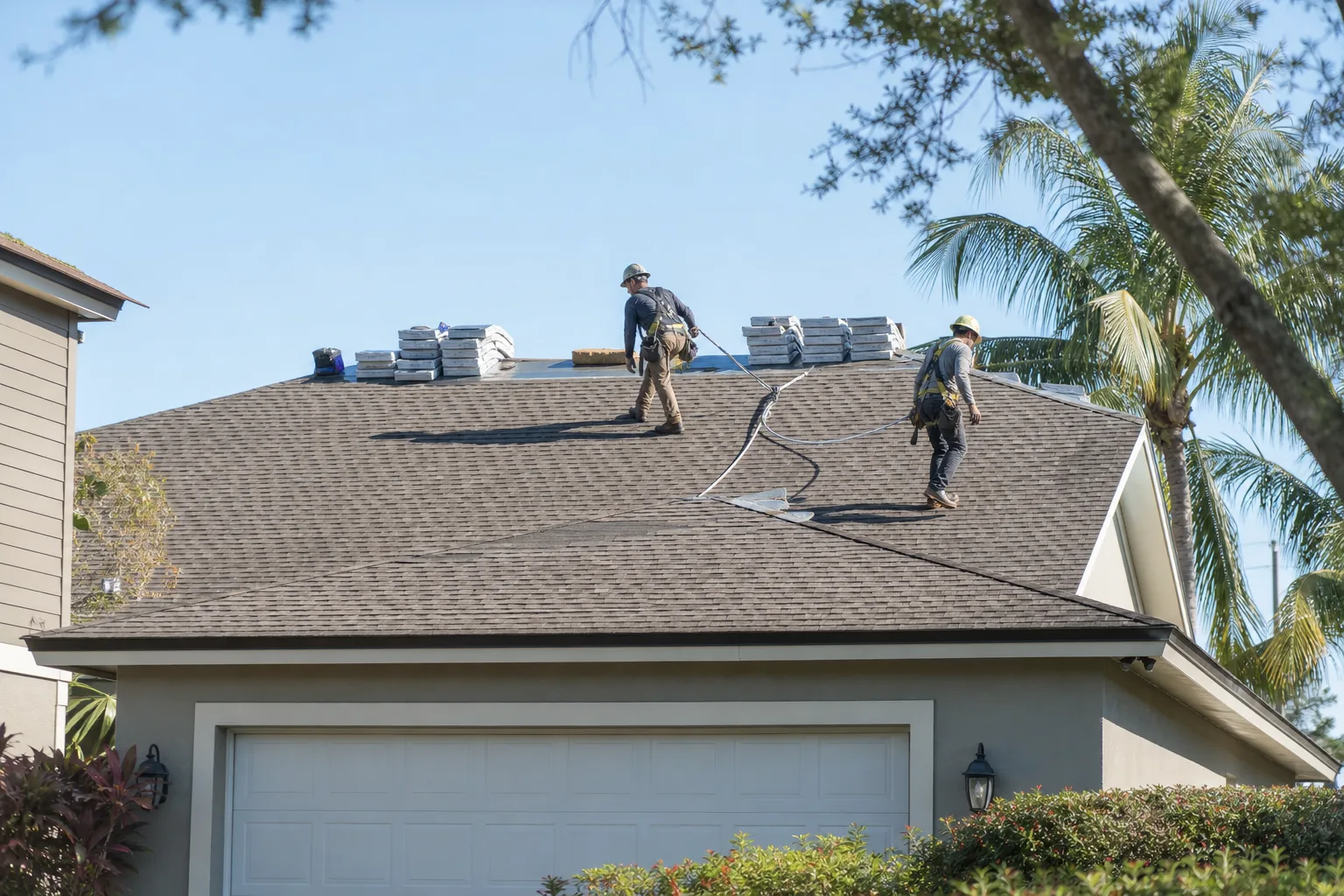
If you hire anyone to look at your roof after a hail event, you should know what a real inspection looks like. Ask for this, and be wary of anyone who can’t describe it.
- Grid-pattern walking. A proper inspection moves systematically across the roof in a grid, section by section, not a casual walk around the perimeter. Hail damage is scattered, and a random pass will miss most of it.
- Chalk marking. Every damaged tile gets marked with chalk so the count is visible and reproducible. This matters enormously when you’re filing a claim.
- Photo documentation with a scale reference. A photo of a crack is meaningless without something in frame to show its size. A tape measure or a coin next to the damage gives the adjuster something concrete to work with.
- A written scope. You want a document that lists how many tiles are damaged by type, what’s happening at the hip joints, and what the underlayment condition is. That written scope is your leverage.
A crew that shows up in uniform and does the work this way is doing you a real favor, whether or not you hire us. Groundwork Construction Co. of Spring Valley sends background-checked, uniformed technicians on every inspection, and we document the way we’d want our own roof documented.
Why Insurers Under-Count Tile Hail Damage
Here’s the insurance gap that costs Spring Valley homeowners real money. Many adjusters were trained on shingle roofs in the Midwest, where hail damage is a field of obvious dents and bruises. They know exactly what to look for. On a Spring Valley concrete tile roof, the inspection method is completely different, and an adjuster who doesn’t adapt will simply miss the damage. They’ll walk the roof, see nothing dented, and log a denial.
Having a contractor document the damage before the adjuster arrives is often the difference between a full claim and a denial. If a contractor hands the adjuster a written scope with chalk-marked damage counts, scaled photos, and a clear underlayment assessment, the adjuster has something to evaluate. If you call the adjuster first and hope they find it themselves, you’re gambling on whether they know tile. Call us before your adjuster does.
| Service | Typical Spring Valley Range |
|---|---|
| Tile roof repair (hairline cracks, spalled corners) | $600-$2,500 |
| Roof repair (general, leak, flashing) | $400-$1,800 |
| Full roof replacement (age + storm damage stacked) | $8,000-$20,000 |
If your tile roof is 20-plus years old and the hail damage is extensive, replacement may make more sense than patching. On those, we often install GAF or Owens Corning systems so the new roof is backed by a material warranty to match the workmanship on it. Our Spring Valley service area page lists the neighborhoods we cover, and every project comes with our 730-Day Done Right Promise, so if the repair isn’t right we make it right. We also offer $1,000 off projects over $10,000 and 0% financing for 18 months if a full replacement is on the table.
A final word on who touches your roof and your paperwork: after a hail event, canvassers in unmarked vans show up in Spring Valley neighborhoods promising fast repairs and offering to “handle the insurance.” Do not hand your claim documentation to someone you can’t verify. You deserve to know exactly who is walking your roof and handling your claim. Our technicians show up verified, in uniform, and we’ll tell you straight if your roof doesn’t need anything.
FAQs
Hail damage on concrete tile shows up as radial cracks at the impact point, chipped corners, and hairline fractures you can only see up close or under raking light. You’re looking for spiderweb cracks rather than dents. If you can’t get on the roof safely, that’s what an inspection is for. Call (888) 329-9414 for a free look.
Yes, and it commonly does. A hairline crack from a hail strike may not leak for 12 to 18 months, because the cycle of 110°F summer days and near-freezing winter nights slowly opens the fracture until water gets through. So inspect after the storm, not after the leak. Call us and we’ll document what’s on the roof now.
It can, but coverage depends on your policy and on proof the damage came from a specific storm event. The bigger obstacle is that adjusters trained on shingles often undercount tile damage. Having a written contractor scope before the adjuster visit gives your claim real footing. Call (888) 329-9414 to get documented in advance, and estimates are free.
Repair usually wins when damage is limited to a few tiles and the underlayment is sound, typically $600-$2,500. Replacement makes more sense when the roof is 20-plus years old and hail has exposed a failing underlayer, running $8,000-$20,000. We’ll walk the roof and give you a straight call rather than a sales pitch. Call (888) 329-9414 for a no-pressure assessment.
If you’d rather have it looked at, Groundwork Construction Co. of Spring Valley offers a no-pressure assessment in Spring Valley. We’ll document what we find, in writing, and tell you honestly whether it’s a claim, a repair, or nothing. Call (888) 329-9414 for a free estimate.
Written by the team at Groundwork Construction Co. of Spring Valley, serving Spring Valley, NV.