




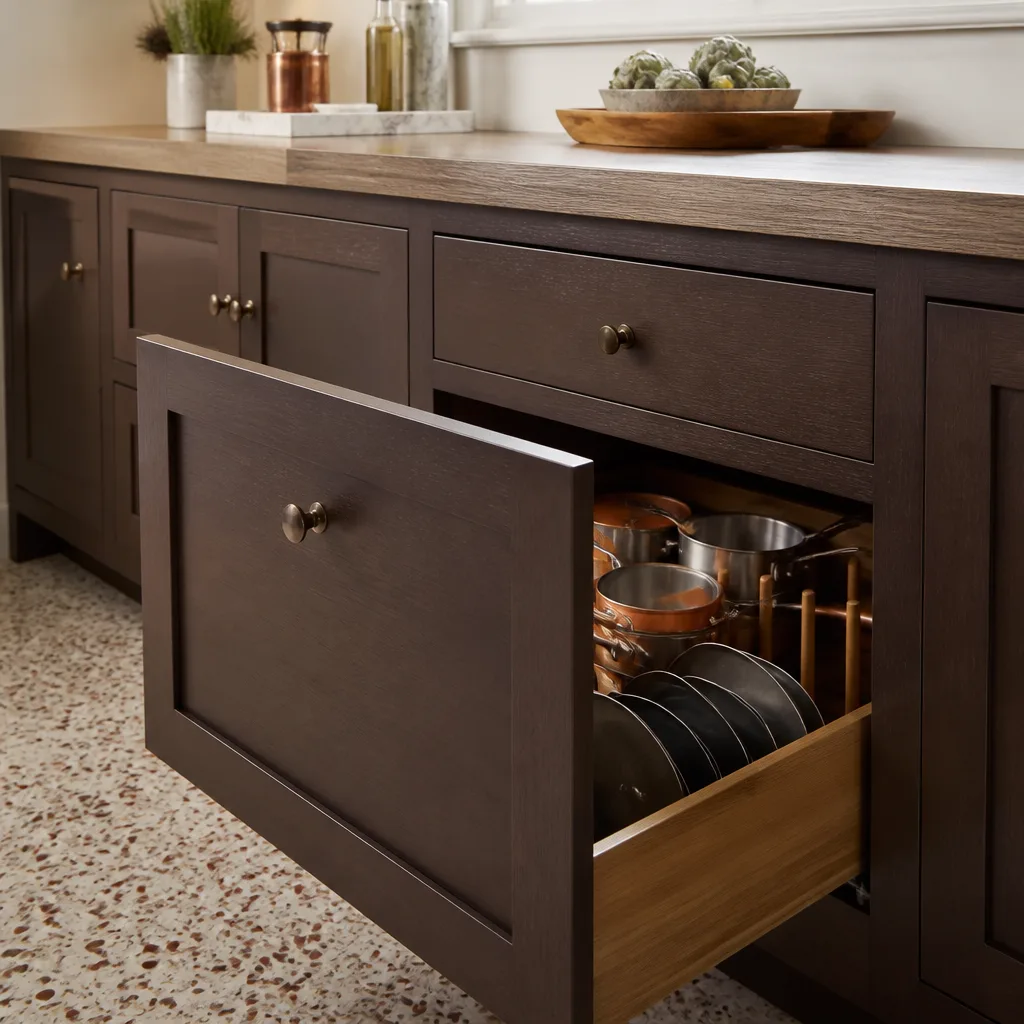
Free written scope consultation - allowances, timeline, and change-order rules on paper before a single trade is scheduled
Styles & brands we work with
- Kitchen remodeling
- Bathroom remodeling
- Home additions & ADU
- Roofing
- Windows & doors
- Driveway & pavers
- Fence
See the difference
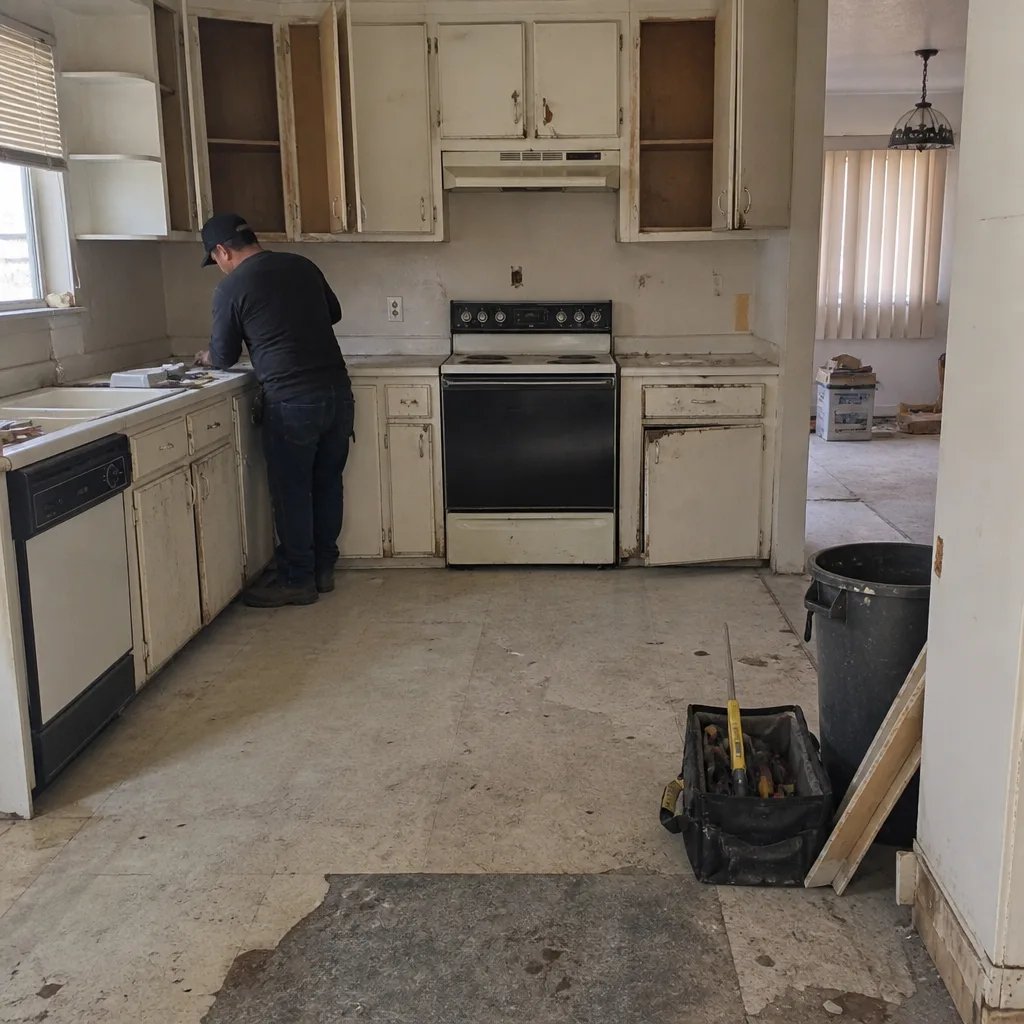 Before
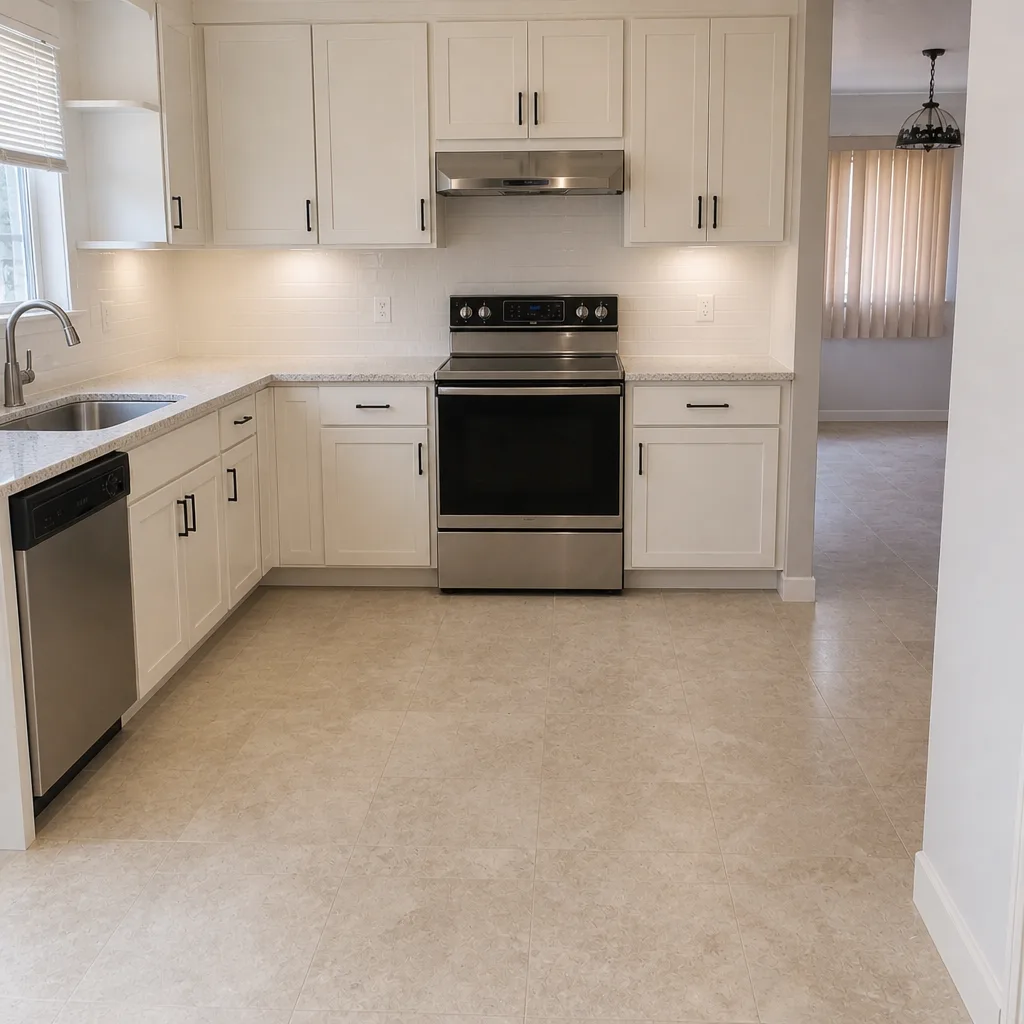 After
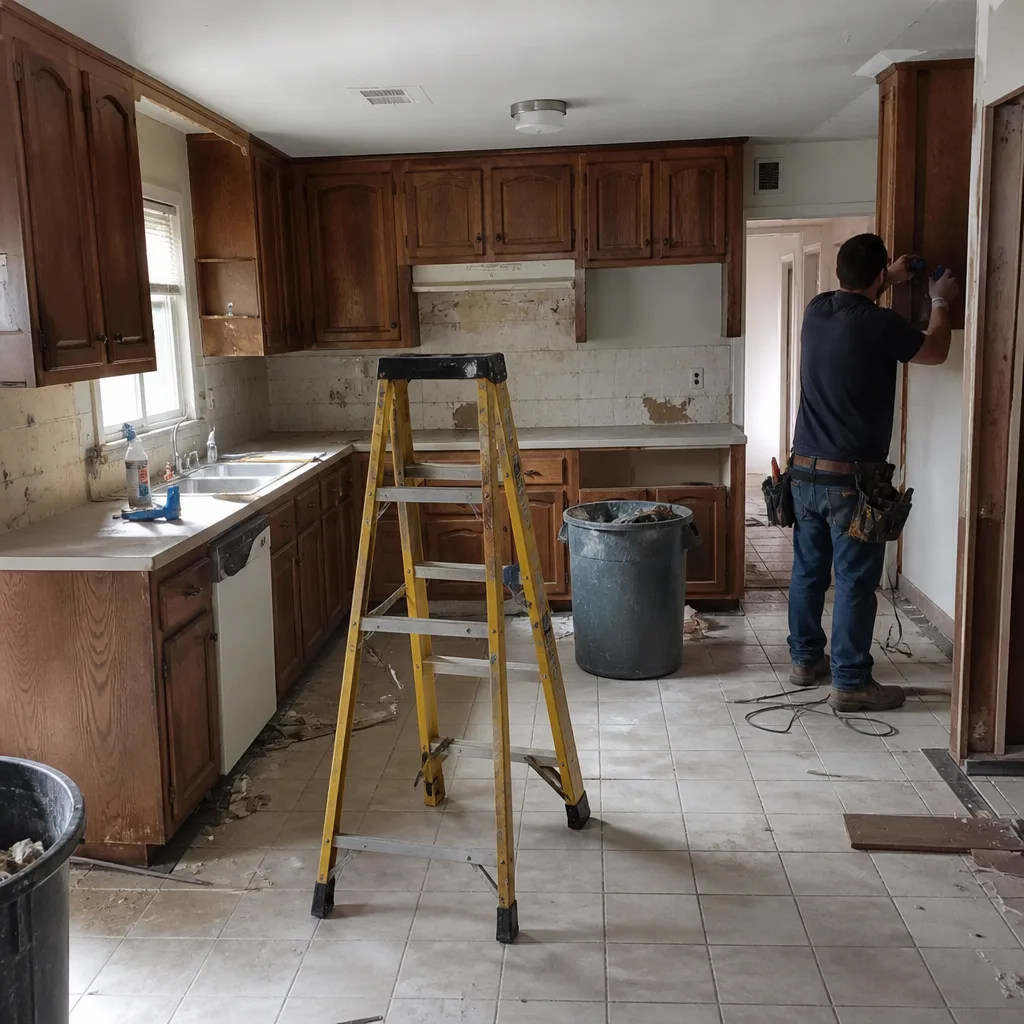 Before
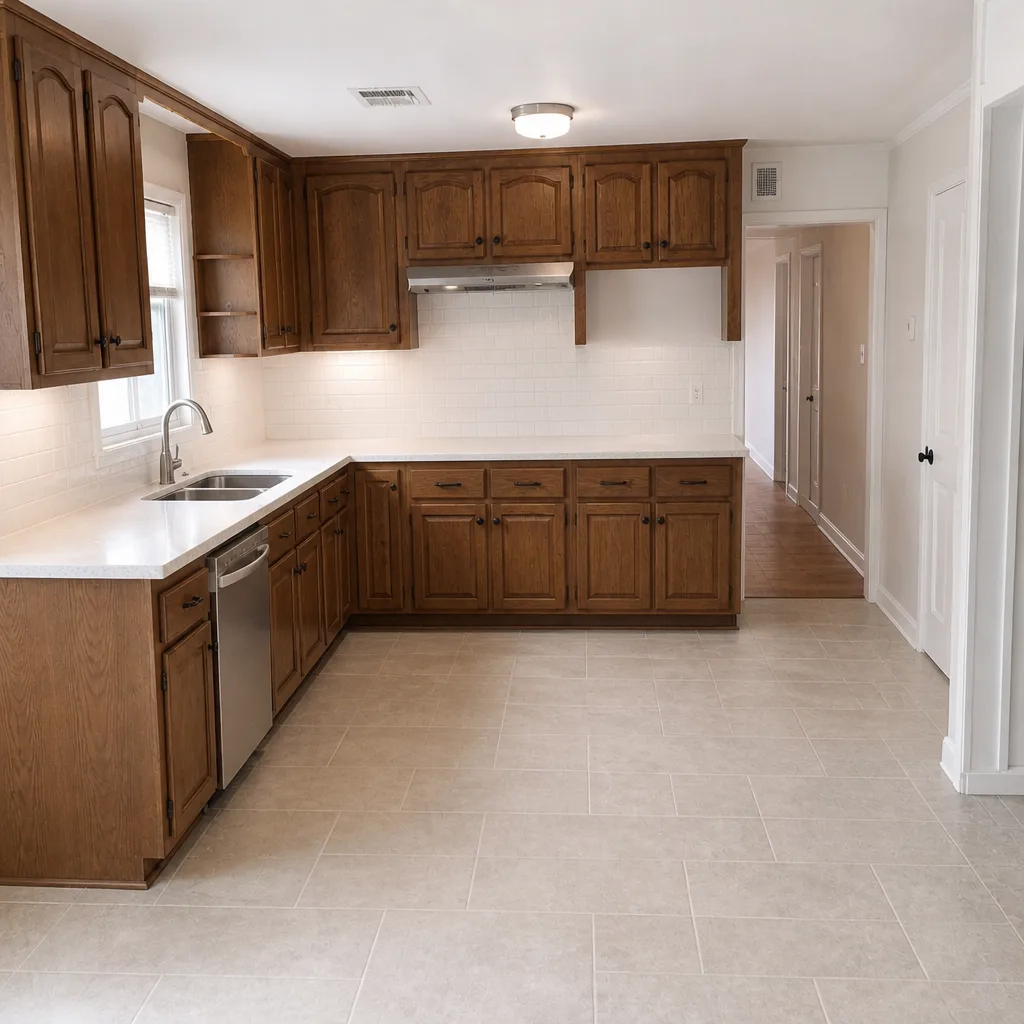 After
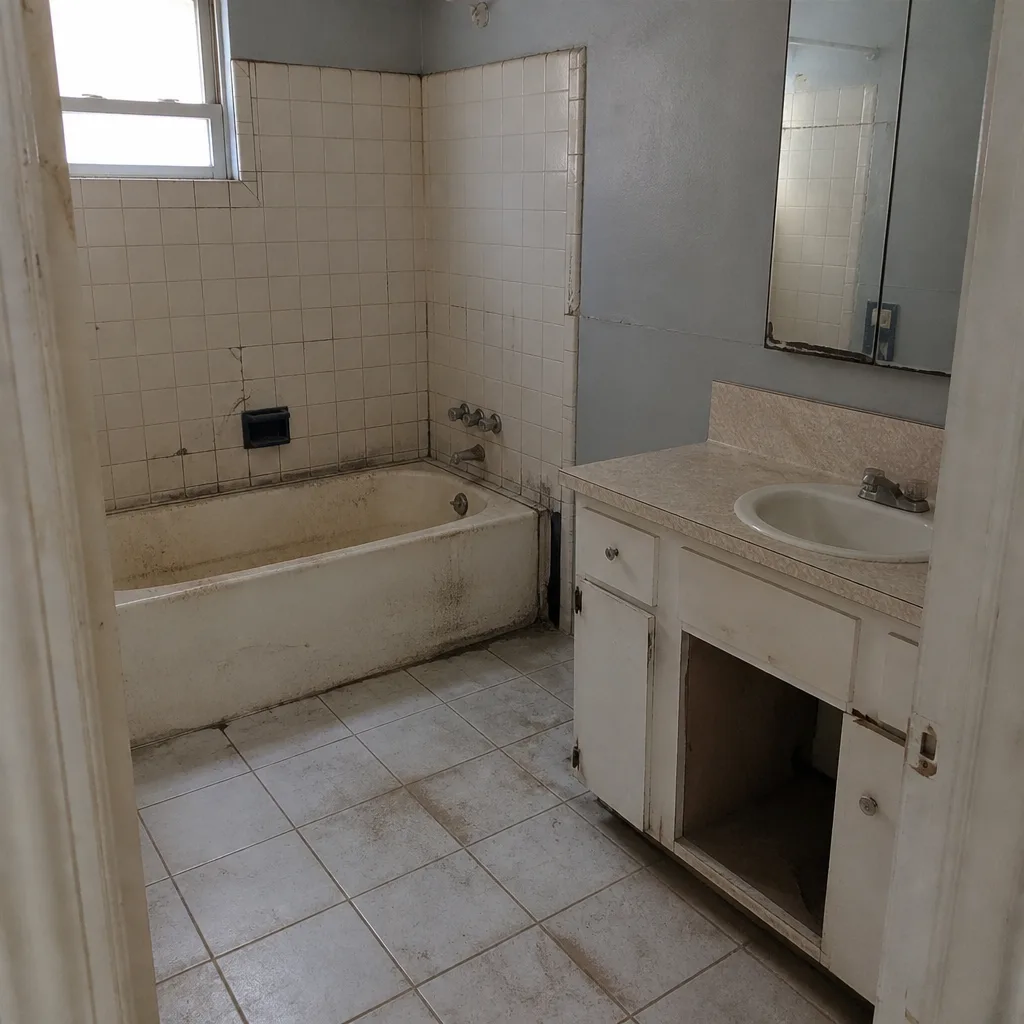 Before
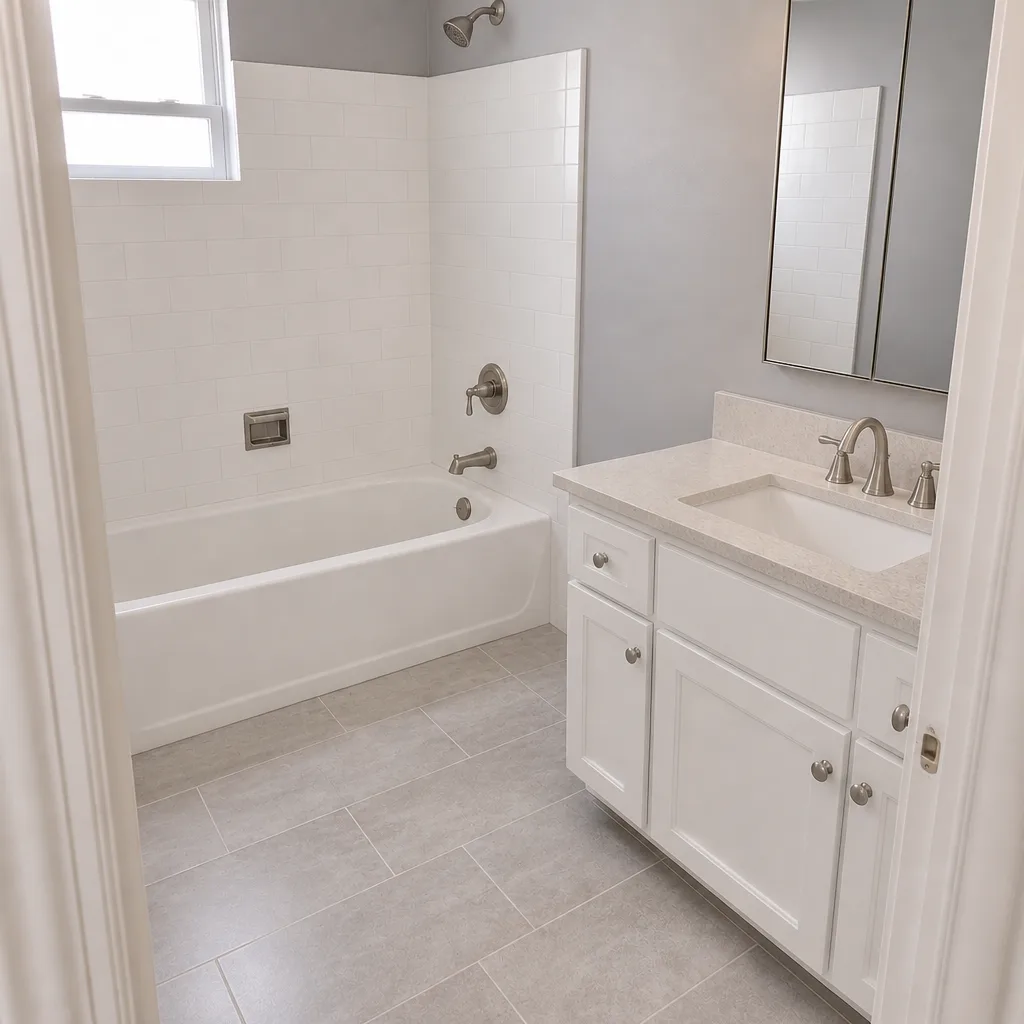 After
Spring Valley’s roofs don’t fail the way the standard checklists describe. On a concrete tile roof, the surface can look perfectly intact from the street while the felt underlayment underneath has been baked brittle by 25 summers above 110°F. The first real warning usually isn’t a curled shingle or a missing tile – it’s a water stain on your ceiling after an August monsoon.
That single difference changes how you inspect a Spring Valley home, and it’s the whole reason this guide exists.
Why the standard signs-you-need-a-new-roof list misses Spring Valley homes
If you search “signs you need a new roof,” you’ll get the same five items on almost every page: curling shingles, granules in the gutters, daylight in the attic, rusted flashing, and age over 20 years. That list was written for asphalt-shingle houses in wetter, colder parts of the country. Spring Valley is stucco-and-tile country, built on the edge of the Mojave at roughly 2,300 feet, where summer highs run past 110°F and winter nights can drop to freezing. The roof system is different, the failure mode is different, and the signals you should actually be watching for are different.
Here’s the core thing to understand: on a concrete tile roof, the tile is not the waterproofing. The tile is the rain-shedding, sun-blocking armor. The waterproofing is the underlayment – a felt or synthetic sheet membrane laid over the deck, hidden completely beneath the tile. Tile can last 40 years or more. Underlayment commonly has a 20-to-25-year service life. When the underlayment goes, the roof leaks even though every tile on top still looks fine.
Which brings up the local math most national guides skip entirely: a huge share of Spring Valley’s housing was built in the 1990s and early 2000s. A home built in 1998 with the original roof has underlayment that’s now at or past its rated service life – regardless of how the tile looks from the sidewalk. If your neighbors on the same street got their homes from the same builder in the same year, they’re on the same clock.

What to actually look for: five signs specific to tile-and-stucco roofs
The comparison framing helps here. A Midwest homeowner scans for shingle damage. A Spring Valley homeowner is scanning for water intrusion and thermal breakdown – often in places the old list never mentions.
- Water staining at interior ceiling peaks. Stains at the highest point of a ceiling, especially near the center of a room, usually mean water is getting in at the ridge and running down before it soaks through the drywall. This is the signature monsoon-season symptom of failed underlayment.
- Crumbling or powdering felt at the eave edges. This is the one place underlayment sits close enough to the edge to inspect. Where the roof meets the fascia, look for the felt turning to powder or flaking. If it’s crumbling there, it’s doing the same across the whole roof.
- Stucco cracking below the roofline. Cracks that run from the roofline down toward window and door corners often point to moisture cycling at the roof edge or thermal movement working its way into the stucco. Left alone, that lets water behind the stucco and into the wall.
- Granular debris in the gutters. Tile coatings erode over decades, and some of that material winds up in the gutters. If your gutters carry granular grit, the tile surface is aging – and where water is pooling behind tile, underlayment is likely aging faster.
- Daylight or gaps at ridge cap junctions. Take binoculars and check the ridge from the ground. Lifted or misaligned ridge caps, or visible gaps at hip junctions, are the most common place a post-monsoon leak starts.
Thermal cycling is the reason all five show up here more than in milder climates. Spring Valley homes go from 110°F-plus afternoons to near-freezing winter nights, and that swing works the roof constantly – expanding and contracting tile, flashing, and sealants against the deck underneath. Over 20 or 30 years, that’s what degrades underlayment ahead of schedule. It’s the same thermal cycling the local building community sees driving recurring needs for exterior crack repair and envelope fixes across 1990s-to-2000s tract housing at the edge of the Mojave.
How to safely self-inspect from the ground – and when to stop looking and call
You don’t need to get on the roof to catch most of the signs above, and we’d rather you didn’t. Concrete tile is heavy and slick, and walking on an aging roof can crack tiles or move underlayment that’s already failing. A ground-level inspection gets you a lot of the information safely.
- Stand across the street and look up at the ridge with binoculars. Check ridge cap alignment and any lifted tiles at the hips.
- Walk the perimeter and inspect the felt at the eave edges for crumbling or powdering.
- Look at the stucco directly below the roofline for new cracking.
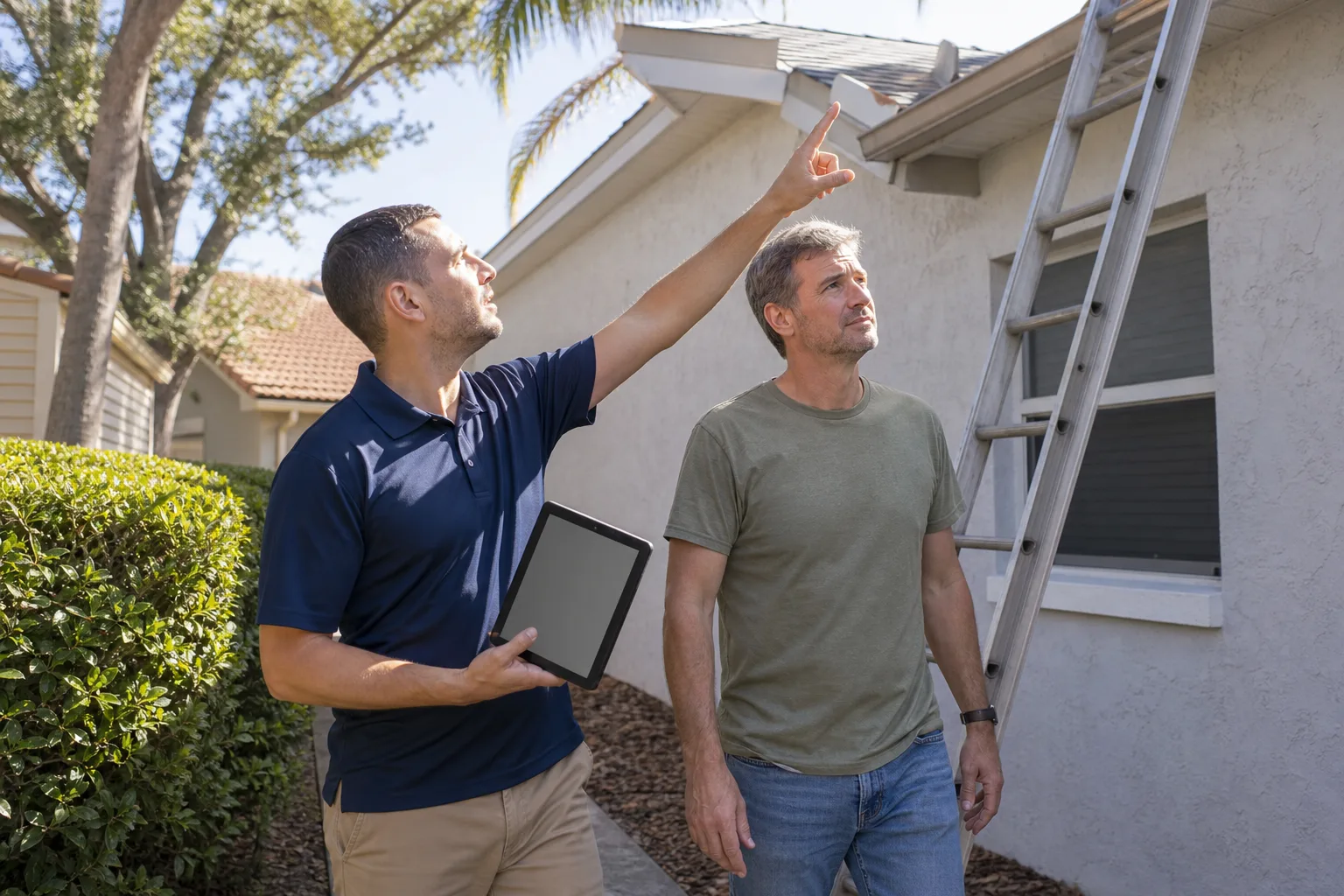
- Steady a ladder against a wall and check the gutters for granular grit (stay on the ladder – don’t step onto the roof).
- Walk the interior and look for ceiling staining at peaks and near the ridge line.
That’s a ground-level check. Stop and call a professional if you see any of these: active water staining on the ceiling, anything that looks like a lifted or broken tile, daylight at the ridge, or crumbling felt at the eave. Don’t probe underlayment yourself or pry up tile to see what’s underneath – it’s the fastest way to turn a hidden problem into an active leak.
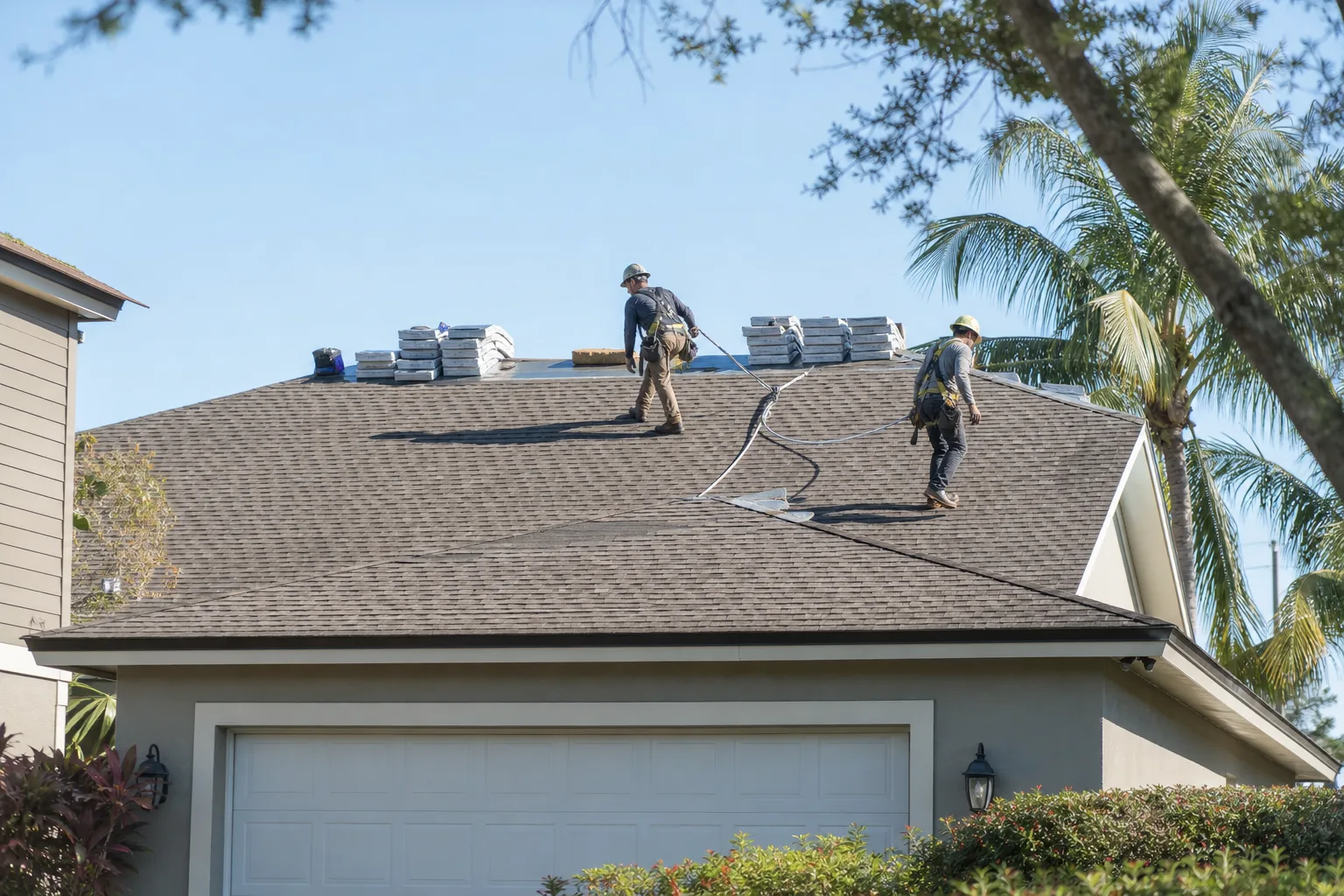
What a full replacement costs in Spring Valley, and when it makes sense
Here’s a straight answer on cost. For most Spring Valley homes with concrete tile roofs, repair is the right call when the problem is isolated to a ridge cap, flashing, or a handful of tiles in one area. Once underlayment is failing across the whole roof, though, patching is throwing money at a roof that will keep leaking next monsoon season.
| Service | Spring Valley price range | When it applies |
|---|---|---|
| Roof repair | $400-$1,800 | Isolated leaks, flashing, a few tiles |
| Tile roof repair | $600-$2,500 | Broken or lifted tile, localized ridge work |
| Full roof replacement | $8,000-$20,000 | Underlayment at end of life across the whole roof |
| Metal roof installation | $15,000-$40,000 | Upgrading to a longer-life roof system |
The judgment call – the one we make with every Spring Valley homeowner – is whether the visible symptoms point to one failure or to the whole underlayment having aged out. A roof replacement done right includes new underlayment, proper flashing, and re-laying tile if it’s still sound, and it’s the honest recommendation when a home built in the late ’90s has its original roof and any of the five signs above. We use materials from brands like Tamko and Boral when the roof calls for them, and every job comes with Groundwork’s 730-Day Done Right Promise – if it’s not done right, we make it right. When we tell you a full replacement is needed, that guarantee is on the line.
You can read more about our full scope on our Roofing page, or check how we work across the Spring Valley service area and see the home page for the other trades we cover – our technicians have up to 12 years of experience.
Why a live answer at 9 PM on a Saturday matters here
Monsoon leaks don’t wait for business hours. If you spot ceiling staining on a Saturday night, the difference between a contained problem and soaked drywall, warped flooring, and a mold issue is how fast you get a tarp or a crew on it. That’s why every Groundwork call is answered by a live person, 24/7 – no voicemail, no waiting until Monday. And when a contractor tells you a full replacement is the call, demand a workmanship guarantee in writing. The 730-Day Done Right Promise gives that diagnosis skin in the game. Upfront pricing, no surprises – the number you see is the number you pay.
FAQs
If your home was built in the 1990s or early 2000s with its original roof, the underlayment is likely at or past its 20-to-25-year service life even if the tile looks fine from the street – and any ceiling staining after a monsoon confirms it’s already leaking. Crumbling felt at the eave edges and daylight at the ridge are the other strong signals. Call (888) 329-9414 for a no-pressure assessment; estimates are free.
Yes – on concrete tile roofs, the tile isn’t the waterproofing; the underlayment beneath it is, and after 25 summers of 110°F heat that felt can crack and stop shedding water while the tile above stays perfect. That’s the most common failure we see in Spring Valley. If you see ceiling stains, get it looked at rather than waiting for the tile to show damage.
Roughly 20 to 25 years is the rated service life for most underlayment used on tile roofs – and the brutal Mojave thermal swing here, from 110°F-plus summers to freezing winter nights, pushes it toward the shorter end. That’s why a home built in 1998 with its original roof is a candidate for replacement now, tile appearance notwithstanding.
No – Groundwork offers a free project estimate and design consult, so you can get a professional read on your roof at no cost. If it’s a repair, we’ll tell you; if it’s replacement, we’ll show you why and what it runs. Call (888) 329-9414 – a live person answers 24/7.
If you’d rather have it looked at, Groundwork Construction Co. of Spring Valley offers a no-pressure assessment in Spring Valley – call (888) 329-9414. We’ll tell you honestly whether you’re looking at a repair or a replacement, and if a full replacement is the answer, the 730-Day Done Right Promise backs it in writing.
Written by the team at Groundwork Construction Co. of Spring Valley, serving Spring Valley, NV.