
Last updated November 17, 2026







Free written scope consultation - allowances, timeline, and change-order rules on paper before a single trade is scheduled
Construction Warning Signs: A Spring Valley Homeowner’s Reference Guide
A hairline crack in stucco gets dismissed as normal settling in nine out of ten cases. But in Spring Valley’s expansive soil conditions, it’s sometimes the first visible indication of a foundation drainage problem that costs $15,000 to correct. The warning signs that actually matter here are rarely dramatic. They’re the quiet signals a seasoned contractor reads as the start of a failure cascade, not an isolated cosmetic flaw. This guide walks you through the cracks, drainage patterns, contractor behaviors, material swaps, and post-completion checks that separate a home that holds up from one that quietly deteriorates.
Quick Answer
The construction warning signs worth acting on in Spring Valley are structural movement rather than cosmetic shrinkage, ponding water after monsoon rain that points to grading failure, contractor communication breakdowns that predict disputes, and subtle material substitutions. Catch them early and most repairs run a few hundred to a few thousand dollars; ignore them and correction costs can climb past $15,000.
Styles & brands we work with
- Kitchen remodeling
- Bathroom remodeling
- Home additions & ADU
- Roofing
- Windows & doors
- Driveway & pavers
- Fence
Table of Contents
- How to Tell Cosmetic Cracks From Structural Movement
- Drainage and Grading Warning Signs Unique to Spring Valley Lots
- Contractor Behavior Red Flags During Active Projects
- Material Substitution Warning Signs
- The Post-Completion Checklist Before You Write the Final Check
- Seasonal Warning Signs: What Spring Valley Heat and Monsoon Rain Reveal
- Documentation Red Flags in Bids and Contracts
- When to Call a Professional
How to Tell Cosmetic Cracks From Structural Movement
Not every crack deserves a call. In the Spring Valley climate, stucco and concrete flatwork expand and contract through hot days and cool desert nights, and small shrinkage cracks are the price of that movement. The difference between a cosmetic crack and a structural one isn’t the width at the surface. It’s the pattern, the location, and whether the two sides are still at the same depth.
Here’s how to read them.
- Cosmetic shrinkage cracks are typically under 1/16 inch wide, run in short random webs, and appear within the first year as stucco cures. They don’t grow and the two sides of the crack sit flush.
- Structural movement cracks are wider than 1/8 inch, run diagonally from the corners of windows or doors, and one side of the crack is visibly proud of the other. That offset – a “lip” you can feel with your finger – is the tell.
- Stair-step cracks in block walls or along a foundation follow the mortar joints like a staircase. Those trace differential settlement, and they’re common where expansive clay soil under a Spring Valley slab cycles between wet and dry.
- Concrete flatwork cracks that open seasonally and close again are usually contraction joints doing their job. Cracks that stay open through winter and widen each year are a drainage movement signature.
Walk the exterior of your home twice a year with a pencil and a notepad. Sketch each crack, date it, and measure the width. If the same crack has grown a quarter inch over two seasons, that’s a pattern worth a professional look. In our experience around Spring Valley, cracks near downspout discharge points and at the inside corners of an L-shaped plan tend to be the earliest indicators of a water management problem, not a structural one – which is good news, because drainage is far cheaper to correct than foundation underpinning.
Drainage and Grading Warning Signs Unique to Spring Valley Lots
Spring Valley sits on some genuinely challenging ground. Expansive clay soils, a hot and dry climate that hardens the surface, and monsoon storms that dump an inch of water in under an hour. The way a lot drains under that combination tells you almost everything about how the home will hold up over the next decade.
“Ponding after monsoon rain” is the phrase homeowners use, and it should never be taken lightly. Water that sits against a foundation for 24 hours after a storm is pressing directly into the clay that swells beneath your slab. That swelling is what drives the differential movement behind those stair-step foundation cracks.
Warning signs to look for
- Water standing anywhere against the foundation wall more than a few hours after rain stops.
- Soil that pulls away from the foundation, leaving a visible gap around the slab edge – a classic sign the grade has settled below the sill.
- Mulch or gravel beds that wash out and collect at the low corner of the yard.
- Downspouts that discharge within three feet of the footing instead of running to a splash block or a graded swale.
- Efflorescence – the white chalky residue on block or stucco near the base of the wall – which signals moisture wicking through the material.
- New cracks in concrete patios, walkways, or driveways that follow the direction of surface water flow.
The fix usually starts with regrading. A slope of roughly six inches of fall over the first ten feet away from the house is the general target most contractors aim for, though local soils and lot layout change the specifics. If your grading has flattened or reversed, correcting it before the next monsoon season prevents far more expensive work. For lots where a new patio, driveway, or paver surface is part of the equation, our team installs Driveway & Pavers in Spring Valley with subgrade prep and drainage slope built into the design so surface water runs away from the slab instead of toward it.
Fencing and perimeter changes can also silently alter the drainage of a Spring Valley lot. A fence footing installed without regard to grade can create a shallow dam behind a property line, and we’ve seen water pool against a rear wall for a full season because of it. If you’re adding a perimeter, Fence Installation in Spring Valley should account for how water crosses the property before ground is broken.
Contractor Behavior Red Flags During Active Projects
The single best predictor of a construction dispute isn’t the quality of the work as it’s happening. It’s how the contractor communicates before and during the job. A crew that shows up on time, answers messages, and tells you about problems early almost never ends in a fight. A crew that goes quiet, dodges questions, or surprises you with new numbers mid-project is signaling trouble long before the finished work shows it.
These are the behaviors worth watching with clear eyes.
- Scope changes with no paper trail. A verbal “we’ll just add that in” is how surprise change orders are born. Every scope addition should be documented and priced before the work happens.
- Vague or delayed start dates. A contractor who can’t tell you which week your project starts after signing is either overbooked or disorganized. Both hurt you.
- No updated schedule when weather or permits slip. Delays happen. Silence about them is the red flag. A contractor who proactively resets expectations is showing you the same care they’ll apply to your build.
- Site condition drift. Trash piling up, materials left in the rain, tools scattered where the dog runs; site order tends to predict build order.
- Subcontractor churn. If a different crew shows up every few days with no explanation, ask who’s responsible for the phase and who owns the warranty on it.
- Pressure to skip inspection. Pulling a permit and passing the inspection is your legal protection, not paperwork. Any contractor who suggests you can skip it is telling you something about how they work.
- Requests for large early deposits with no contract milestones. Progress-based payments, documented in writing, protect you both.
In Spring Valley, where permits for additions and ADUs get reviewed by the county, a contractor who brushes off the permitting process is the one to walk away from. Our team pulls permits and manages inspections as part of the job – it’s not extra, it’s the baseline. You can see how a full-scope project runs end to end on our Home Additions & ADU in Spring Valley page.
Material Substitution Warning Signs
Material substitution – swapping a specified product for a lower-grade alternative without telling you – is one of the most common hidden failures in residential construction, and the cheapest for a contractor to hide if you aren’t paying attention. The specification sheet in your bid names the product, the thickness, the grade, and often the brand. Your job during the build is to verify what actually shows up.
How to catch a swap
- Match the wrapper. Photograph every delivered pallet, bundle, or box and compare the brand, product line, and grade against the specification sheet. A lumber bundle marked with a lower grade stamp than your bid named is a substitution.
- Check the weight and thickness. Shingles, hardboard siding, and tile all come in tiered thicknesses. A “premium 50-year” roof shingle that arrives in a bundle labeled with a thinner product is a downgrade invisible from the ground.
- Confirm brand partners. If your spec names Belgard pavers, look for the manufacturer’s stamp or packaging. The same goes for Bufftech or ActiveYards fence panels – those brands mark their product, and unbranded lookalikes are not the same grade.
- Read the delivery receipt before signing. Delivery paperwork lists product codes. You have every right to review it before the materials are staged.
- Watch for “we ran out, so we used this instead.” That’s a conversation that should happen with you before installation, not after.
Our position is straightforward: the number you see on the bid is the number you pay, and the material you approved is the material that gets installed. We work from a curated set of brand partners across every trade, including KraftMaid and Cambria in kitchens, GAF and Owens Corning on roofs, and Andersen and Marvin on windows. That matters because a manufacturer’s limited warranty only applies to a product that was actually installed – a swap can void your coverage entirely. For outdoor surfaces, we specify Belgard and Unilock because their product lines are clearly identified and their warranties are easy to verify, which makes a substitution much harder to hide.
The Post-Completion Checklist Before You Write the Final Check
The final walkthrough is your last clean chance to catch problems while the contractor is still on the hook for them. Most homeowners walk through once, nod at the pretty finishes, and sign off on items that show up in the first thirty days – which for many contractors is past the window where they’ll return. Do the walkthrough in daylight, with a notepad, and take your time.
Walkthrough items most people miss
- Door and window operation. Open and close every window and exterior door. Any that stick, rub, or don’t latch indicate movement or an installation problem that hasn’t settled yet.
- Water test. Run every faucet, shower, and appliance that uses water for several minutes. Check under sinks and around the base of every fixture for moisture.
- Drainage slope at the yard edge. Walk the perimeter with a hose running on the closest downspout and watch where the water actually goes.
- Electrical outlets and switches. Test every one with a small plug-in tester. Ask which outlets are on GFCI protection and verify they trip.
- Roof and gutter inspection from the ground. Look at the line where the roof meets the fascia for gaps, and check that the gutter pitch sends water toward the downspout.
- Paint and finish touchups. Note every nick, drip, and brush mark in writing before you leave the walkthrough. These are almost never a warranty item later.
- Paperwork handoff. Collect every permit copy, appliance manual, manufacturer warranty registration, and lien waiver for subcontractors before the final payment clears.
Put all walkthrough items in a written punch list and require a signed acknowledgment with a date for each fix. That one document is your protection. Our 730-Day Done Right Promise exists for exactly this reason – if a defect we’re responsible for shows up long after the punch list is closed, we make it right. You can read more about how we work at the Groundwork Construction Co. of Spring Valley home page.
Seasonal Warning Signs: What Spring Valley Heat and Monsoon Rain Reveal
Construction problems in Spring Valley tend to announce themselves on a seasonal clock. The cold night and hot day cycle of late winter opens exterior cracks. The first monsoon storm of summer reveals every drainage flaw that’s been building since the last one. Knowing what each season tends to expose helps you time your inspection and your repair work.
- Late winter through early spring. Cracks in stucco and concrete are widest now. So are gaps between window frames and walls where the interior and exterior materials move at different rates.
- Pre-monsoon. This is the time to check gutters, downspouts, and yard grading before the first big rain. Cleaning gutters and confirming the slope of the ground around the house is the highest-value hour you’ll spend all year.
- Monsoon season (roughly July through September). Watch for standing water and where it flows. Note any water that gets under doors, hits a wall, or pools along the base.
- Post-monsoon fall. Efflorescence, damp patches, and wood swelling show up now. Any of these suggest moisture has already entered a wall cavity.
- Mid-summer heat. This is when surface movement on decks and exterior wood is easiest to see – boards cupping, nails backing out slightly, joints opening.
We’ve seen plenty of Spring Valley homes where a roof issue was diagnosed by a single missing shingle after the first wet-season windstorm, but the underlying mechanical failure was a few years old. Age, not just the weather, is part of the read. If the roof on your home is past the 20-year mark, a good time to get an honest look is before the next wet season rather than after. That’s the kind of planning that saves you replacement costs under pressure.
Documentation Red Flags in Bids and Contracts
The paper trail you get before a job starts matters as much as anything you see on the site. A well-built bid is specific, itemized, and complete. A bid that hedges on prices, omits inclusions, or leans on broad language is a warning sign you can read long before a shovel hits the ground.
Look for these specific issues.
- One-line “and all associated work” language. If a bid doesn’t itemize materials, labor, haul-away, and permits, you have no way to compare it or hold the contractor to it.
- Missing permit and inspection lines. A bid that doesn’t name who pulls the permit and who pays for inspections is leaving the cost – and the responsibility – open.
- No stated payment schedule. Progress-based payments tied to completed phases protect you. A contract that asks for a large up-front amount with no milestones should be renegotiated.
- No written change-order process. There should be a paragraph explaining exactly how a scope change is priced and approved in advance.
- Vague warranty language. A workmanship warranty should state its length in days and what it covers. Ours runs 730 days and is written into the contract – if it’s not done right, we make it right.
- No start and completion estimate. A written schedule is a baseline you can hold your contractor to. Its absence is not a minor omission.
For any project over $10,000 – which includes most kitchen remodels and roof replacements – the documentation quality is your single best early predictor of how the job goes. Free project estimates and design consults are the right first step, and they should come with a written, line-item bid so you can compare apples to apples. That’s the kind of upfront pricing we build our whole process around, along with 0% financing for 18 months and $1,000 off projects over $10,000 to keep bigger work accessible.
Common Mistakes to Avoid
- Filling a structural crack before diagnosing it. Caulking a diagonal crack that’s still moving hides the problem and guarantees it returns next season. Test the cause before you touch the cosmetic fix.
- Adding hardscape flat against the house without re-checking the grade. A new paver patio installed flush to the slab can redirect water into the wall. The install plan needs to account for slope and drainage.
- Assuming a small crack can wait. In Spring Valley’s expansive soils, the small crack at the inside corner is often the entry point for water that drives the bigger crack six months later.
- Handing over the final payment before collecting paperwork. Lien waivers, warranty registrations, and permit copies are almost impossible to get after the check clears.
- Letting a contractor start before the permit is pulled. Even on small projects, unpermitted work can delay a future sale and complicate insurance. Every job we take on starts after the permit is in hand.
- Skipping the seasonal walkthrough. Two walks a year with a camera and a notepad catch problems while they’re still cheap. Once-a-decade inspections catch them when they’re expensive.
- Taking a verbal change order “to be worked out later.” That’s how a $4,000 job becomes an $8,000 surprise. Every scope change gets a written price before work continues.
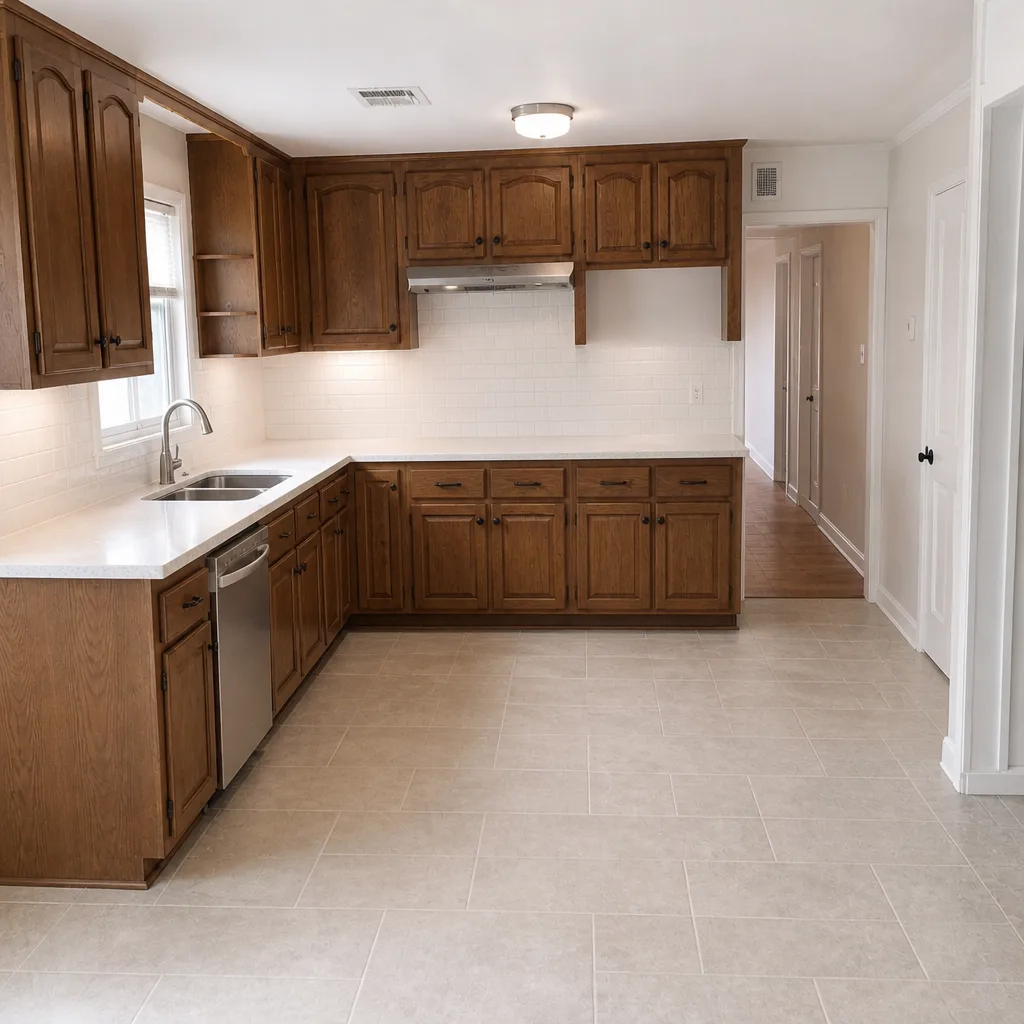
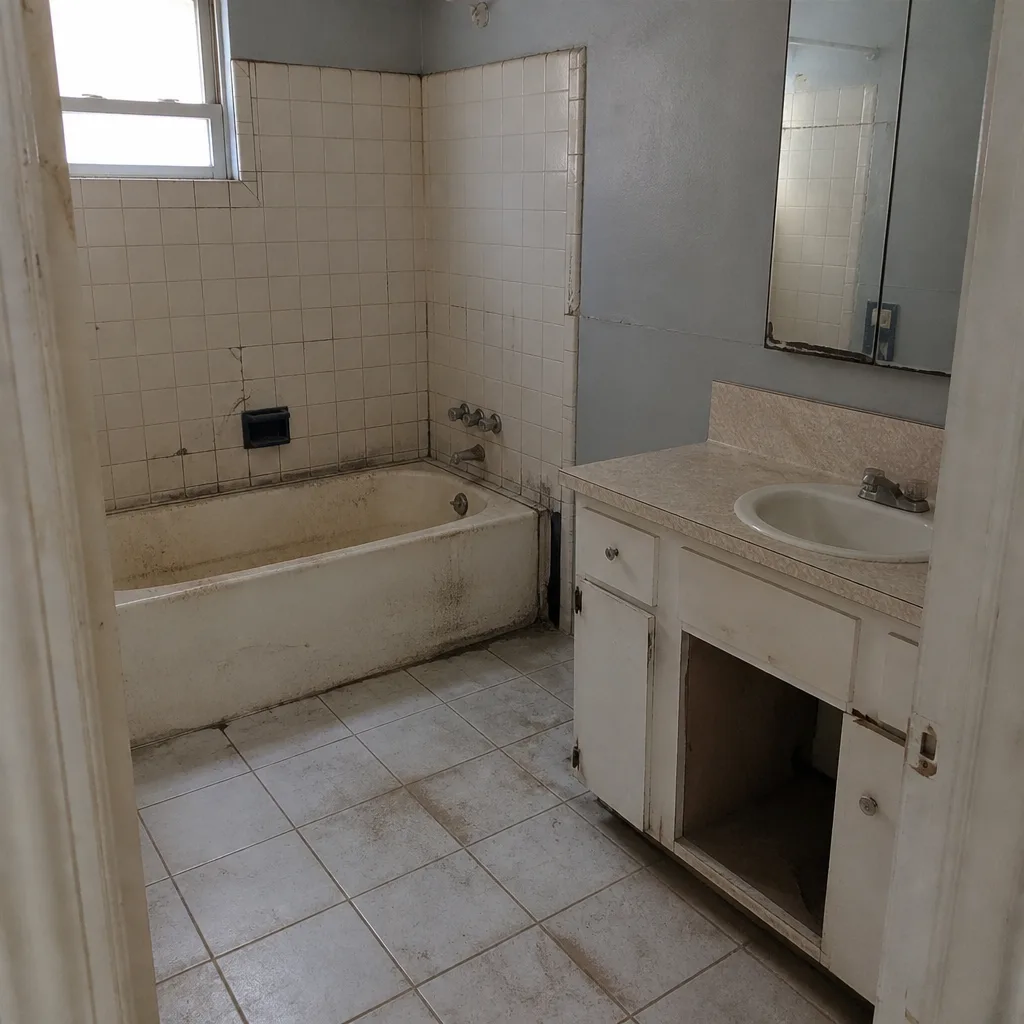
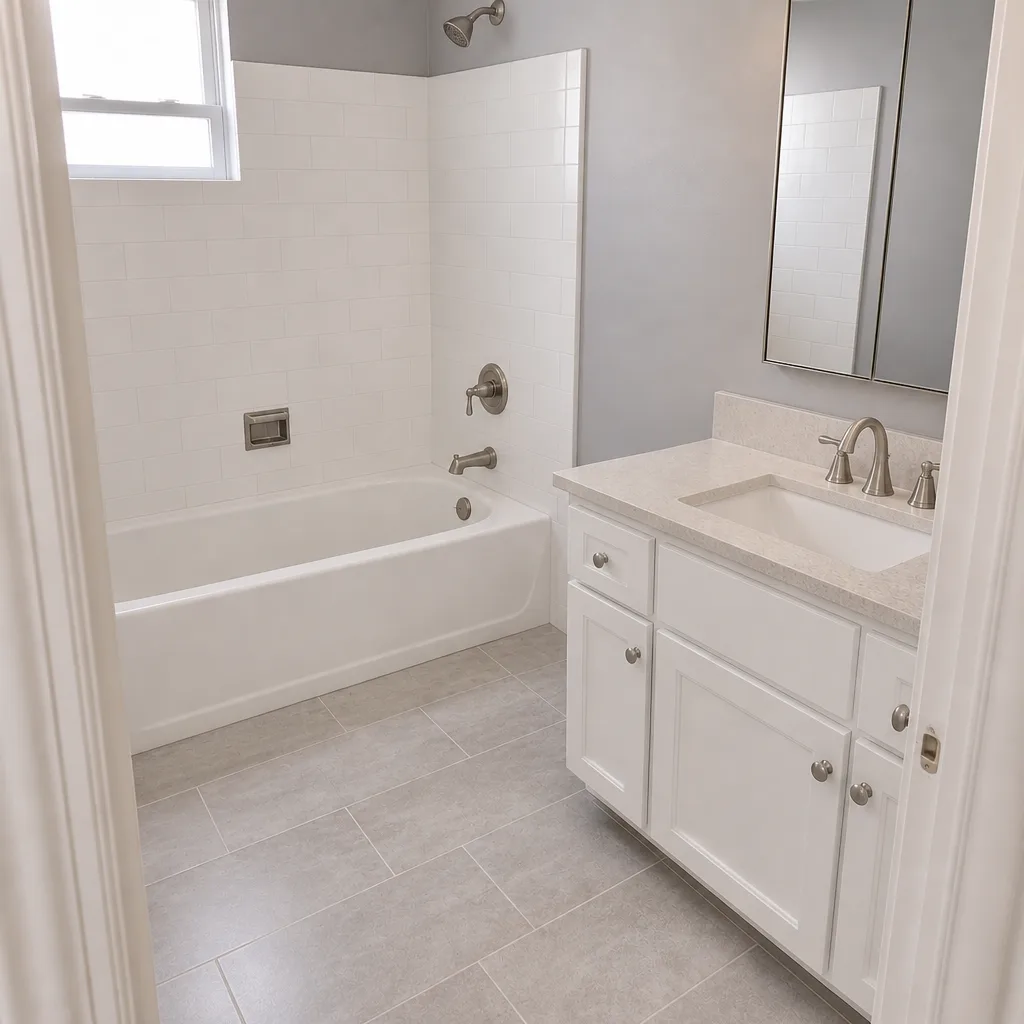
See the difference
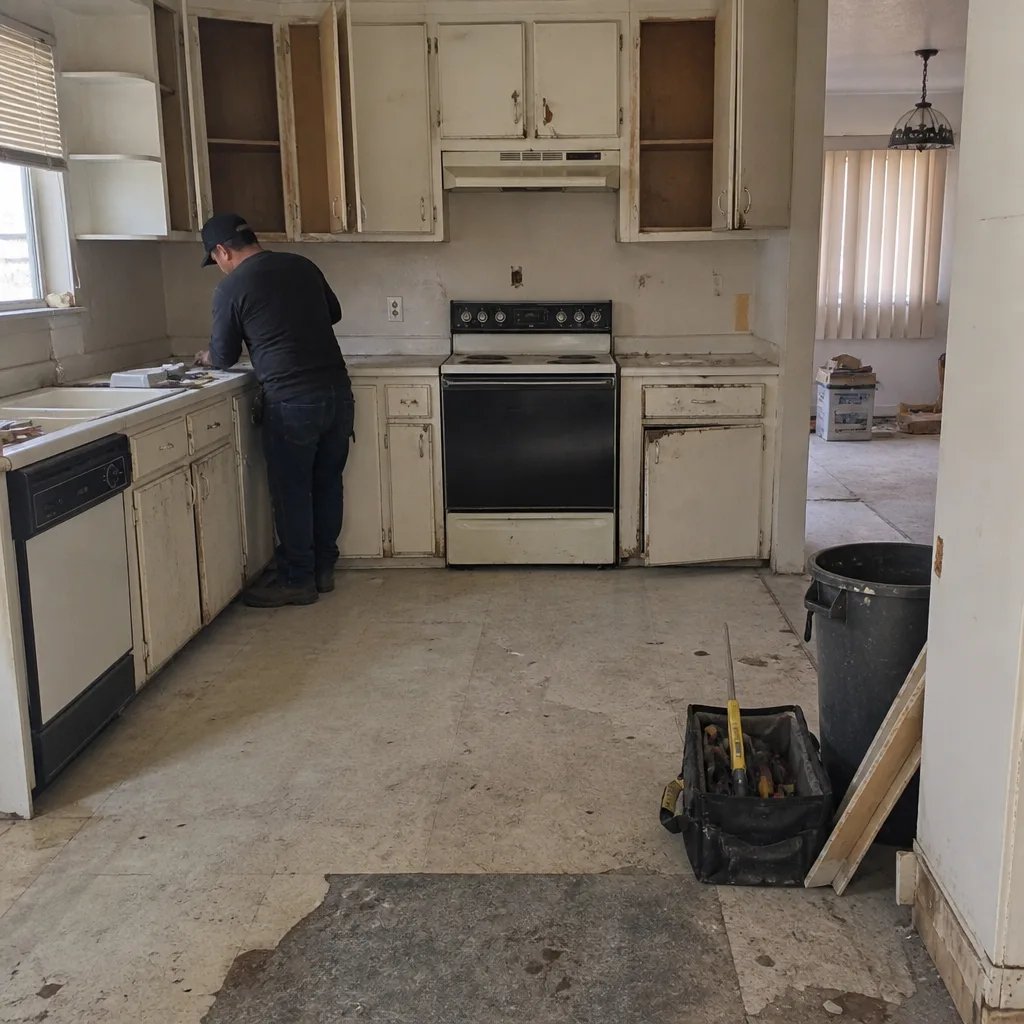 Before
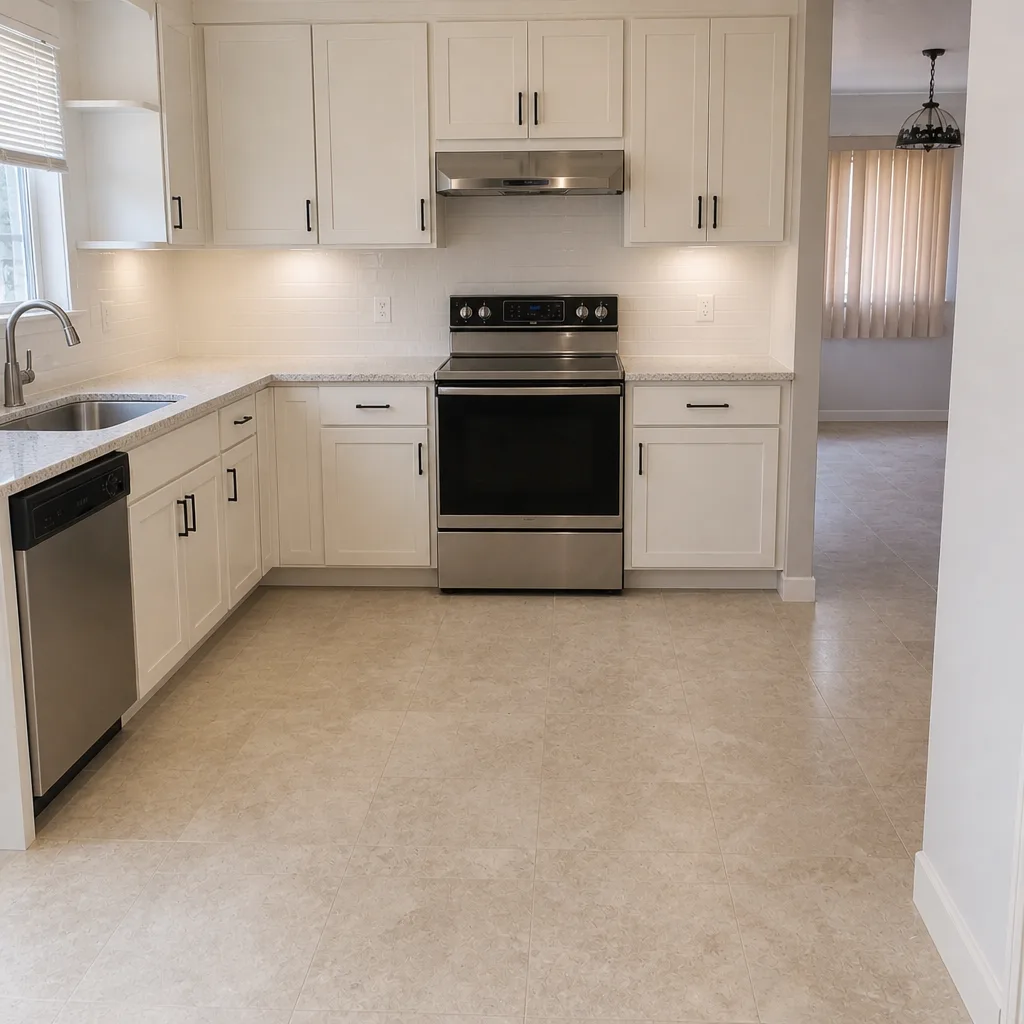 After
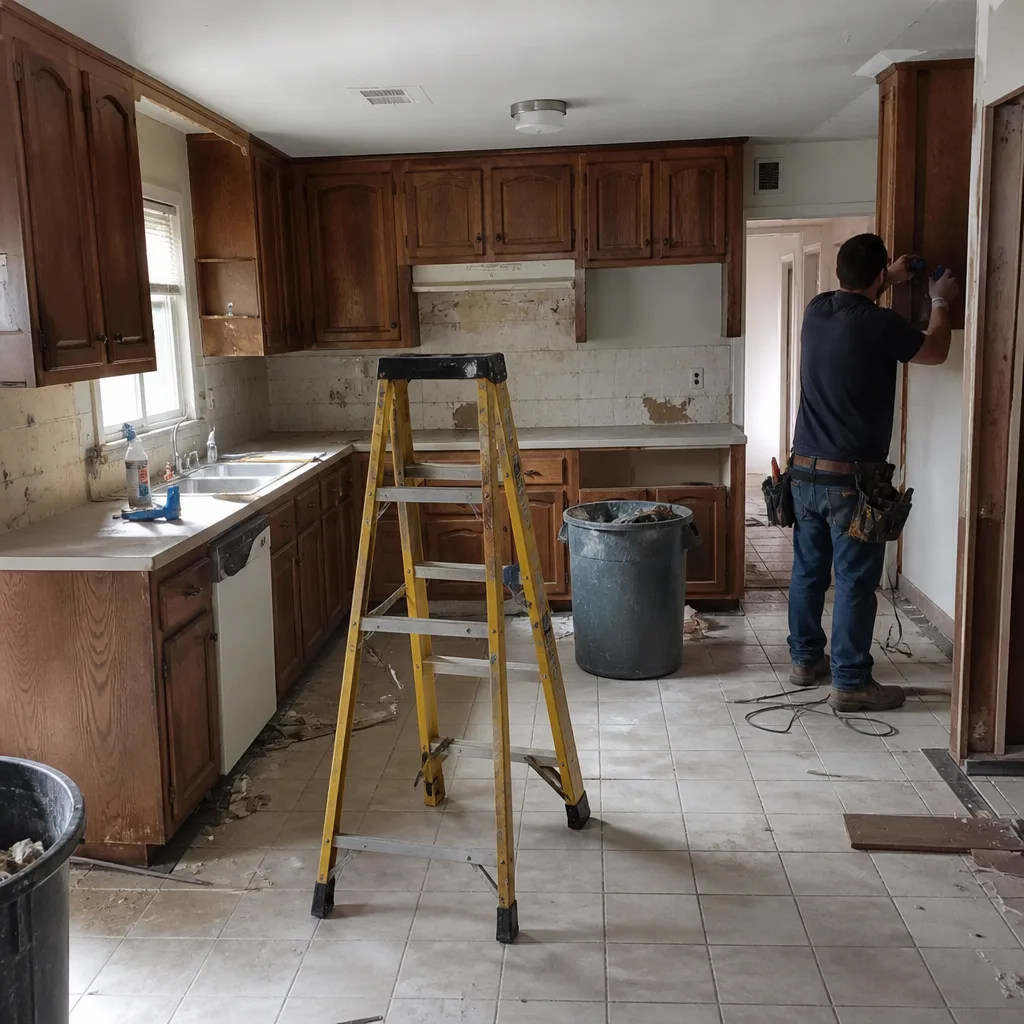 Before
 After
 Before
 After
When to Call a Professional
Some warning signs are safe to watch. Others need professional eyes before the next rain or the next hot spell.
Call a licensed contractor when a crack has grown over two seasons, when water is ponding against your foundation more than a day after rain, when you feel a soft spot or a lifted edge in a floor or wall, when the exterior of the house is out of level from one corner to another, or when a spring storm leaves visible damage to the roof or fascia. Call when the paperwork doesn’t add up: a bid with no line items, a warranty without a stated length in days, a start date with no schedule.
Groundwork Construction Co. of Spring Valley offers free estimates in Spring Valley – call (888) 329-9414. We’ve been in business since 2014 and back every project with our 730-Day Done Right Promise. Our technicians have up to 12 years of experience, arrive in uniform, and are background-checked, and calls are answered by a live person 24/7. When the repair is bigger than a patch – a failed roof, a warped exterior, a kitchen that’s aging out – we handle the full scope from foundation to finish line, with premium brands like GAF, Owens Corning, Andersen, Pella, and James Hardie.
Frequently Asked Questions

The most common sign is a diagonal crack running from the corner of a window or door across the stucco. In Spring Valley’s expansive clay soil, these trace differential movement driven by drainage problems and are usually visible within a season of the problem starting. If the crack is wider than 1/8 inch or the two sides are offset, it’s worth a professional inspection.
Cosmetic shrinkage cracks are usually under 1/16 inch wide, short, random, and flush on both sides. Structural movement cracks are wider than 1/8 inch, run diagonally from corners, and one side is visibly proud of the other. If the crack has grown between two of your seasonal walkthroughs, treat it as structural until a professional says otherwise. Call (888) 329-9414 for a free estimate if you’re unsure.
Pooling that lasts a day indicates the ground has lost its slope away from the house or that subsurface soil has settled. On a Spring Valley lot, that pooled water pressures the expansive clay beneath your slab, and the resulting movement is what cracks the foundation. Regrading and downspout extension fix most cases.
Compare the delivered product packaging, brand marks, and thickness against the specification sheet in your contract. Look for manufacturer branding on the product – Belgard and Unilock pavers, for example, carry markings that identify the grade. Photograph every delivery before signing the receipt. If a swap happened, a manufacturer’s warranty may no longer apply to the installed product.
Test every window and door, run all water fixtures, verify the drainage slope with a hose, test electrical outlets, and note every finish defect in writing. Collect permit copies, warranty registrations, appliance manuals, and subcontractor lien waivers before final payment. Turn the findings into a written punch list with a completion date for each item – that document protects you more than any verbal promise.
Yes. We offer a free project estimate and design consult with no obligation. Scheduled work is backed by our 730-Day Done Right Promise, and we offer 0% financing for 18 months plus $1,000 off projects over $10,000. Call (888) 329-9414 – live person, 24/7 – to schedule your estimate.
The Bottom Line
The warning signs that matter in Spring Valley construction are quiet, not dramatic. A crack offset by a quarter inch, water ponding against a slab, a contractor who goes silent mid-project, a delivery that doesn’t match the spec sheet – each is a small data point that experienced builders read as the start of a bigger problem. Walking your property twice a year, reading your contract and bid carefully, and documenting the final walkthrough catch most of these before they turn into expensive repairs. When in doubt, get a professional set of eyes on it. Call (888) 329-9414 for a free estimate.
Written by the team at Groundwork Construction Co. of Spring Valley.