
Last updated November 17, 2026








Free written scope consultation - allowances, timeline, and change-order rules on paper before a single trade is scheduled
How to Hire a Construction Contractor in Spring Valley: A Step-by-Step Guide
Nevada’s contractor licensing board lists tens of thousands of active licenses. The credential that’s supposed to protect you is so common it tells you almost nothing about who you’re actually hiring. Walk into any Spring Valley kitchen remodel and the license on the wall is table stakes, not proof. So the real question isn’t “are they licensed?” It’s “how do they behave when a Clark County inspector finds a problem, when a sub disappears mid-job, or when a warranty claim surfaces two years after the check clears?” This guide walks you through the vetting process that actually answers those questions, from public inspection records to the exact clauses to read before you sign.
Quick Answer
To hire a construction contractor in Spring Valley, verify the license, pull the contractor’s public inspection pass/fail history through Clark County records, interview their named subcontractors, and read the dispute-resolution clause before signing. Then compare bids on total cost of delivery, not headline price. A contractor worth hiring will hand over all of that without flinching.
Styles & brands we work with
- Kitchen remodeling
- Bathroom remodeling
- Home additions & ADU
- Roofing
- Windows & doors
- Driveway & pavers
- Fence
Table of Contents
- Step 1: Verify the License and Look Past It
- Step 2: Pull the Contractor’s Clark County Inspection History
- Step 3: Ask the Subcontractor Questions
- Step 4: Read the Bid Like It’s a Contract
- Step 5: Structure a Payment Schedule That Protects You
- Step 6: Read the Dispute Resolution Clause Before You Sign
- Step 7: Evaluate Total Cost of Delivery, Not the Lowest Bid
- Know Which Projects Require What in Spring Valley
Step 1: Verify the License and Look Past It
Start with the Nevada State Contractors Board. Their public database shows whether a license is active, what classification it carries, and whether it’s ever been suspended or revoked. That takes about four minutes. But here’s the part most Spring Valley homeowners skip: the classifications matter. A residential license for a general contractor isn’t the same as a specialty license for roofing or electrical. If the scope of your project crosses trades, the GC needs the right classification to pull the permits on the whole job.
What the license does not tell you is whether this contractor finishes jobs on time, pays their subs, or honors a workmanship warranty. It’s a bare minimum. Treat it like a driver’s license: important, but you wouldn’t hand a stranger your car keys just because they have one.
Three things to check beyond the license:
- Bonding and insurance. Ask for a current certificate of insurance and call the carrier to confirm active coverage. A lapse in general liability coverage means the contractor’s mistakes become your financial problem.
- Classification match. Confirm the license classification actually covers what you’re building. An ADU addition needs the right residential classification; a roof-only job may not.
- Unresolved complaints. The board publishes disciplinary actions. Two complaints from ten years ago reads differently than three active ones from this year.
When we vet trade partners for the projects we coordinate, we start with the same database. Anyone who hesitates when you ask for the license number is telling you something. Anyone who sends a screenshot of the board record without being asked twice is telling you something else. Pay attention to which conversation you’re having.
Spring Valley sits inside unincorporated Clark County, which means most projects fall under Clark County Building Department jurisdiction rather than a city building department. That distinction matters in step two. For a closer look at how our team operates on the ground here, see the Groundwork Construction Co. of Spring Valley home.
Step 2: Pull the Contractor’s Clark County Inspection History
Clark County’s public permit and inspection portals let you search permits by address, contractor name, or license number. This is the single most underused vetting tool available to Spring Valley homeowners. It’s free. It takes a browser tab and a few minutes. And it exposes what no reference call ever will: how a contractor’s work actually performs when an inspector looks at it.
Here’s how to read what you find:
- Search the permit records for the contractor’s license number or business name. You want the last two or three years, not their whole history.
- Count the permits pulled versus closed. A contractor with dozens of open permits from previous years is a contractor who leaves jobs unfinished or forgets to close them out. Both outcomes cost you.
- Look at inspection results on each permit. Pass/fail history tells you whether their rough-in framing, electrical, and plumbing get approved on the first walk or need reworking.
- Note the pattern, not the single failure. Every contractor fails an inspection now and then. A perfect record is believable on ten jobs; a perfect record on three hundred jobs means someone isn’t pulling permits.
- Check who pulled the permit. If the permit was pulled by the homeowner instead of the contractor, that’s a red flag on a large job.
In our experience, a contractor whose permit closes on schedule and whose inspections pass on the first or second attempt is a contractor who runs a competent crew. A contractor whose permits sit open for eighteen months and who blames inspectors for every failure is telling you exactly what your project will look like when something goes sideways. Southwestern neighborhoods in Spring Valley have seen a wave of additions and ADU conversions over the last several years, and the permit records on those jobs are a matter of public record. Use them.
Step 3: Ask the Subcontractor Questions
Every general contractor uses subcontractors for specialty trades: electrical, plumbing, HVAC, stucco, drywall, roofing. The GC’s main job is coordination. So the question that should be on your list, and almost never is: “Who are your primary subs on this job, and can I meet them?”
A GC who can name their electrical, plumbing, and finish subs without checking a phone is a GC who has working relationships ship those trades. A GC who can’t name them, or gets defensive when you ask, is either planning to hire whoever’s available that week or doesn’t want you to know how thin the coordination actually is.
Questions to ask, in order:
- “Which subs are you bringing on for the electrical, plumbing, and drywall?” You want specific companies, not “we’ve got a guy.”
- “Who pays the subs, and on what schedule?” You want to hear that the GC pays subs directly out of draws, not that the subs bill you separately.
- “Have you worked with these subs on more than one job?” Repeat working relationships signal reliability. One-off hires signal pricing, not partnership.
- “What happens if a sub walks off the job mid-project?” A GC with an answer that mentions a backup sub or a plan for re-sequencing the schedule is a GC who has run into this before and survived it.
- “Are the subs licensed and insured independently, or under your umbrella?” On a permitted job, each trade should carry coverage. Ask for it.
Spring Valley homeowner horror stories almost always trace back to the same root cause: a GC who disappeared mid-job and left the subs unpaid, and the subs putting a mechanic’s lien on the homeowner’s property. That lien can survive the job, the GC, and the final payment. Talking to the subs directly, and asking how they get paid, is the cheapest insurance you can buy.
If the project involves outdoor structures like a new fence or a built-in pergola, ask the same questions of the outdoor trade head. Fence work in our area often relies on a single crew, and knowing who they are before the first post sets prevents arguments later. Our own process for that scope is at Fence Installation in Spring Valley.
Step 4: Read the Bid Like It’s a Contract
A bid is not a number on a business card. A real bid is a written scope of work with a price attached to each line. If a contractor hands you a single page that says “kitchen remodel: $47,500,” you haven’t been bid. You’ve been guessed at.
Compare any three bids in Spring Valley on what they leave out rather than on the total. The low bid almost always leaves out more. Common omissions on a kitchen remodel bid:
- Permit fees and any inspection re-inspection fees
- Cabinet removal and disposal of old materials
- Plumbing relocation and electrical upgrades to bring the room to code
- Countertop fabrication and templating (a line item in most bids, missing in some)
- Backsplash, trim, and paint, listed as “by owner” or absent
- Jobsite protection and cleanup
Ask each contractor to write a scope that matches the others, line for line, before you compare prices. That’s the only way the numbers mean anything. When we work up a scope, we list the brand partners we’re specifying so the homeowner is comparing KraftMaid cabinets against KraftMaid cabinets, not comparing a cabinet brand against a cabinet-sized hole. Material brand drives the total as much as labor does.
Two things to verify in every bid:
- The allowances. If the bid says “$1,200 allowance for tile,” ask what happens if the tile the homeowner wants costs $2,800. An allowance that’s set artificially low hides cost. The contract should state who pays the overage and at what markup.
- The change-order process. A bid that says “changes will be billed at hourly rate” with no written procedure is a bid that will grow in the middle of your project. Insist on written change orders signed by both sides before any extra work begins.
Upfront pricing, in writing, with allowances stated plainly, is the single best predictor of whether the project stays on budget. The number you see should be the number you pay, minus the changes you chose to make.
Step 5: Structure a Payment Schedule That Protects You
A payment schedule that front-loads most of the money into the start of the job is a schedule that gives the contractor all your leverage in the first two weeks. A fair schedule ties each payment to work that is actually done and inspected.
What a reasonable schedule looks like on a mid-size remodel in Spring Valley:
- Deposit: small, generally enough to cover materials ordering and permit pull, not a large down payment. Laws in many states cap this; Nevada contractors generally shouldn’t demand half the job upfront.
- Second payment at framing or demo complete: ties money to a visible milestone.
- Third payment at rough-in inspection passed: ties money to an inspector’s signoff, not a contractor’s claim.
- Fourth payment at finishes installed: cabinets, countertops, paint.
- Final payment at substantial completion and final inspection pass: the last 10-15% should be held until you’ve walked the job and the permit closes.
What you don’t want to see:
- A demand for half or more of the contract total up front
- A request for cash only, no check or card
- A payment request before the milestone it’s tied to is actually complete
- Any arrangement where the contractor asks you to pay a sub directly
A contractor who needs a large front-loaded deposit is telling you they need the cash flow. That is not necessarily dishonest, but it is a signal about their financial buffer. If the job pauses for a week because the contractor ran out of cash halfway through, your project is the one that waits.
In our experience, homeowners who hold the final payment until inspection pass have far better outcomes than those who pay in full at substantial completion. The last check is the only leverage you have after the crew leaves.
Step 6: Read the Dispute Resolution Clause Before You Sign
This is the clause most homeowners never read. It sits near the back of the contract, usually in dense type, and it dictates what happens if the job goes wrong. Read it before signing, not after problems surface.
What you’re reading for:
- Is arbitration mandatory? If it is, you give up your right to sue in court in exchange for a private arbiter. Arbitration can be faster and cheaper than court. It can also be expensive if the arbitrator’s fees are billed hourly and the contractor has deeper pockets.
- Who pays the arbitrator? A clause that splits the cost evenly is fair. A clause that puts the cost on whoever files a claim can price the homeowner out of pursuing a legitimate dispute.
- Which state’s law governs? A Spring Valley contract should say Nevada. A contract governed by another state complicates your ability to enforce it locally.
- Is there a warranty? What’s the term and what’s excluded? If the contract mentions a warranty, count the years and read the exclusions. A “one-year warranty that excludes water intrusion” is not a warranty on a roof. A contract that offers a multi-year workmanship warranty with an “if it’s not done right, we make it right” commitment is a real one.
- Who owns the dispute escalation process? The clause should name a phone number or process for raising a complaint before arbitration. A contractor with a formal escalation process is a contractor who plans to still be in business when you call.
The contract is where trust becomes enforceable. A prompt answer to “what does this clause mean?” is worth more than any reference call. If a contractor can’t explain their own dispute clause in plain language, ask them to put the explanation in writing and add it as an exhibit to the contract.
We recommend – and write – contracts that spell out dispute resolution plainly and back workmanship with a written multi-year guarantee. A 730-Day Done Right Promise is a written commitment the homeowner can point at if something fails. Ask every contractor you interview what their warranty actually says. If they can’t show it in writing, they don’t have one.
Step 7: Evaluate Total Cost of Delivery, Not the Lowest Bid
The lowest bid is often the most expensive outcome. Here’s the framework for seeing why before you commit.
Total cost of delivery is the headline bid plus the costs you’ll likely pay after the contract ends. Compare two bids for the same kitchen renovation, both around $45,000, and the one at $38,000 looks like a $7,000 savings. But add in the realistic extras:
- Allowances that overrun. If the low bid stacked the tile and lighting allowances below what the family actually wants, you’ll pay the difference.
- Change orders mid-project. If the low bid scoped the electrical to code-minimum and the house needs panel upgrades, that’s a change order at a markup.
- Delay costs. Every extra month of work means another month of eating out, another month of rent on a temporary space, and another month of holding a construction loan.
- Warranty exposure. A one-year warranty that excludes big-ticket items means the homeowner pays the repair within a few years. A multi-year workmanship guarantee shifts that cost back to the contractor.
- Replacement risk. A low bid that skipped inspections to “save time” means the buyer of your house in five years finds unpermitted work, and you eat the rework cost.
The framework flips the question from “which bid is cheapest today?” to “which one costs me least over the life of the house?” A solid bid on brand-name materials, with inspections passed and a written workmanship guarantee, rarely wins on sticker. It almost always wins on total cost.
Any scope that touches structure or adds square footage amplifies this math. Additions in Spring Valley are on the high end of the cost-per-square-foot range compared to finishing a basement or re-siding a house. Every dollar of change-order markup on a five-figure project scales up. If the project involves an addition, review the scope carefully against Home Additions & ADU in Spring Valley before you sign.
Know Which Projects Require What in Spring Valley
Not every project in Spring Valley gets the same permit treatment. The scope drives the paperwork, the inspection schedule, and the amount of oversight you should give it.
- Kitchen and bathroom remodels. Permits required if electrical, plumbing, or structural changes. Cosmetic swaps (cabinet fronts, paint, countertop) often don’t need a permit, but the electrical and plumbing inside do. The inspection schedule covers rough-in and final.
- Roof replacements. Permit required. Clark County inspects on final. Ask the roofer whether they pull the permit in their own name and whether the inspection is included in the bid. A roofing bid that leaves inspection out is a bid that will get a change order at the end.
- Windows and doors. Replacement windows generally don’t require permits if the size and location are unchanged. New openings do. Energy code compliance on spring Valley’s summer heat loads matters, and a window contractor who knows the local U-factor requirements is worth the extra few hundred dollars.
- Fence installation. Height limits and setbacks apply. Six-foot fences are permitted in most residential zones; anything taller usually needs review. Spring Valley’s HOA-governed neighborhoods often layer additional rules on top. Driveway & Pavers in Spring Valley walks through hardscape scopes where the permit path is a bit more obscure.
- Additions and ADUs. Full permit process, multiple inspections, energy code, and setback review. These are the heaviest scopes and the ones that most reward a contractor with a clean inspection history.
Spring Valley’s climate adds a scoping wrinkle. Tile roofs crack under the summer thermal swings. Stucco takes extra maintenance on sun-facing walls. Driveway pavers shift if the base wasn’t compacted to spec. And the monsoon season pushes water toward whatever drainage the project didn’t build. A contractor who scopes with those realities in mind is worth more than one who bids the same plan in every market. If your project includes exterior hardscape, ask how the grade is handled before the bid is signed.
Common Mistakes to Avoid
- Picking the low bid by default. The lowest number is a starting point, not a decision. Compare total cost of delivery and you’ll usually find the cheapest bid isn’t.
- Calling references the contractor chose. Anyone can list three happy past clients. Instead, ask to see a project from two years ago and knock on the door. Spring Valley neighborhoods are close enough that most homeowners will talk.
- Skipping the inspection record check. The Clark County portal is free and public. A homeowner who doesn’t spend ten minutes looking at an inspection history is trusting the contractor’s word over the records.
- Signing before the dispute clause is explained. If the contractor can’t explain how disputes are resolved in plain English, walk away. A clause you don’t understand is a clause you can’t rely on.
- Paying too much up front. A deposit that eats half the contract before the first truck arrives gives the contractor all the leverage. Tie payments to milestones and inspection passes.
- Ignoring the allowance trap. Allowances set low to make a bid look cheap are the single most common way a “budget” kitchen remodel ends up thousands over. Ask what the allowance actually buys.
- Forgetting the punch list. The final 10% payment should wait until the punch list is signed off and, on permitted work, the final inspection has passed. A contractor who wants the money before the list is done is skipping the account.
- Not asking who pulls the permit. A contractor who asks the homeowner to pull the permit is either avoiding their record or not licensed for the scope. Either answer is disqualifying.
See the difference
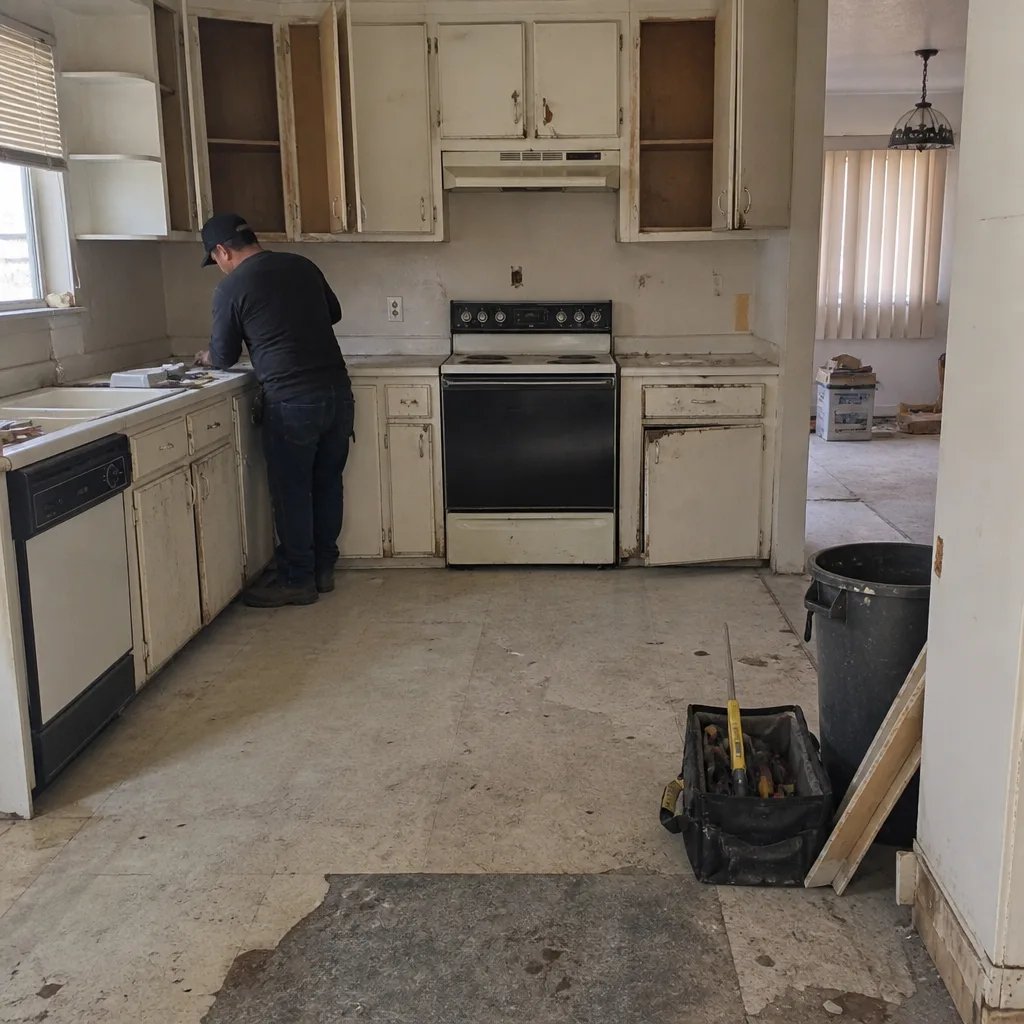 Before
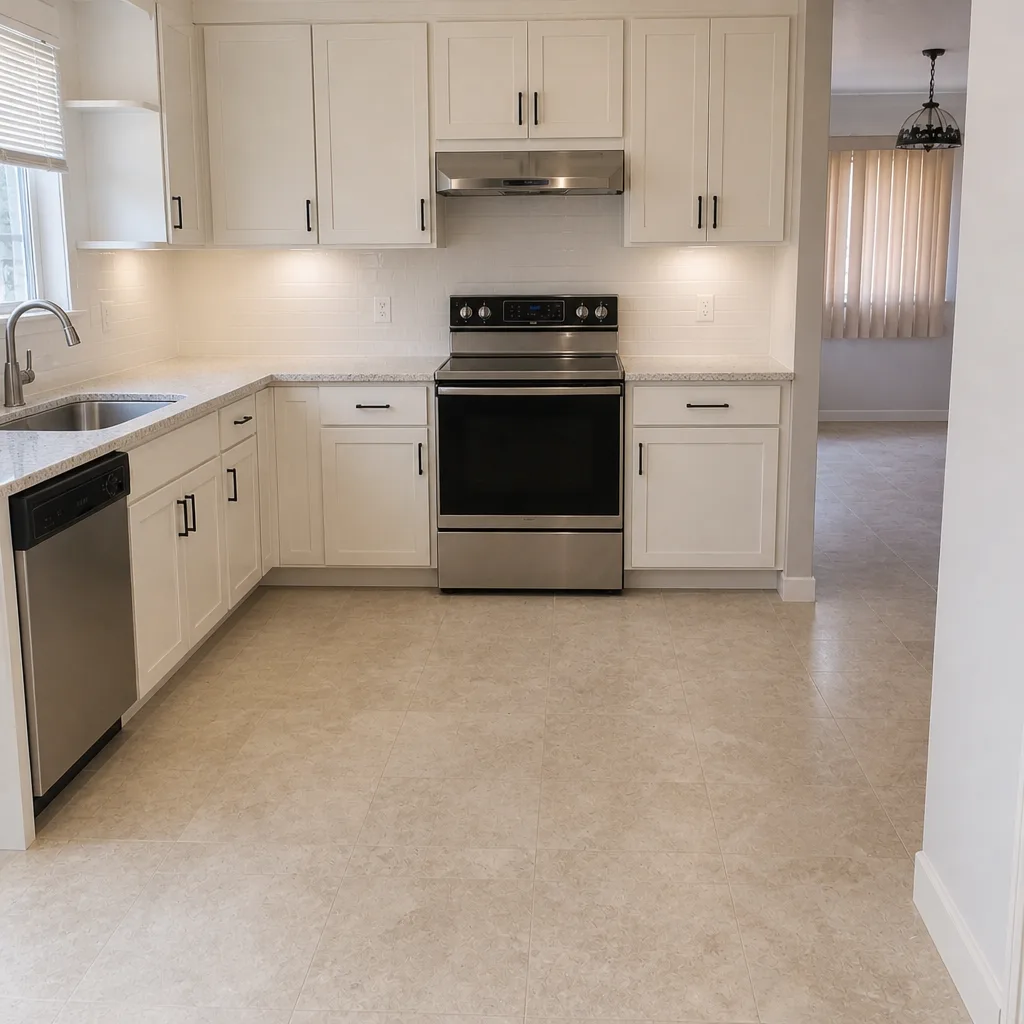 After
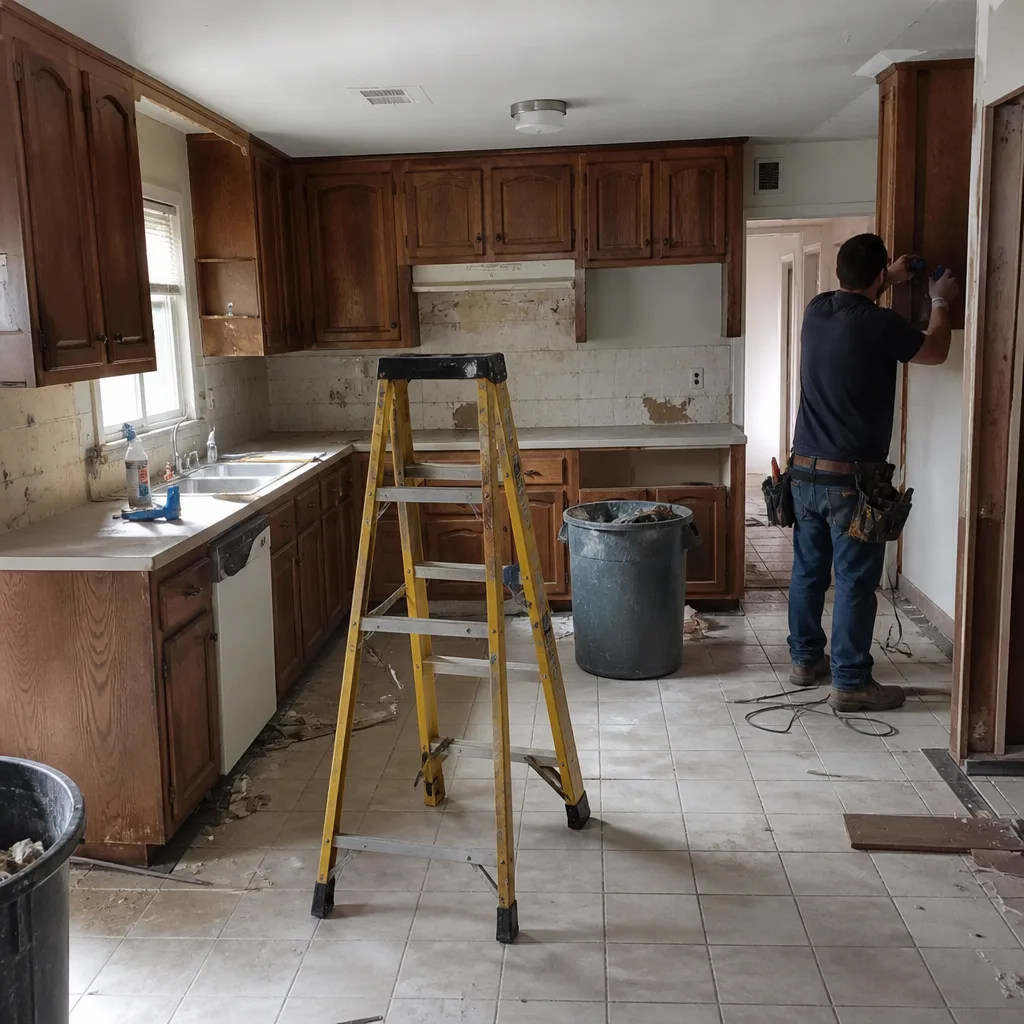 Before
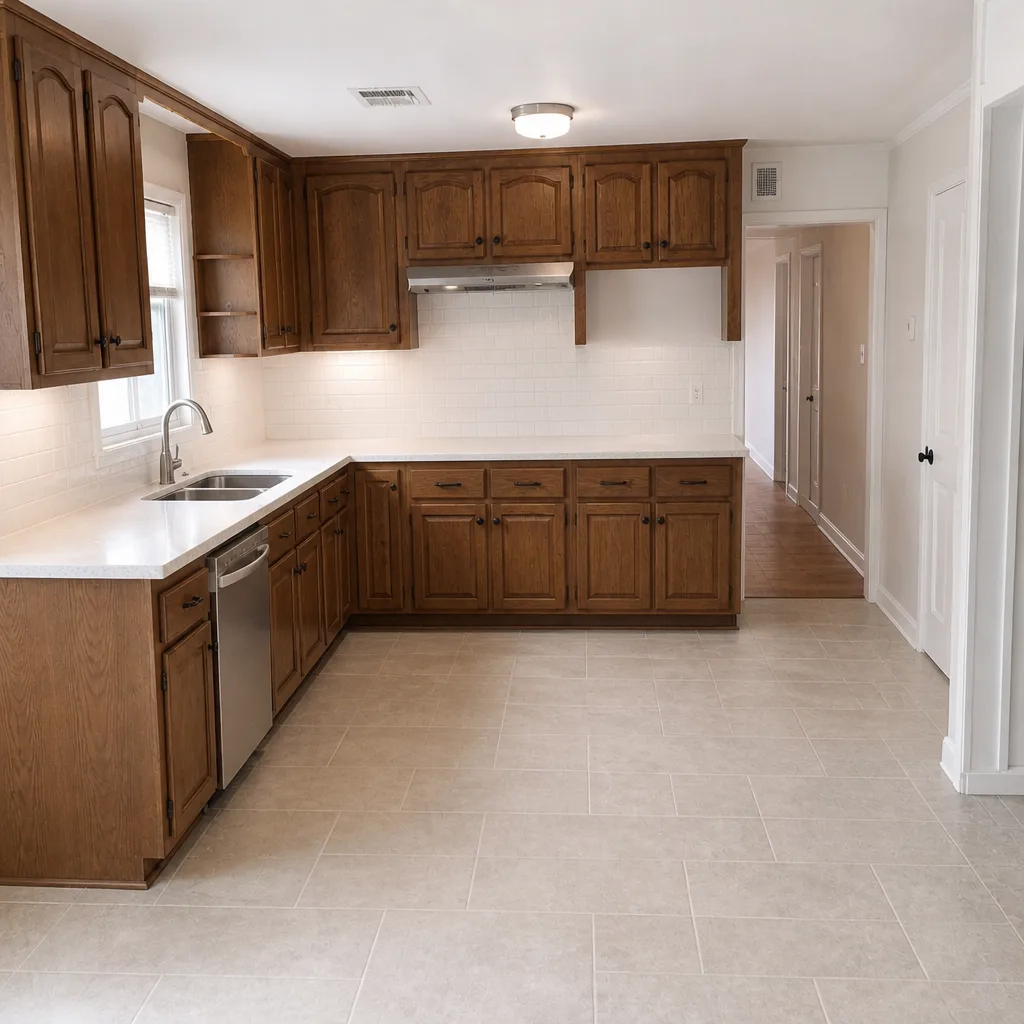 After
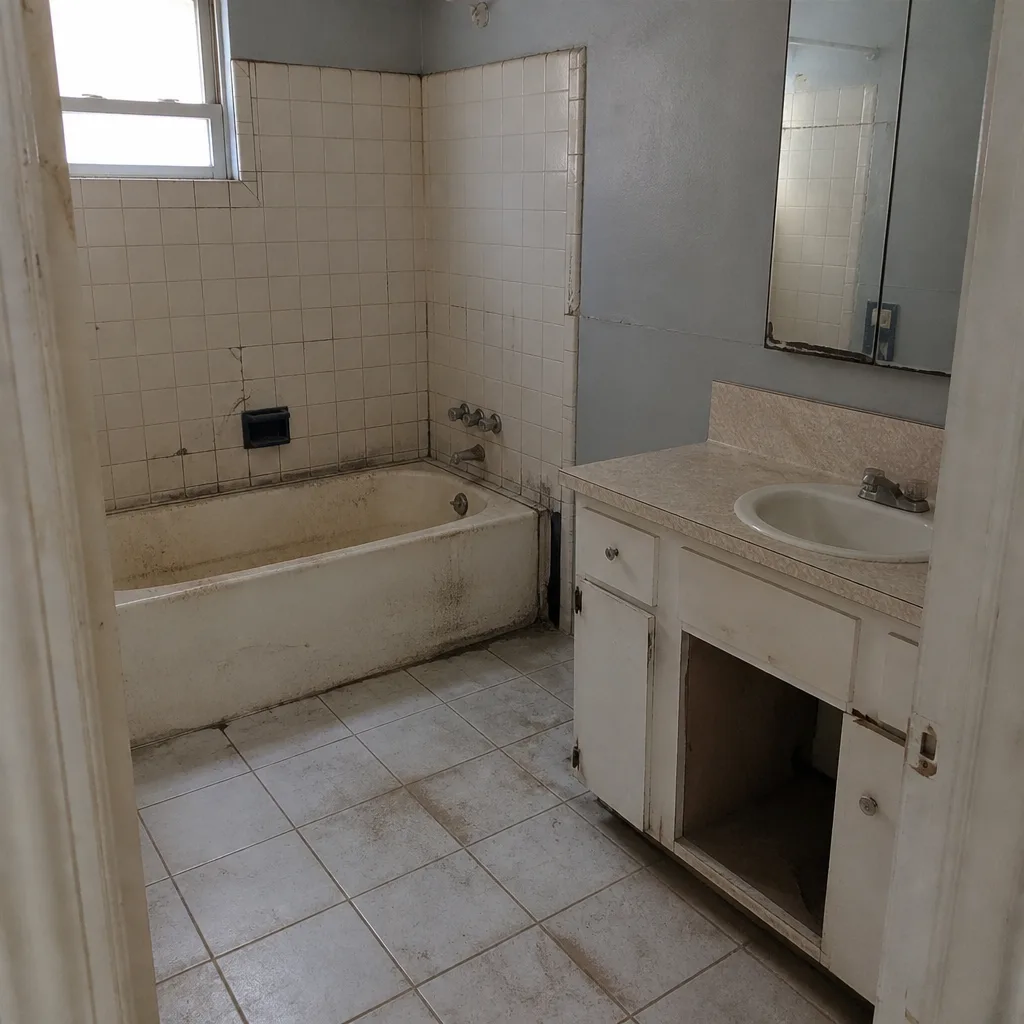 Before
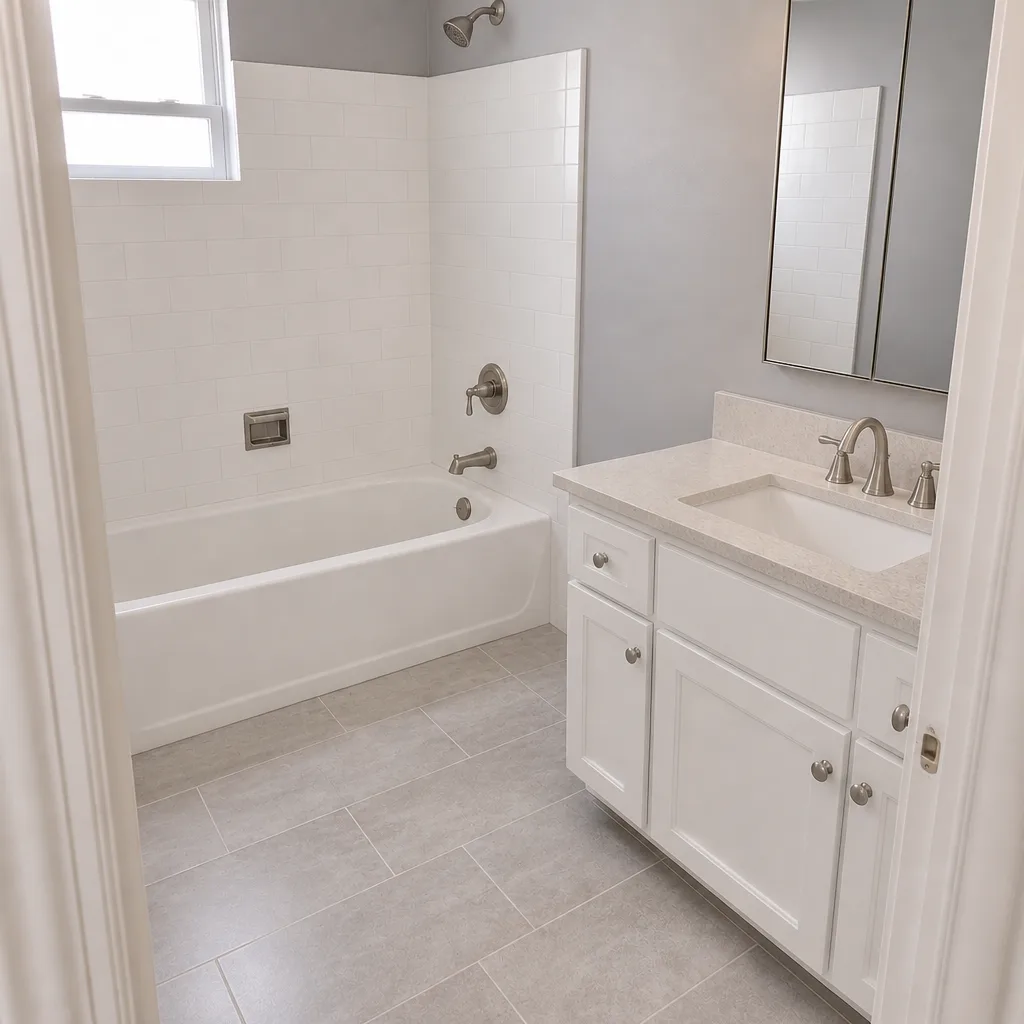 After
When to Call a Professional
Some scopes genuinely call for a pro, and no amount of YouTube changes that. Anything that touches a building’s structure, the electrical panel, gas lines, or the roof’s penetration layer is a licensed professional’s job. Spring Valley’s summer heat makes roof work a genuine safety risk above a certain height, and an amateur electrical panel swap is a fire hazard. Even a fence installation, which looks DIY-friendly, gets complicated quickly when the posts need to go below frost depth or the HOA requires a specific Bufftech or Jerith style to match the neighborhood. If permits are required, a professional pulls them. If the project involves a driveway or hardscape that will drain toward the foundation, the base compaction matters more than the surface material.
Groundwork Construction Co. of Spring Valley offers free estimates in Spring Valley – call (888) 329-9414. Our technicians have up to 12 years of experience, and every project comes with a written multi-year workmanship guarantee. If the scope is outside what we handle, we’ll tell you and point you toward the right specialty.
Frequently Asked Questions

Use Clark County’s public permit and inspection portal to search by the contractor’s license number or business name, then review the pass/fail results and open-permit count for the last two to three years. A pattern of first-attempt passes and closed permits signals a competent crew. Open permits from years ago signal the opposite.
A fair payment schedule ties each payment to a milestone, with 10-15% held back until substantial completion and final inspection pass. Deposits should be small and cover materials and permit pulls, not fund the contractor’s operating expenses. Any contractor demanding half the contract up front is signaling cash-flow trouble; ask why in writing. Call (888) 329-9414 for a written line-item quote with a clear payment schedule.
It isn’t illegal, but it’s a red flag on any substantial job. A legitimate contractor with the correct license classification pulls the permit in their own name. When the homeowner pulls it, the contractor’s inspection record shows up clean whether they did a good job or not, which defeats the purpose of the public record. If a contractor asks you to pull the permit, ask why. Call us for a free estimate if you want to compare notes on a scope.
A mid-range kitchen remodel in Spring Valley typically runs from about $55,000 to $115,000 depending on square footage, cabinet brand tier, and whether plumbing and electrical move. High-end scopes with custom cabinetry and upgraded appliances run above that range. Ask for a written line-item bid with material brand named for each line, and never decide on the total without pricing the allowances separately.
A handyman in Nevada can perform small maintenance tasks below a defined dollar threshold but cannot pull permits or perform work covered by a contractor’s license classification. Structural, electrical, plumbing, roofing, and additions all require a licensed contractor. The dollar threshold matters: a job priced under it isn’t the same job as a full remodel, and a contractor who offers to do a $60,000 kitchen on a handyman’s scope is operating outside the law.
Count the years, read the exclusions, and ask what happens if the failure falls into a gray area. A multi-year workmanship guarantee should cover the contractor’s labor on the repairs, not just the materials the manufacturer’s warranty covers. If the warranty excludes water intrusion, ask whether that exclusion applies to a full roof leak or only to leaks above a certain size. If the answer is unclear, ask for it in writing before signing.
A kitchen remodel typically takes 6-10 weeks once permits are issued, with Clark County permit review adding 2-4 weeks before work begins. Additions and ADUs run 4-8 months depending on size and inspection schedule. Ask the contractor for a written schedule keyed to permit dates rather than a start date, and ask what happens to the schedule if the permit review runs long. Call (888) 329-9414 if you want a free estimate and an honest schedule.
The Bottom Line
Hiring a contractor in Spring Valley comes down to reading the record instead of trusting the pitch. Verify the license, then look past it into the Clark County inspection history. Name the subs and ask how they get paid. Read the payment schedule and the dispute clause before you sign, and compare total cost of delivery instead of headline price. The lowest bid is rarely the cheapest job, and the cleanest record is rarely the cheapest bid. Spring Valley’s climate, code, and market conditions make the small distinctions matter more than the big claims. Take the time to check both.
Groundwork Construction Co. of Spring Valley brings a curated set of brand partners across every trade, from KraftMaid and Kohler to GAF, CertainTeed, Andersen, Pella, Belgard, and James Hardie, behind work covered by a 730-Day Done Right Promise. Calls are answered by a live person, 24/7. Background-checked, uniformed technicians arrive on every project, and every quote is upfront pricing with no surprises. Standing offers include $1,000 off projects over $10,000, a free project estimate and design consult, and 0% financing for 18 months.
If you’re vetting contractors for an upcoming project, start with a free estimate. Call (888) 329-9414 to schedule yours, and bring the other bids to the conversation. We’ll compare scope line by line and tell you honestly whether the total will hold.
Written by the team at Groundwork Construction Co. of Spring Valley.