Last updated November 17, 2026





Free written scope consultation - allowances, timeline, and change-order rules on paper before a single trade is scheduled
Driveway & Pavers Warning Signs Every Homeowner Should Know
That thin white powder coating your pavers isn’t just ugly. It’s your driveway telling you there’s a moisture problem below the surface that’s going to cost real money if you ignore it for another season. Most paver driveways that fail badly didn’t collapse overnight. They gave their owners visible warnings six, twelve, sometimes eighteen months before the bill arrived, and almost nobody knew what they were looking at. Spring Valley’s swing between baking summer sun and cool desert nights pushes that clock faster than most people expect. This guide turns those silent signals into a plain-language checklist you can run in about fifteen minutes, so you spend on the fixes that matter and skip the ones that don’t.
Quick Answer
The most important driveway paver warning signs are efflorescence (the white powdery bloom), joint sand washing out, weeds sprouting through the joints, rocking or loose pavers, sinking or heaving sections, and changing drainage patterns where water pools instead of running off. Some of these signal surface wear you can maintain yourself; others point to base failure underneath, which needs a professional look before the whole driveway goes with it. In Spring Valley, our experience says the split matters because our soil and heat tend to push base failures hard and fast.
Styles & brands we work with
- Kitchen remodeling
- Bathroom remodeling
- Home additions & ADU
- Roofing
- Windows & doors
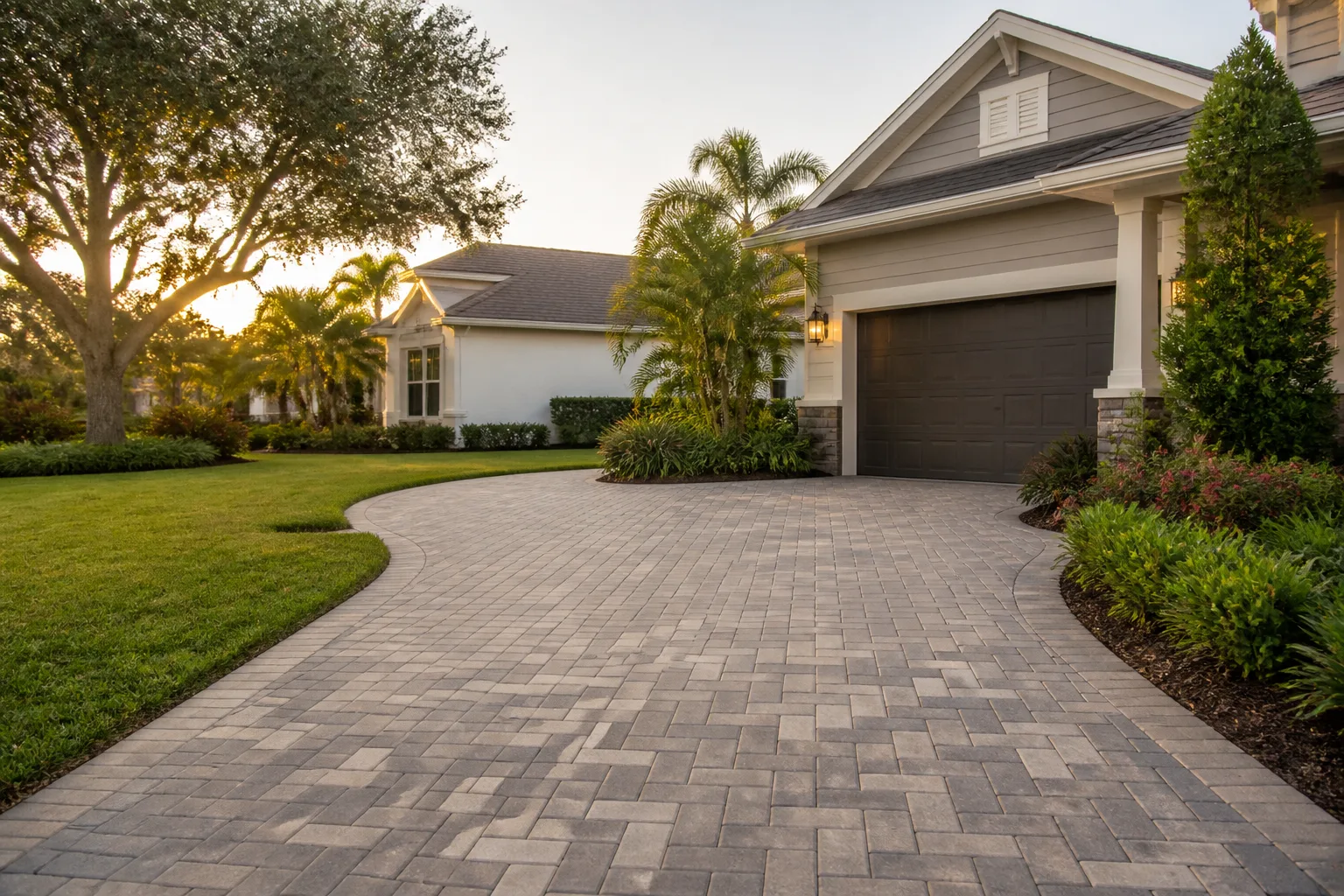
- Driveway & pavers
- Fence
Table of Contents
- The Five Signs of Base Failure vs. the Three Signs of Surface Wear
- Efflorescence: What the White Powder Actually Means
- Edge Creep and Why Tight Borders Fail First
- Weeds Through the Joints: Polymeric Sand Breakdown and Drainage Slope
- The Rocking Paver Test: Catching Isolated Failures Early
- Sinking, Heaving, and the Spring Valley Soil Story
- Warranty Issues vs. Homeowner Maintenance: Knowing the Difference
- Your 15-Minute Walkthrough Checklist
The Five Signs of Base Failure vs. the Three Signs of Surface Wear
Every paver problem you can see belongs to one of two families, and the difference decides whether you’re looking at an afternoon with a broom and a bag of sand or a call to a contractor. Surface wear lives in the sand, the sealer, and the top face of the stone. Base failure lives underneath, where the compacted gravel and the subgrade that holds it have quit doing their job.
The five signs of base failure:
- Rocking or loose pavers. A paver you can tip with hand pressure means the sand bed beneath it has washed out or the base gave way locally.
- Sinking or dipping sections. A section of the driveway sitting lower than its neighbors, especially in the two wheel paths where cars track, is compacted soil losing density or fine material migrating out.
- Heaving or ridges. The reverse of sinking, and often a sign of frost-like movement, moisture swelling, or roots pushing from below.
- Widening joints. Joints that used to be a consistent eighth of an inch opening out to double that means pavers are spreading apart and the interlock is breaking.
- Water pooling against the house or at low spots. Drainage that has changed direction without anything being built means the surface plane is moving.
The three signs of surface wear:
- Efflorescence. White mineral bloom on the face, which we’ll cover in detail below.
- Faded sealer and color wash. The protective coat wearing through, letting the desert sun bleach the stone at the top.
- Joint sand settling an inch or two. The bedding layer losing its top charge over a season of rain and wind.
In our experience around Spring Valley, the split matters because a single rocking paver near a garage apron is often the only warning before a five-foot section starts moving. Catch it in the surface family and it stays cheap. Miss it and it graduates.
Efflorescence: What the White Powder Actually Means
Efflorescence is the white, chalky bloom that shows up on paver faces, usually in patches after rain or during the shoulder seasons, and it’s the most misunderstood sign on the list. It’s salt and mineral carried up through the paver by water, deposited on the surface when that water evaporates. The bloom itself is harmless to the stone. What it tells you is that water is moving through the material and out the top, which means somewhere below there’s more moisture than the base wants.
Here’s where Spring Valley homeowners get tripped up. In our climate, efflorescence often appears in the months after winter rain when the ground is saturated and slow to dry. A single bloom that you can sweep off, never returns, and leaves no crust behind is usually a temporary wetting event, not a structural warning. A bloom that keeps returning to the same three or four pavers, soaks up from the bottom, and turns into a hard crust at the joint lines is a different animal.
How to tell the two apart in a minute
- Run a dry broom across the bloom. If it sweeps clean and the pavers look uniform, you’ve seen a temporary surface issue.
- If it returns within a few weeks of the first sweep, and especially after dry weather, the moisture is coming from below and not from the sky.
- If you see soft, chipped faces where the bloom is thickest, water is attacking the paver body itself, not just coating it.
- Check the joint sand near the bloom. If it’s washed out or mixing with the white crust, that same water path is eroding the base.
Efflorescence that pairs with any of the five base-failure signs is your early-warning combination. On its own, in Spring Valley, it’s usually a moisture story worth watching and not yet a job.
Edge Creep and Why Tight Borders Fail First
Edge creep is the slow outward drift of the pavers at the perimeter of the driveway, and it’s the warning sign most homeowners miss because it hides at ground level. The pavers at the border, and the edge restraint that holds them, are the thinnest structural line on the whole surface. Once the restraint loses grip, the pavers start stepping outward a quarter inch at a time, and every vehicle that clips the edge finishes the job.
Driveways fail here first for two reasons. First, the perimeter is where cars overhang. Backing out and parking tight against a border means the tire’s sidewall and the bumper keep loading the outer row, and the paver beneath it starts rocking. Second, a border paver is only supported on three sides instead of four. Around Spring Valley, where a lot of driveways run tight to a side yard or fence line, that outer row is often the only thing keeping the section interlocked.
How to spot edge creep
- Walk the perimeter and look down the edge of the driveway from knee height. A straight edge will show you the drift in seconds.
- Press the border pavers with your hand flat. Any lateral movement, or any paver you can slide, means the restraint is failing.
- Look at the gap between the outer paver and the adjacent grass, fence line, or concrete. A widening gap means the pavement has moved.
- Inspect the edge restraint itself, if it’s exposed. A restraint that’s cracked, lifted, or pulled away from the border pavers means the whole border row is free to walk.
Edge creep accelerates. Once the outer row walks, the next row in starts to loosen, and the section follows. If you catch it in the first season, reseating and re-anchoring the border is a modest repair. If you ignore it through two Spring Valley summers, the repair usually climbs to the next two rows. Our Driveway & Pavers in Spring Valley work starts with the edge restraint for exactly this reason.
Weeds Through the Joints: Polymeric Sand Breakdown and Drainage Slope
Weed growth through the joints is the visible outcome of polymeric sand that has lost its seal, and it’s your earliest readable signal that the drainage system on top of the driveway is changing. Polymeric sand is what fills the gap between pavers, locks them together, and lets water run across the surface instead of into the joint. When it breaks down, two things happen: the joint opens, and water starts flowing where the design didn’t intend.
Weeds come through that open joint because they’re telling you the joint has become a channel. The seed is only the messenger. The message is that water is now running down a groove rather than across the pavers into the drainage design, and that groove is going to get wider every time it rains. In Spring Valley, a long dry season followed by monsoon rain is exactly the weather that turns a failing joint into a wash-out.
What to check, in order
- Joint depth. Probe a joint with a screwdriver. If it’s deeper than about half an inch, the polymeric sand has washed or worn out.
- Weed concentration. A weed here or there is wind-blown seed. Weeds along an entire joint line, a whole row, or clustered at the low corner of the driveway is a drainage signal.
- Ponding. After a rain, walk the driveway. Any spot that holds water for more than an hour is a spot the surface slope has changed, and the weeds around it are reading the same data.
- Flow toward the house. The one that matters most. If water is heading toward the garage apron or foundation wall, the whole conversation has moved from maintenance to structure.
Polymeric sand that’s simply reached the end of its life is a straightforward maintenance job: clean the joints, re-sand, re-activate. Polymeric sand that’s broken down at one edge of a section whose slope has also changed is not. That second case is a base-failure signal wearing a surface-wear costume, and it’s the one that costs the most to ignore.
The Rocking Paver Test: Catching Isolated Failures Early
The rocking paver test is the single most useful fifteen minutes you can spend on your driveway, and it doesn’t require any tools. A rocking paver is a paver whose sand bed or base support has failed locally while the pavers around it are still stable. Caught early, a rocking paver is a one-paver fix. Caught late, it’s the seed of a whole section.
How to run the test
- Pick a dry day. Wet pavers don’t rock the same way in the joint. Do this after a few hours of sun.
- Walk the driveway from the garage door out, in one path. Back and forth, heel to toe, across the full width. Stop and shift your weight on any paver that moves under your foot.
- Do a second pass with both feet together on a rectangular grid. On the wheel paths, the garage apron, and the street flare. Those three zones see the most vehicle load and fail first.
- Push down with your palm on any suspicious paver. If the paver tips like a seesaw, you’ve found an isolated failure. Note the count and the layout.
- Look under the paver’s neighbor joint. A paver that rocks and has a visible gap around its edges is losing its bedding sand. A paver that rocks and has tight neighbors is more likely a base issue beneath.
Why this matters to Spring Valley homeowners: the sun-heated pavers on a full-sun driveway here will surface a base problem faster than in almost any climate. A paver that’s rocking on a driveway facing east or west gets worked by the daily expansion cycle, and what started as an isolated paver splits the neighbors within a season. If you find one, find ten and call it a section. If you find ten, that section is a repair rather than a someday. Catching it here keeps you out of a full-driveway rebuild.
Sinking, Heaving, and the Spring Valley Soil Story
Sinking and heaving are the two movements that read to a homeowner as “the driveway looks off,” and in Spring Valley they usually have a soil story behind them. This valley is built on a mix of alluvial soils and caliche-hardened layers, and both behave differently than the sandy fill that a lot of paver base is set with. When moisture moves through those layers, they swell and shrink, and the driveway base sitting on top of them goes along for the ride.
Sinking is the slow one. A section of pavers that’s dropped a half inch compared to its neighbors, or a low spot in the wheel path that grows by a quarter inch every year, means the compacted base or the subgrade below it has lost density. Common causes in Spring Valley:
- Base gravel that wasn’t compacted in lifts during the original install.
- Water finding a path under the pavement, from roof runoff, an irrigation leak, or a neighbor’s grading.
- Fine material washing out of the base over years of wet-dry cycling.
- A subgrade of caliche that was broken up but not properly removed or replaced at the original install.
Heaving is the fast one, and it’s the warning that deserves a call. Pavers that push up in a ridge, or a section that rises after rain and settles back a few days later, are showing you active moisture movement under the base. In Spring Valley, the big rains we get in our storms will push a heaving section up and then leave it sitting proud of its neighbors by the time it dries. That’s a sign the base is no longer holding the surface, and it’s the point at which more rain, or another summer, turns the ridge into a break.
If you own a home addition or detached structure on the property with a paver apron or walkway tied into the same base, the same soil story applies at both surfaces. Our Home Additions & ADU in Spring Valley projects routinely address the driveway base at the same time, because it’s the same subgrade doing the work.
Warranty Issues vs. Homeowner Maintenance: Knowing the Difference
When you see a warning sign, the first question should be who’s responsible, and the answer lives in one distinction: did the base or the original install fail, or has the surface simply reached the end of its maintenance life? A contractor’s warranty on a paver driveway should cover the structural family, the base, the edge restraint, and the interlock. It should not cover the joint sand you were always going to re-sand, or the sealer that wears off in the sun.
Signs that read to us as a warranty issue (assuming the driveway was installed by a professional with a real warranty):
- Continuous sinking or dipping in a pattern that follows a section, not a seasonal wet spot.
- Edge creep at the border where the restraint has pulled away or broken.
- Heaving that returns after rain, especially in the same area, season after season.
- Polymeric sand washing out of a joint line in a way that tracks back to water flowing toward the house.
- A rocking paver next to a joint with tight neighbors, meaning the base beneath, not the surface, is the problem.
Signs that read as homeowner maintenance:
- Efflorescence that sweeps clean and stays away in dry weather.
- Faded sealer, color wash, or the top face dulling with no movement.
- Joint sand settling an inch deep in a spot, with no sign of water flowing through the section.
- Weeds that are wind-seeded in a single joint and hold in the surface, not clustered along a line.
Why this matters before you call: the difference between a warranty claim and a maintenance job isn’t just dollars, it’s what you ask for. If you walk out with a rocking paver and a clear sense that the base under it has failed, you make a warranty call. If you’ve got a sealer that’s faded and a few weeds, that’s a maintenance conversation. At Groundwork Construction Co. of Spring Valley, we’ve built our entire position around this distinction, because it’s where most homeowner uncertainty starts. Our Groundwork Construction Co. of Spring Valley home page lays out the 730-Day Done Right Promise in plain terms, and a warranty that long only means something if we’re honest about which problems are ours and which aren’t.
One more thing on materials. The pavers on the surface of a well-built driveway have a job, and the curb you spend on a quality paver matters. We keep relationships with manufacturers across the trades because choosing the right paver stock is part of the warranty story. It’s the same discipline we bring when we specify windows (we’ll talk about which brands fall in that category in the FAQ).
Your 15-Minute Walkthrough Checklist
This is the whole guide boiled down to a walk you can run this weekend. Do it once a season, and always after the first big rain of the year, because Spring Valley’s storms surface the moisture story faster than any other time.
- Broom pass (2 min). Sweep the white bloom off any pavers with a dry broom. Note where it is and what it does.
- Rocking test (4 min). Walk the driveway heel to toe, back and forth. Note every paver that gives under your weight.
- Edge walk (3 min). Walk the perimeter and press the border pavers. Check for any lateral movement and look for gaps at the grass or fence line.
- Joint inspection (3 min). Probe three or four joints with a screwdriver. Note the depth, and look for weed lines or water grooves.
- Drainage look (2 min). Walk the full surface and identify every spot water pools after rain. Note any direction that water flows toward the house.
- Fresh-rain follow-up (1 min, after the next rain). Look at the same spots and see what changed. Sinking, heaving, or a moving flow line tells you more in one rain than a month of dry weather.
Fifteen minutes, a broom, and a screwdriver. That’s the whole toolkit. What you’ll get is a short list of observations, and that list is what lets a contractor quote you on the actual problem instead of a worst-case guess.
Common Mistakes to Avoid
- Sealing over a base problem. A fresh coat of sealer over a section that’s already sinking in Spring Valley’s heat hides the warning without fixing the cause, and the sinking will re-surface within two seasons. Seal the driveway after the base is right.
- Re-sanding a joint line that’s washing out. A joint that the sand washes out of every year isn’t a sand problem; it’s a slope problem. Re-sanding a joint that water is finding is a recurring cost you don’t need to keep paying.
- Ignoring edge creep because the border “still looks straight.” The edge restraint is the easiest part of the driveway to check and the cheapest to fix early. Waiting on edge creep is what turns a border repair into a row-three rebuild.
- Treating efflorescence as a cleaning problem. A white bloom that returns to the same pavers after rain is moisture information, not a stain. Clean it, watch the pattern, and let the pattern guide the next step.
- Letting one rocking paver stay rocking. In Spring Valley’s full-sun heat, a single loose paver works its neighbors within one season. The minute you find one, you find its neighbors.
- Cutting the drainage flat to stop weeds. A homeowner who changes grade or slope to chase weeds often sends runoff toward the garage or the house. The fix for weeds is joint sand and slope, not a new grade.
- Assuming the warranty covers maintenance. Nothing on a paver driveway lasts forever, and the joint sand you re-sand and the sealer that fades are not the same thing as a base failure. Knowing the difference before you call saves you a wasted service visit and a wasted call.
See the difference
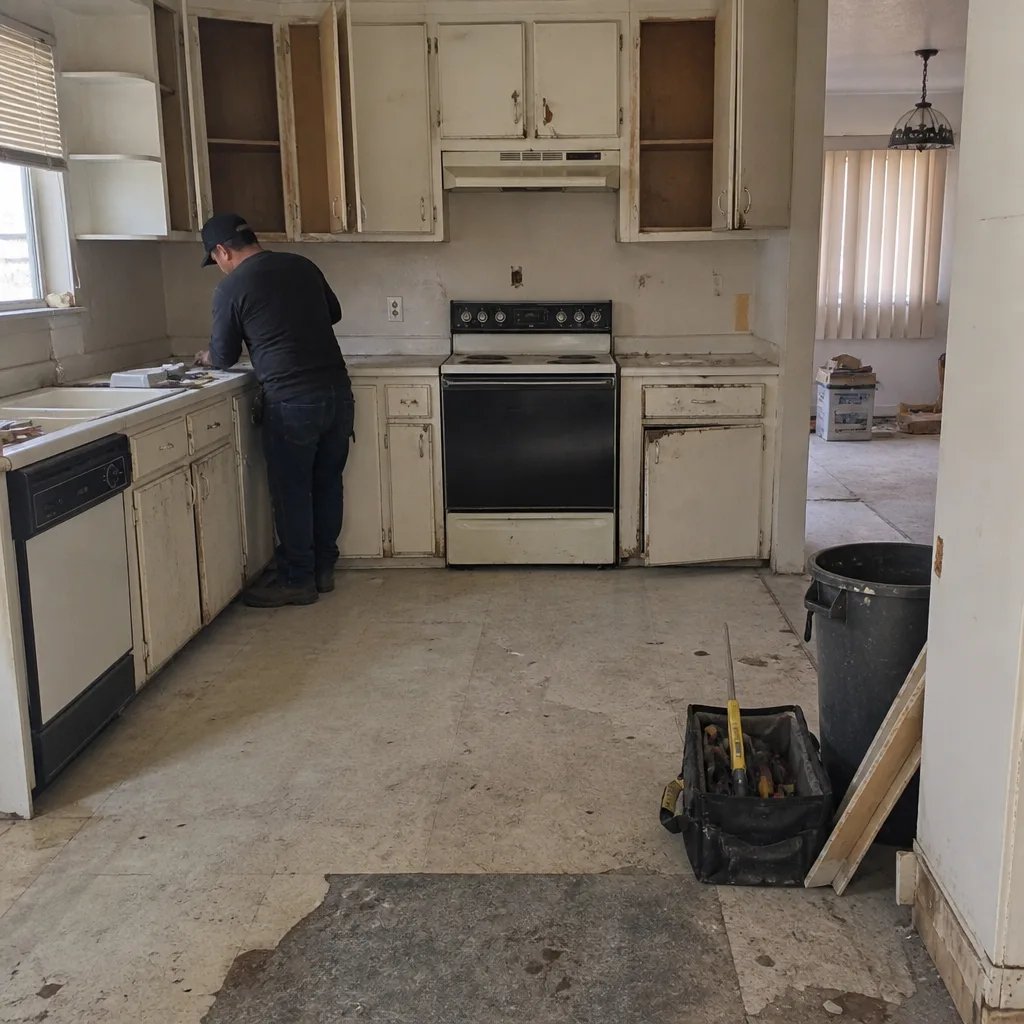 Before
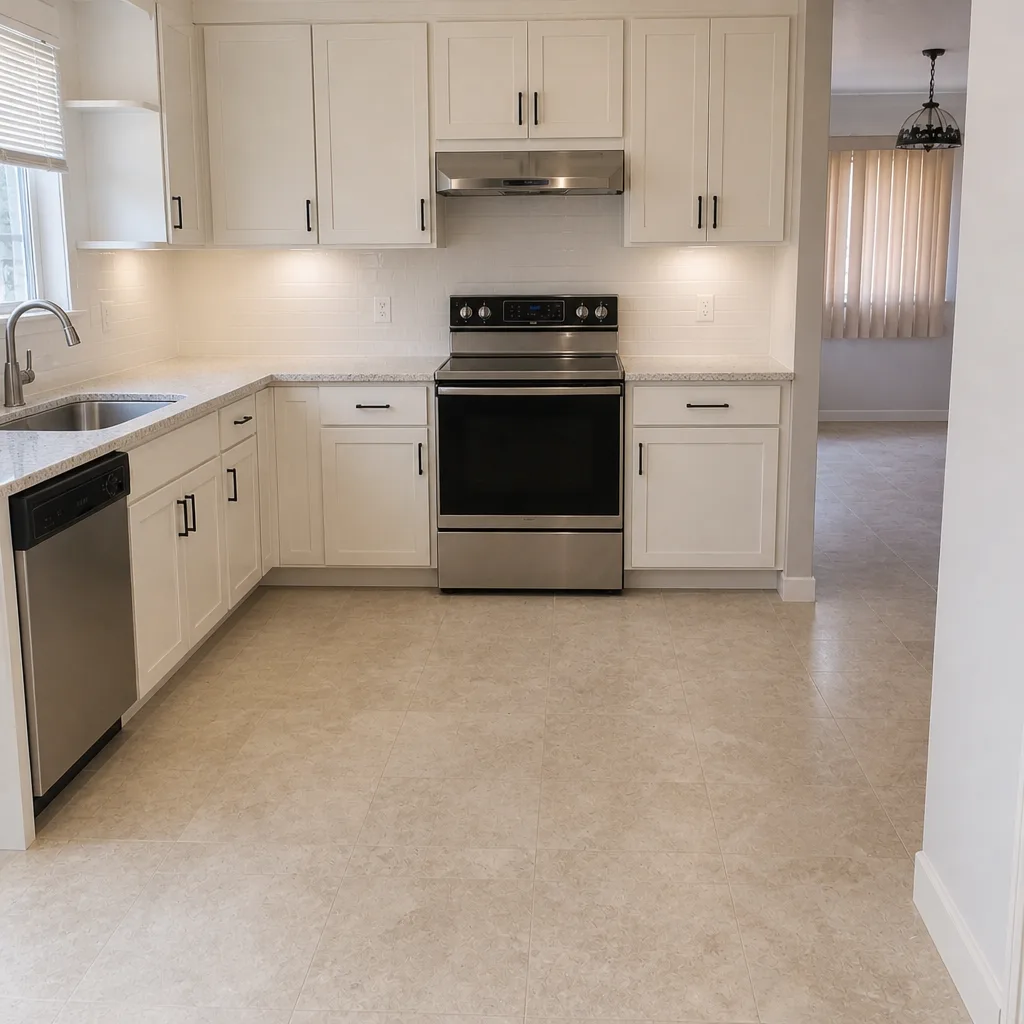 After
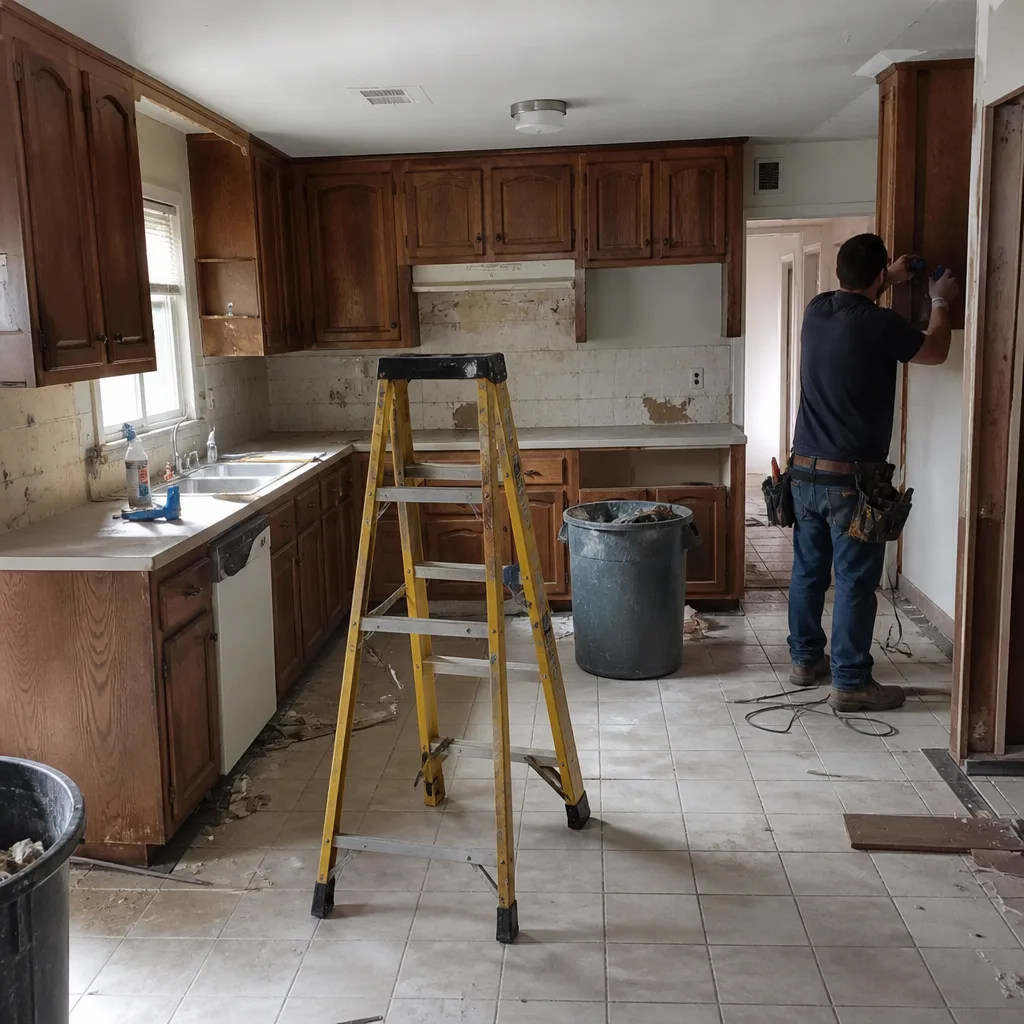 Before
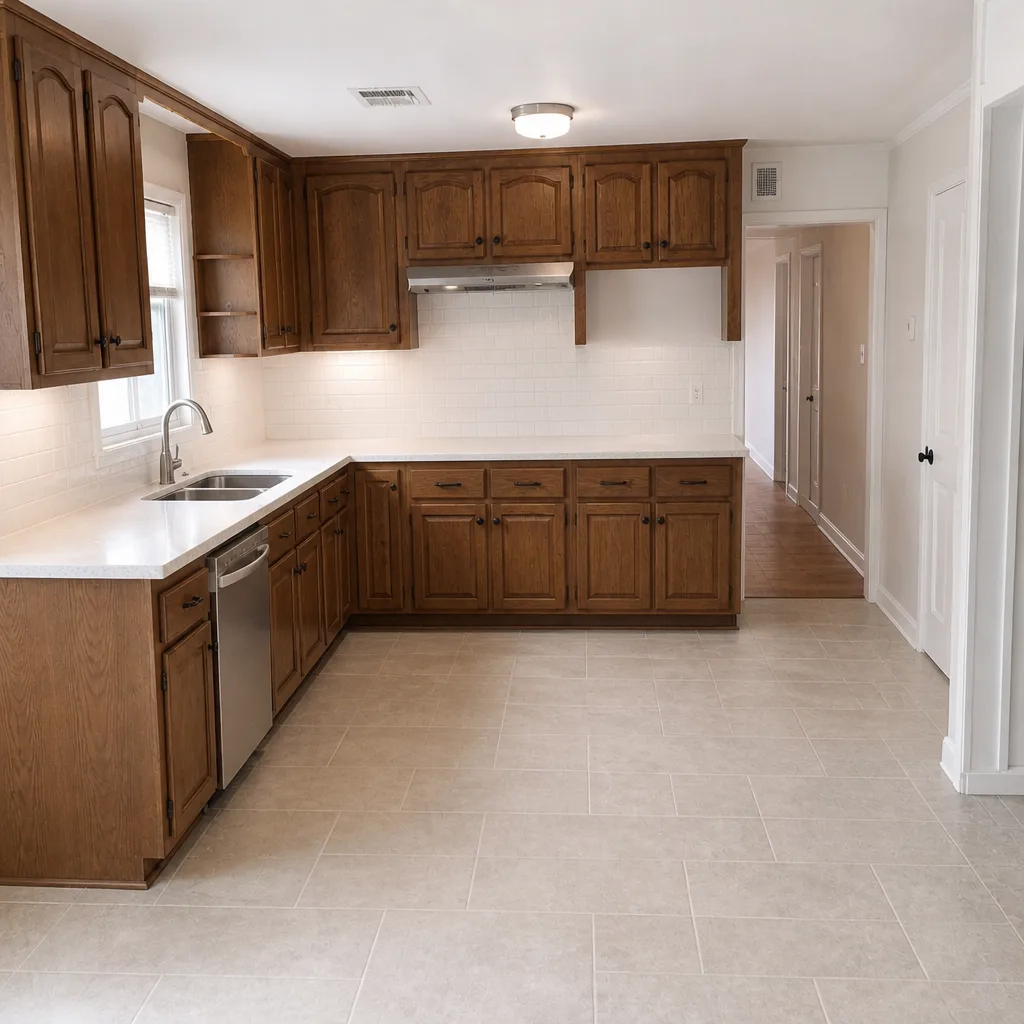 After
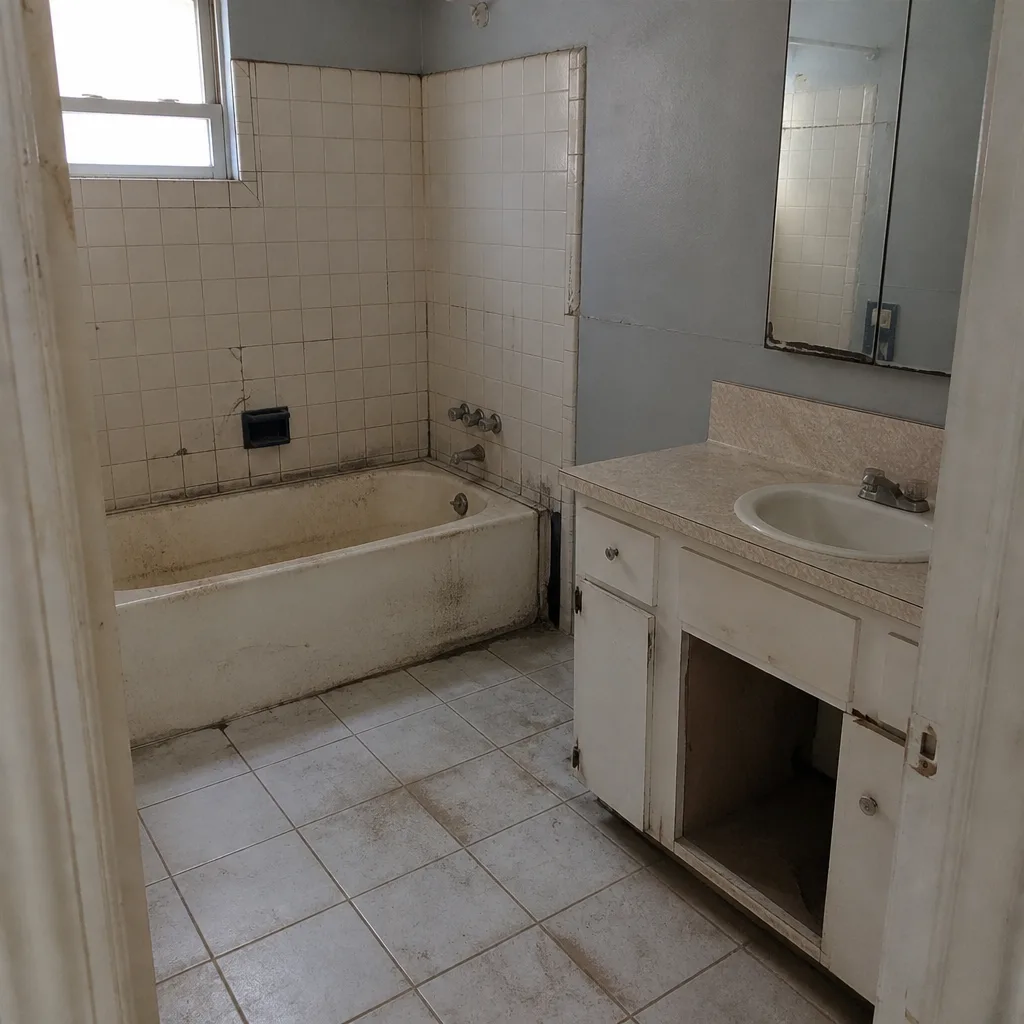 Before
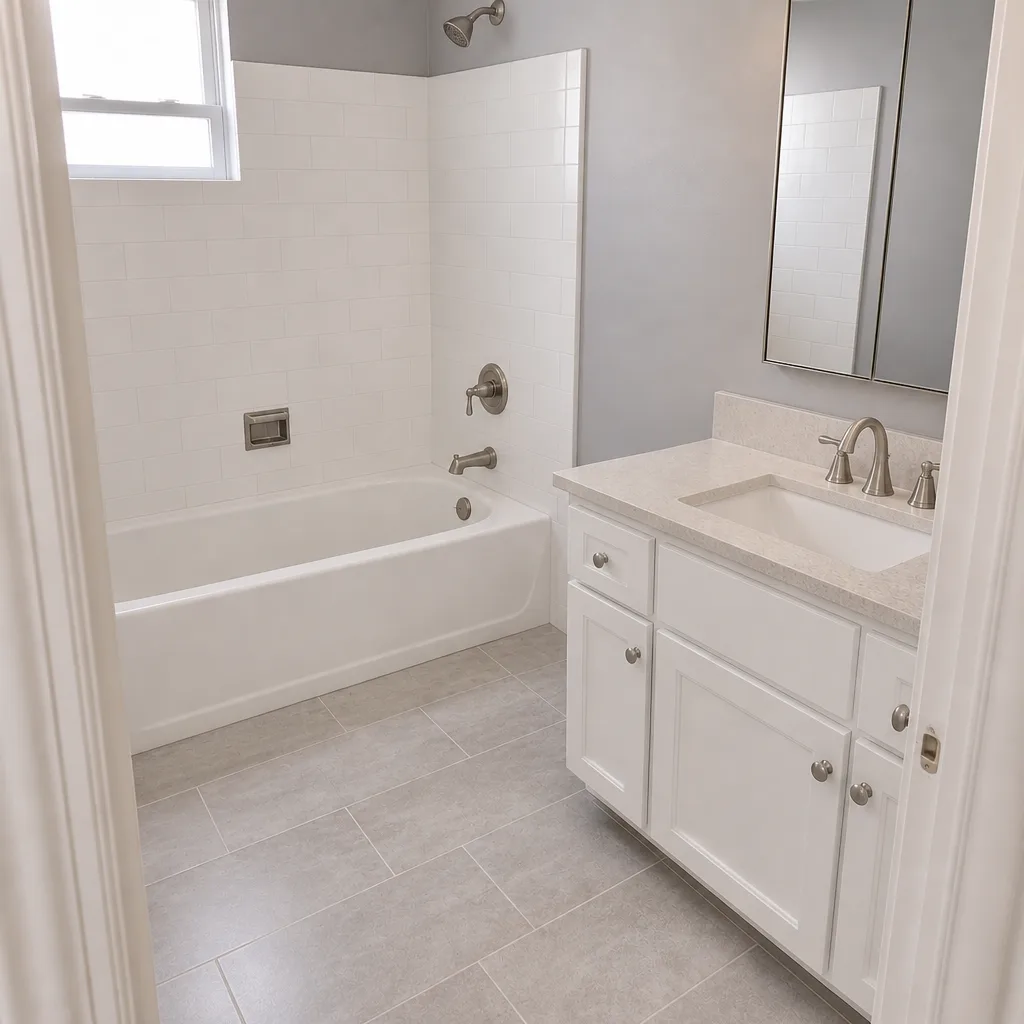 After
When to Call a Professional
Call when you find a rocking paver that has neighbors with tight joints, when a section is sinking or heaving in a pattern that follows the rain, when edge creep has moved past a quarter inch, or when water is flowing toward the house rather than away. Those are the signs that the base needs a real look. Call sooner if you bought the home recently and don’t know who installed the driveway, because the warranty story starts with the installation record. A phone call on those signs costs nothing and the fix is smaller than it will be next year. Groundwork Construction Co. of Spring Valley offers free estimates in Spring Valley, and a live person answers every call at (888) 329-9414, any hour, any day. Our technicians have up to 12 years of experience, and they’ll walk the driveway with you and tell you plainly which of the signs you’re seeing is which.
Frequently Asked Questions
The first base-failure signs are rocking pavers and widening joints at the borders, followed by a section that’s sinking or heaving in the same place rain after rain. Efflorescence that returns to the same pavers, weeds that cluster along a joint line, and water pooling where it didn’t before all pair with base failure when they show up together. Call (888) 329-9414 for a free estimate if you’re seeing more than one.
No. A single bloom that brushes off, leaves no crust, and stays away in dry weather is a temporary wetting event, not a structural problem. It becomes a warning when it returns to the same pavers after rain, when it forms a hard crust at the joint lines, or when it pairs with sinking or rocking. That combination is a moisture problem below the surface. Call (888) 329-9414 to have someone look at it before the next season.
Base and interlock failures (sinking, heaving, edge creep, rocking with tight neighbors) are warranty territory; worn sealer, settling joint sand, and removable efflorescence are maintenance. The clearest test is whether the problem moves or just wears. If you’re unsure which you’re looking at, that’s the right time to call (888) 329-9414 and get a free estimate on the actual cause.
Yes. The swing between our summer heat and our cool desert nights works the pavers and the base through daily expansion and contraction, and our rainy seasons push water through any joint that’s lost its polymeric sand. Base problems that would develop slowly in a mild climate surface faster here. That’s exactly why a seasonal walkthrough matters in Spring Valley. Call (888) 329-9414 if the walkthrough turns up a pattern.
On a well-built paver driveway, polymeric sand typically holds for a few years before it needs re-sanding, and that interval shortens in Spring Valley because of the sun and the wet-dry cycling. A joint that holds for a year and then washes out is a slope problem, not a sand problem. Call (888) 329-9414 and we’ll tell you which one you’re looking at.
We work with PGT, CGI, and ES Windows among the manufacturers across our window and door work, and we spec them the same way we spec paver stock: the right product for the climate and the install. Our paver work at Groundwork Construction Co. of Spring Valley follows the same standard. If you’re planning a driveway alongside an exterior update, call (888) 329-9414 for a free project estimate and we’ll scope both.
The Bottom Line
Most driveway paver failures are visible six to eighteen months before they become expensive, and the guide above is what that early warning looks like. Surface wear (efflorescence, worn sealer, settled joint sand) is maintenance. Base failure (rocking, edge creep, sinking, heaving, changed drainage) is a call to a professional. The 15-minute walkthrough in this guide tells you which family you’re looking at, and that one distinction is what keeps a Spring Valley homeowner from paying for a rebuild when a repair would do. Do the walkthrough once a season. If you find a base-failure sign, call (888) 329-9414 for a free estimate. Groundwork Construction Co. of Spring Valley answers live, 24/7, and the 730-Day Done Right Promise means what we fix stays fixed. That’s the standard on every job, from Fence Installation in Spring Valley to the driveway itself. Upfront pricing, no surprises, and a free design consult before you spend.
Written by the team at Groundwork Construction Co. of Spring Valley.