Last updated November 17, 2026





Free written scope consultation - allowances, timeline, and change-order rules on paper before a single trade is scheduled
DIY vs Professional Bathroom Remodeling: What’s Safe to Do Yourself
Picture a bathroom that looks flawless on the surface: crisp grout lines, a glass shower door that glides, tile that matches the inspiration photo down to the shade. Now picture the same room two years later, when the floor feels spongy underfoot and a faint musty smell won’t leave no matter how often you clean. A YouTube-perfect tile job can still cause $8,000 in subfloor damage if the waterproofing membrane underneath was applied by someone who learned it from a 12-minute video. That gap between what you can see and what’s hiding behind the wall is the whole story of DIY bathroom work. In this guide, we’ll walk through which tasks are genuinely safe to take on yourself, which ones look easy but carry expensive downstream consequences, what requires a permit in Nevada, and how to protect a remodel from Spring Valley that you plan to finish and sell.
Quick Answer
Painting, demolition, accessory installation (mirrors, towel bars, vanities, lighting), and simple fixture swaps are safe DIY territory if you plan carefully. The tasks that quietly ruin bathrooms are the ones you can’t see afterward: waterproofing, mortar beds, shower valve rough-ins, and drain work. Those belong with a trained, permitted professional, because a small error stays hidden until it becomes structural. For anything behind a wall or under a floor in a Spring Valley bathroom, hire a licensed pro and get the permit.
Styles & brands we work with
- Kitchen remodeling
- Bathroom remodeling
- Home additions & ADU
- Roofing
- Windows & doors
- Driveway & pavers
- Fence
Table of Contents
- The Tasks That Look Easy and Cost the Most When They Fail
- What Requires a Permit in Nevada, and Why DIY Without One Hurts You at Resale
- What’s Genuinely Safe to DIY (and How to Scope It to Save Real Money)
- A Risk-Consequence Matrix for Rating Your Own Skill Honestly
- Mixing DIY and Pro Work Without Breaking the Warranty
- Spring Valley-Specific Conditions That Change the Math
- Step-by-Step: How to Plan a Hybrid Bathroom Remodel
- What Each Approach Actually Costs in Spring Valley
The Tasks That Look Easy and Cost the Most When They Fail
Here’s the uncomfortable truth about bathrooms: the work that determines whether the room survives the next twenty years is the work nobody sees when it’s finished. A tile setter who skips a few steps looks identical to one who does everything right, at least on the day the job wraps. The difference shows up at year three or year seven. We’ve torn out Spring Valley showers where the waterproofing was painted on like wall primer, and we’ve torn out others where it was installed correctly – the visual difference at demo is a beat-up subfloor versus a dry one.
The three quiet killers:
- Waterproofing membranes. Liquid-applied and sheet membranes are unforgiving of improper thickness, missed corners, or application over a damp or dusty surface. These failures don’t leak the day you install them; they wick moisture into framing for years.
- Mortar beds and slope. A shower pan has to slope to the drain at a specific angle, and the pre-slope under a traditional pan liner has to be separate from the finish bed. Skip that detail, and water pools in the pan liner instead of draining.
- Valve rough-ins and drain assemblies. Shower valves need the correct rough-in depth for the trim you’ll install. Get it wrong and the trim won’t seat, or worse, you’ll have a slow drip inside the wall. Drain assemblies have to mate to the subfloor and waterproofing in a specific sequence, and reversing that order means re-doing the pan.
None of these tasks require unusual strength or a rare tool. They require the operator to know exactly what “correct” looks like when it’s still ugly and exposed, and to have done it enough times to catch the corner that’s about to go wrong. That skill bar is much higher than any of these tasks appears. It’s the reason professional bathroom remodeling in Spring Valley is priced the way it is: you’re paying for the invisible layers, not the tile.
What Requires a Permit in Nevada, and Why DIY Without One Hurts You at Resale
Permits exist to protect the next person who lives in the house, and in Clark County they’re the pivot point for what’s realistic to DIY. In Spring Valley and the rest of unincorporated Clark County, plan on a building permit for anything that touches plumbing in the walls, electrical circuits, structural framing, or changes the layout of the bathroom. That includes moving a toilet, adding a shower valve, relocating a light switch, or adding a new circuit for a heated floor. Cosmetic work – paint, tile over existing substrate, replacing a vanity or a faucet, swapping a light fixture on an existing circuit – generally does not require one.
Why this matters at resale:
- Disclosure. Nevada sellers are required to disclose known unpermitted work. A buyer’s inspector will spot it, and the seller is now negotiating from a defensive position.
- Appraisal and lending. Unpermitted structural, plumbing, or electrical changes can cause an appraiser to flag the property. Some lenders will require the work be permitted retroactively or excluded from the value.
- Title and inspection traps. A finished basement or a remodeled bath with no permit trail can complicate a clean title and stall escrow at the wrong moment.
- Insurance. If a shower pan fails and the insurer asks for the permit record, the absence of one can affect coverage on the claim.
The practical rule: if the task requires opening a wall or changing a utility, talk to the county before you start. Pulling a permit yourself as an owner-builder is legal in Nevada for a primary residence, but it puts you on the hook for inspection failures – and inspectors fail DIY rough-ins at a rate that surprises most homeowners. And once the drywall is up, the failure mode is no longer visible.
What’s Genuinely Safe to DIY (and How to Scope It to Save Real Money)
Here’s the good news that most remodeling content doesn’t tell you: a meaningful slice of bathroom work really is safe to do yourself, and it can save a real chunk of the budget. The key is scoping it correctly, and the pattern is consistent. DIY makes sense when an error is visible fast and the cost to fix it is low. It doesn’t make sense when an error hides behind a wall for years.
Safe DIY territory in a Spring Valley bathroom:
- Demolition. Removing old tile, cabinets, and fixtures. Wear a proper respirator if the dust gets serious, and test for asbestos if the house was built before the mid-1980s.
- Painting. The whole room. Bath-specific paint with a satin or semi-gloss finish handles moisture better than a standard wall flat.
- Vanity and mirror installs. Hanging a mirror, setting a freestanding vanity against a wall, swapping a faucet on existing rough-in plumbing. All low-risk and easy to verify.
- Accessory installation. Towel bars, robe hooks, TP holders, shelving, a new shower curtain rod. Nothing behind the wall changes.
- Lighting fixtures. Swapping one existing fixture for another on the same circuit. Never run new wire.
- Tile removal from a floor. If the subfloor underneath is sound. Leave tile installation on walls and in showers to a pro unless you’ve done it before.
If you want to be sure you’re not throwing money at an unnecessary bid, start with a free project estimate and design consult from a contractor. It’s not a trap – most contractors will tell you which line items are worth keeping in your scope. If yours won’t, that’s information too.
A Risk-Consequence Matrix for Rating Your Own Skill Honestly
Most DIY advice rates tasks by difficulty: “easy, medium, hard.” That’s the wrong axis. A better question is: what’s the consequence if I get this slightly wrong? A slightly crooked towel bar is a life lesson. A slightly wrong shower pan is a $6,000 to $10,000 tear-out. Sort every bathroom task by two factors – likelihood of getting it wrong, and consequence of getting it wrong – and you’ll see immediately which ones belong in your hands and which don’t.
- Low difficulty, low consequence: DIY. Painting, demo, accessory installs. Even a re-do costs an afternoon.
- Low difficulty, high consequence: hire out. Waterproofing, mortar beds, valve rough-ins, drain assemblies. These look simple, and the first sign of failure is often a spongy subfloor or a musty smell months later.
- Medium difficulty, low consequence: DIY if you can wait and redo. Hanging a mirror or installing a vanity. Buy from a vendor with a return policy.
- Medium difficulty, high consequence: hire out. Electrical work at the panel, plumbing rough-in, and any task requiring a permit.
- High difficulty, high consequence: always hire out. Structural changes, moving walls, adding a bathroom, anything touching the utility systems of the house.
A second test is the “would I do this twice” test. If a task failed and you’d genuinely do it again on a Saturday, it’s likely a candidate for DIY. If a failure means you’d call a professional to re-do it, call them first and save yourself the demo cost. In our experience, homeowners who sort tasks this way finish their remodel cheaper than those who sort by the difficulty rating alone, because they stop buying re-do costs and start buying real value from a Spring Valley contractor.
Mixing DIY and Pro Work Without Breaking the Warranty
Doing part of the remodel yourself and hiring for the rest is genuinely smart budgeting. What kills that plan is a vague handoff. If your contractor is on the hook for tile work you provided the substrate for, they can’t warranty what they didn’t control – and a written warranty that excludes the layer underneath the tile is worth less than it looks. Get the handoff in writing before any work starts.
What a clean handoff plan contains:
- Task list with owner columns. Each line item has a name next to it – you, or the contractor. No “we’ll see.”
- Scope boundaries on materials. Who buys tile, membrane, thinset, valve trim, permit fees. Whose warranty covers what, and for how long.
- A shared inspection point. Before the pro covers a DIYer’s substrate, plumbing, or framing, they walk the surface and sign off in writing. If they see a problem, that’s the moment to fix it.
- Schedule and sequencing in writing. “You finish demo by the 14th, we walk the room on the 15th, we start waterproofing the 16th.” Slippage is what turns clean handoffs into finger-pointing.
- A defined warranty scope. A pro can only back what they installed. Get it in writing which portions of the room are covered and which aren’t.
One more thing: schedule the handoff so the inspection happens before you cover anything. A membrane, once it’s under tile, can only be inspected during demo. Have the pro look while it’s still visible.
Spring Valley-Specific Conditions That Change the Math
The physics of a bathroom is the physics of a bathroom anywhere – but Spring Valley has local conditions that tilt the calculus. In our experience, the dry desert air lulls homeowners into underrating moisture risk. The ambient air is dry, so a slow shower pan leak doesn’t advertise itself the way it would in a humid climate. The drywall looks fine for years while the framing underneath slowly wicks moisture. That’s the specific reason bathroom waterproofing failures here are often caught late.
What we watch for in Spring Valley:
- Hard water. The local supply runs mineral-heavy. Hard water shortens the life of shower valve cartridges and finishes on fixtures faster than in softer-water markets, which is why we recommend brand-partner fixtures – Kohler and Moen are common – with a replaceable cartridge rather than an all-in-one valve.
- Seasonal interior dryness and weekend homes. Bathrooms that sit unused for weeks at a time during the hotter months are more prone to dried-out p-traps and grout cracking, both of which DIYers tend to miss on cosmetic passes.
- HOA rules. Many Spring Valley communities restrict exterior vent termination and exterior water-heater and venting changes. Check with your HOA before any remodel that touches the exterior envelope.
- Existing construction vintage. Homes built in the 1970s and 1980s around Spring Valley often have copper supply lines that need a careful eye during any remodel, plus older drain assemblies that mate with newer tile heights differently than they used to.
The other Spring Valley factor is resale expectation. Buyers in this market have been spoiled by seeing renovated bathrooms everywhere. If your home was built in the last 20 years and the bathroom still carries its original fixtures, a half-DIY remodel may hurt the home’s position in the market more than it helps. On the other hand, a bathroom where you’ve done the finishes yourself and hired out the waterproofing and rough-in is often the sweet spot: it looks current and it’s warranted.
Step-by-Step: How to Plan a Hybrid Bathroom Remodel
If you’re going to mix DIY and pro work, plan it in this order:
- Scope the full job on paper first. Every task, in order, from demo to final walkthrough. Don’t do this by memory.
- Sort by the risk-consequence matrix. Mark each task: DIY, hire, or undecided. Anything undecided gets researched or bid before you commit.
- Check permit requirements with Clark County. Any task involving plumbing inside a wall, electrical circuits, structural change, or layout change needs a permit. Assume yes until confirmed no.
- Get a professional estimate on the pro scope before you start. Confirm the numbers, confirm the handoff plan, confirm the warranty covers the pro portion. A free estimate and design consult from us is a real conversation, not a hard close.
- Sequence the handoffs. Demo, then pro inspection of the substrate and rough-in, then waterproofing, then pro tile, then your paint and accessory pass. Don’t let the DIY tail wag the pro dog.
- Buy the DIY materials early. Painting, mirrors, vanities, and towel bars all have lead times. Get them in the garage before the demo starts.
- Put the whole plan in writing. Signed scope, signed warranty, signed handoff. If it isn’t documented, it didn’t happen.
That last step is the one we see skipped most often. A verbal handoff feels friendly in the moment, and then becomes an argument in month three. Write it down.
What Each Approach Actually Costs in Spring Valley
The sticker price of DIY is genuinely lower than hiring out right up until something fails. Here’s roughly what each path costs in the Spring Valley market. Numbers are typical ranges; your actual price depends on square footage, existing construction, and finish level.
- Full DIY, cosmetic bathroom (paint, accessories, fixture swaps): $1,200 to $3,500 in materials for a standard Spring Valley hall bath.
- Full DIY, more ambitious scope with wrong waterproofing: the remodel itself at $4,000 to $8,000, then a repair cost of $6,000 to $10,000 in tear-out, subfloor repair, and redo. In our experience, the re-do often costs more than the original bid would have.
- Hybrid (DIY paint, demo, and accessories; pro waterproofing, tile, rough-in): typically 20% to 30% less than a full professional remodel and covered by a written warranty on the pro portion.
- Full professional bathroom remodel in Spring Valley: ranges widely by finish level. What we recommend you ask for is line-item pricing. “Upfront pricing, no surprises” means you see the itemized numbers in writing before you sign.
On large projects, financing changes the math. We offer 0% financing for 18 months, plus $1,000 off projects over $10,000 – both standing promotions, both real, both reflected in the paperwork. If the difference between a half-finished bathroom and a finished one is a monthly payment, that’s worth a conversation. Every project we do is covered by our 730-Day Done Right Promise: if it’s not done right, we make it right.
For broader context on how bathroom costs relate to the rest of a home’s value, our team at Groundwork Construction Co. of Spring Valley home covers the whole picture. If you’re also planning exterior work alongside the bathroom, look at Driveway & Pavers in Spring Valley, Fence Installation in Spring Valley, and Home Additions & ADU in Spring Valley.
Common Mistakes to Avoid
- Waterproofing from a video. A 12-minute tutorial can’t teach thickness, order of layers, or corner detail. We’ve pulled out Spring Valley showers where the homeowner followed the video and still ended up with a rotted subfloor.
- Skipping the permit to “save time.” A permit adds a few weeks. Unpermitted work can stall a sale, complicate insurance, and cost more to fix than it ever saved.
- Buying tile before the valve is chosen. Trim depth and tile thickness have to agree. The wrong pairing means the trim doesn’t seat flush – or at all.
- Doing DIY tile over a substrate the pro never inspected. If your contractor can’t see the substrate, they can’t warranty the tile. Get the walkthrough on record before anything is covered.
- Underestimating Spring Valley’s hard water. Local mineral content damages cheap valve cartridges fast. Fixture quality matters more here than in softer-water markets.
- No written handoff. Every hybrid remodel we’ve seen go wrong started with a verbal “you do this part, we’ll do that part” and no scope document.
- Forgetting HOA rules. Spring Valley’s planned communities often restrict exterior venting and envelope changes on a bathroom remodel. Confirm before demo.
See the difference
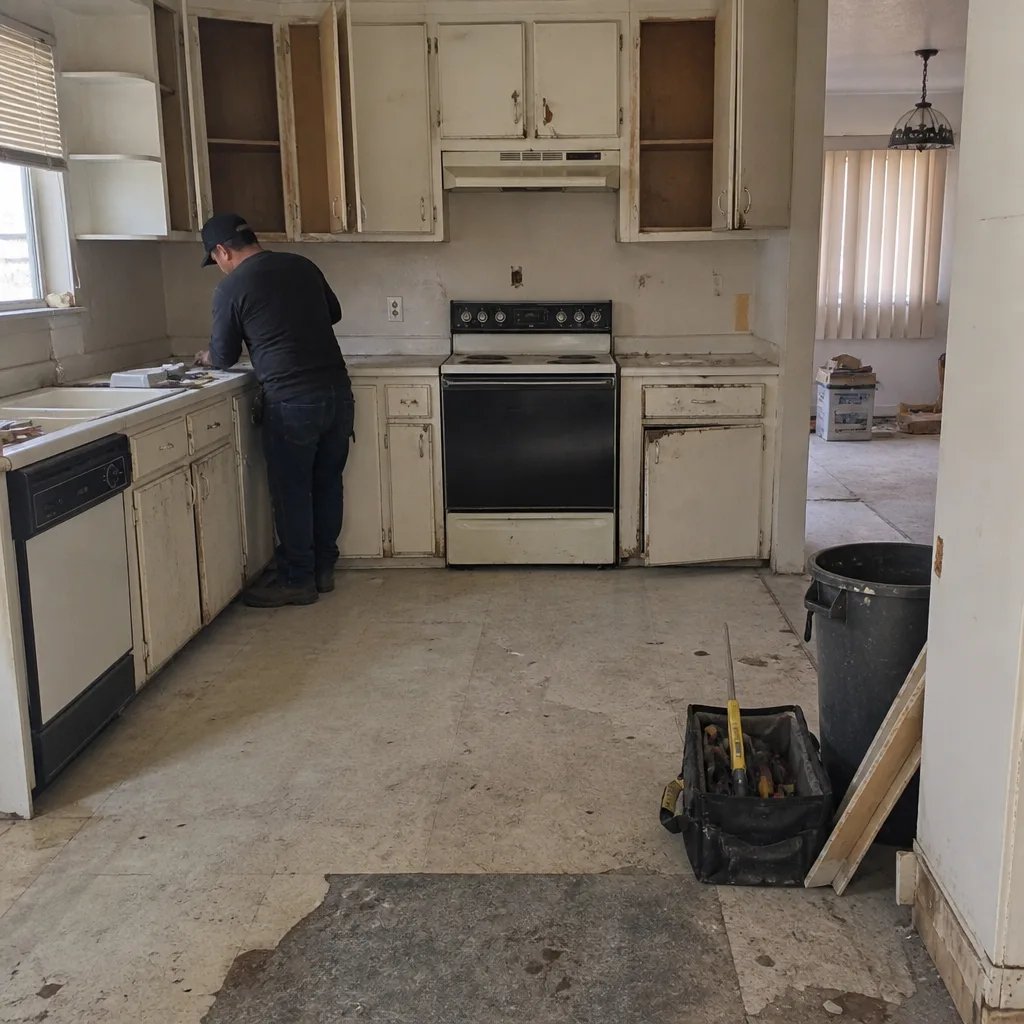 Before
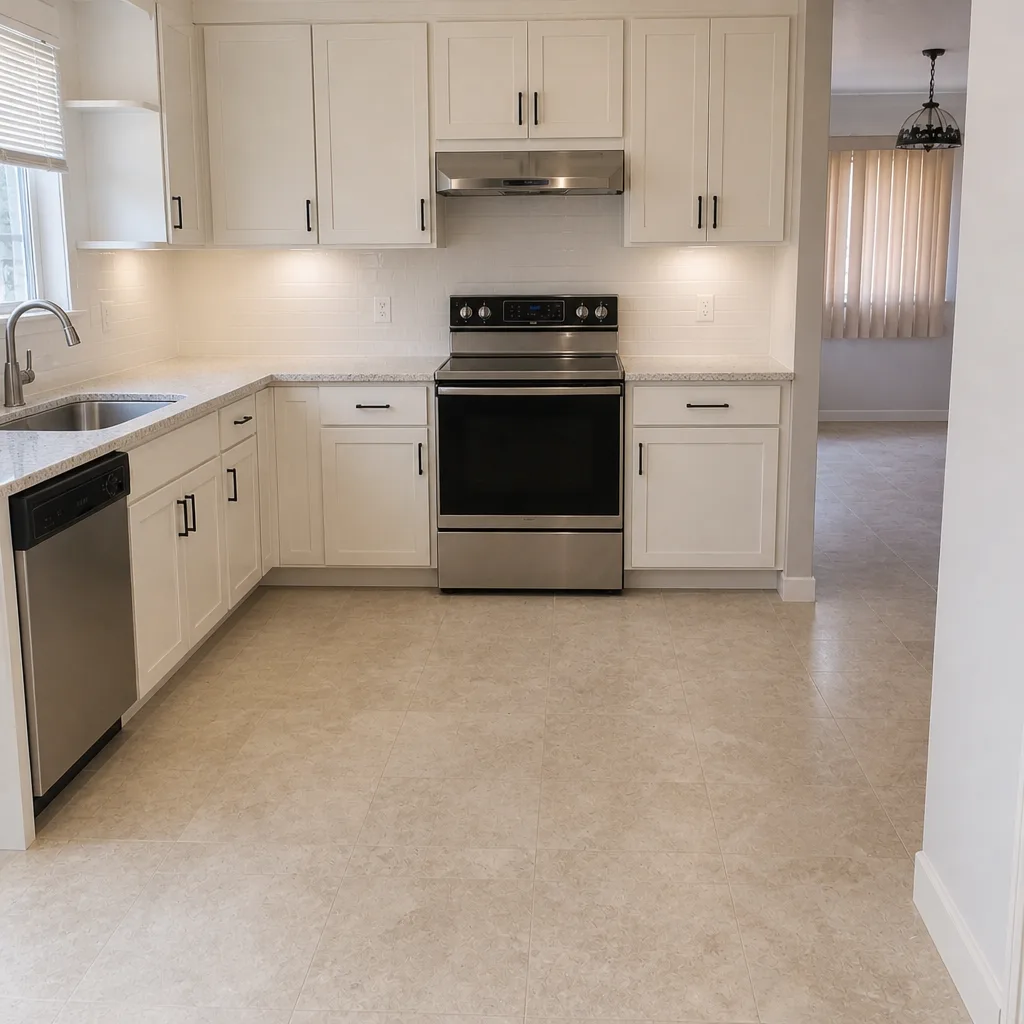 After
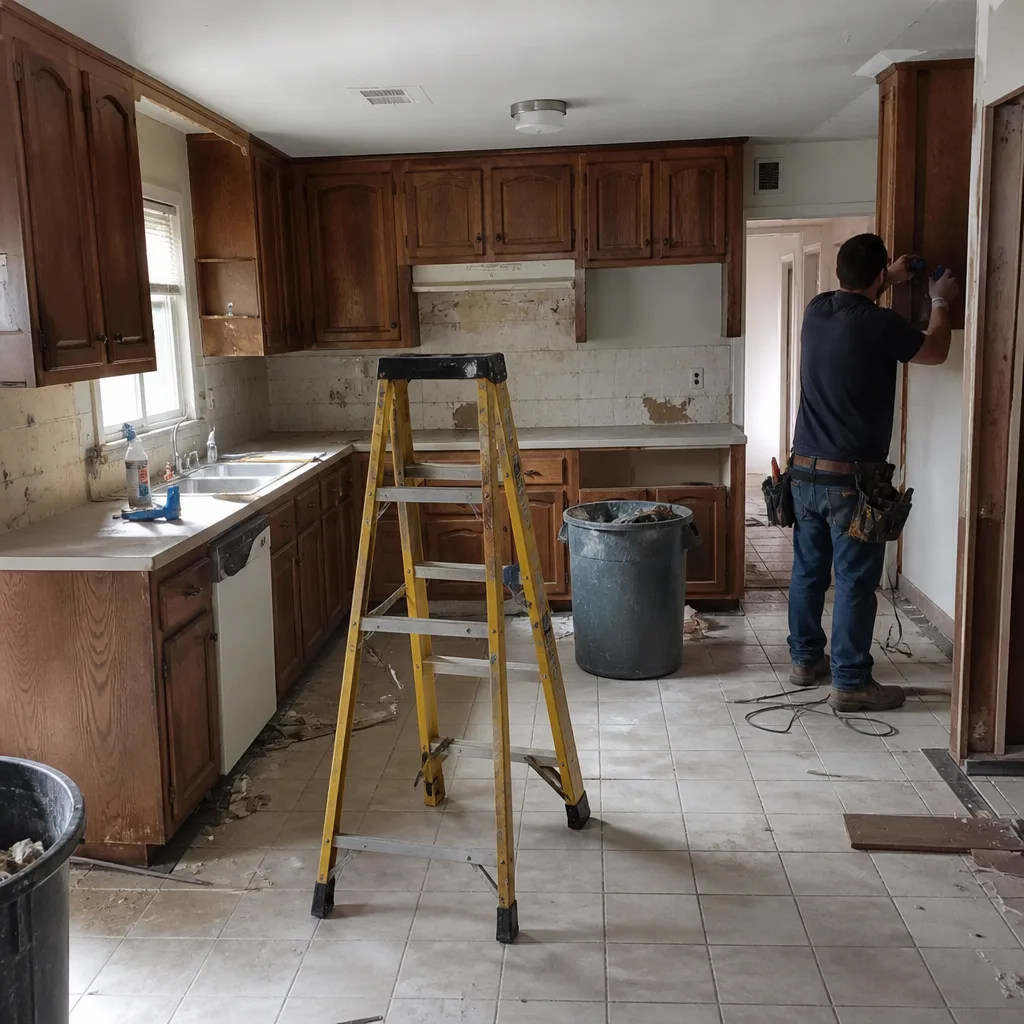 Before
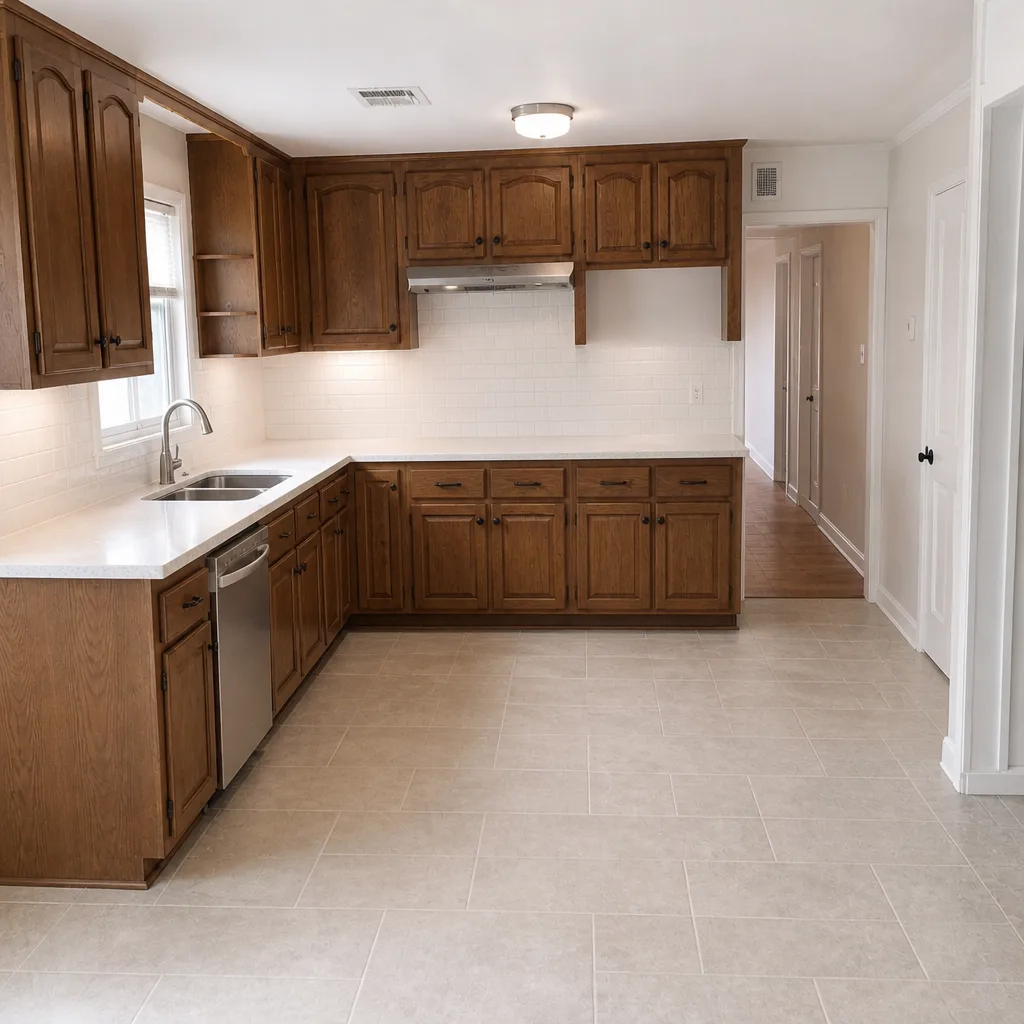 After
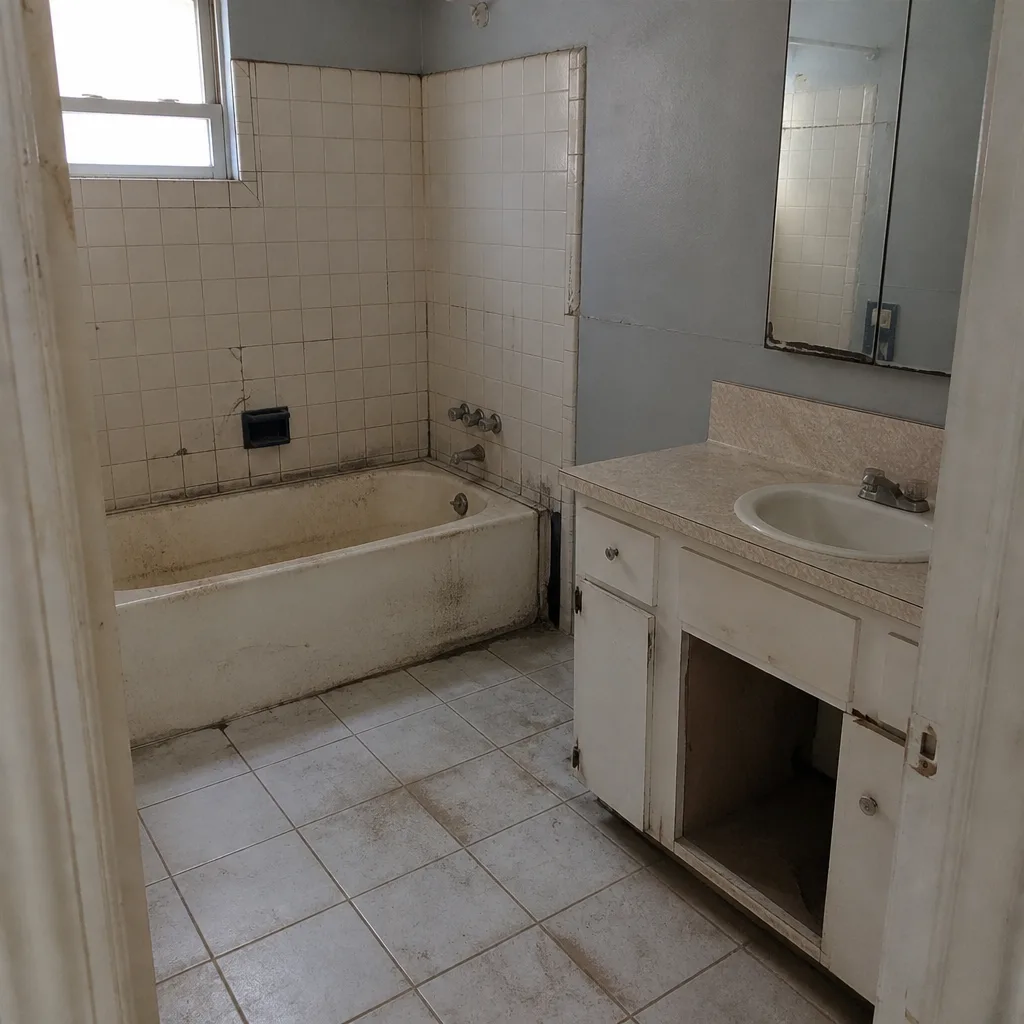 Before
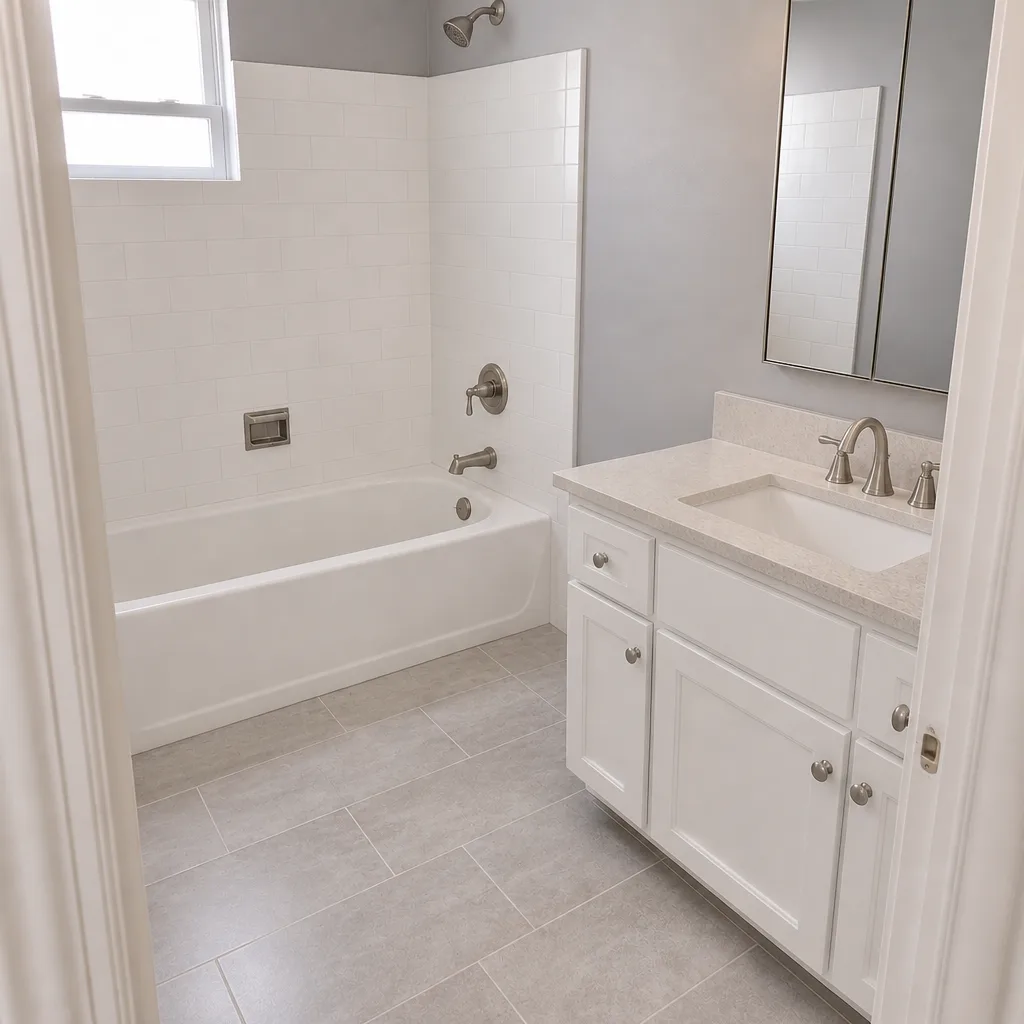 After
When to Call a Professional
Call a professional when the task is one of these: any work behind a wall or under a floor; anything involving plumbing rough-in, electrical circuits, structural framing, or a permit; any shower waterproofing or pan construction; any tile installation in a wet zone; and any layout change. Those tasks aren’t “hard” in the sense of arm strength. They’re hard in the sense that a small error hides for years and then becomes an expensive repair.
The second trigger is resale. If you’re selling within five years, unpermitted DIY work is a negotiating vulnerability, and a professional’s written warranty is a selling asset. Groundwork Construction Co. of Spring Valley offers free estimates in Spring Valley – call (888) 329-9414 to schedule yours. Calls are answered by a live person 24/7, and our background-checked, uniformed technicians arrive prepared to give you an honest scope and an upfront price.
Frequently Asked Questions
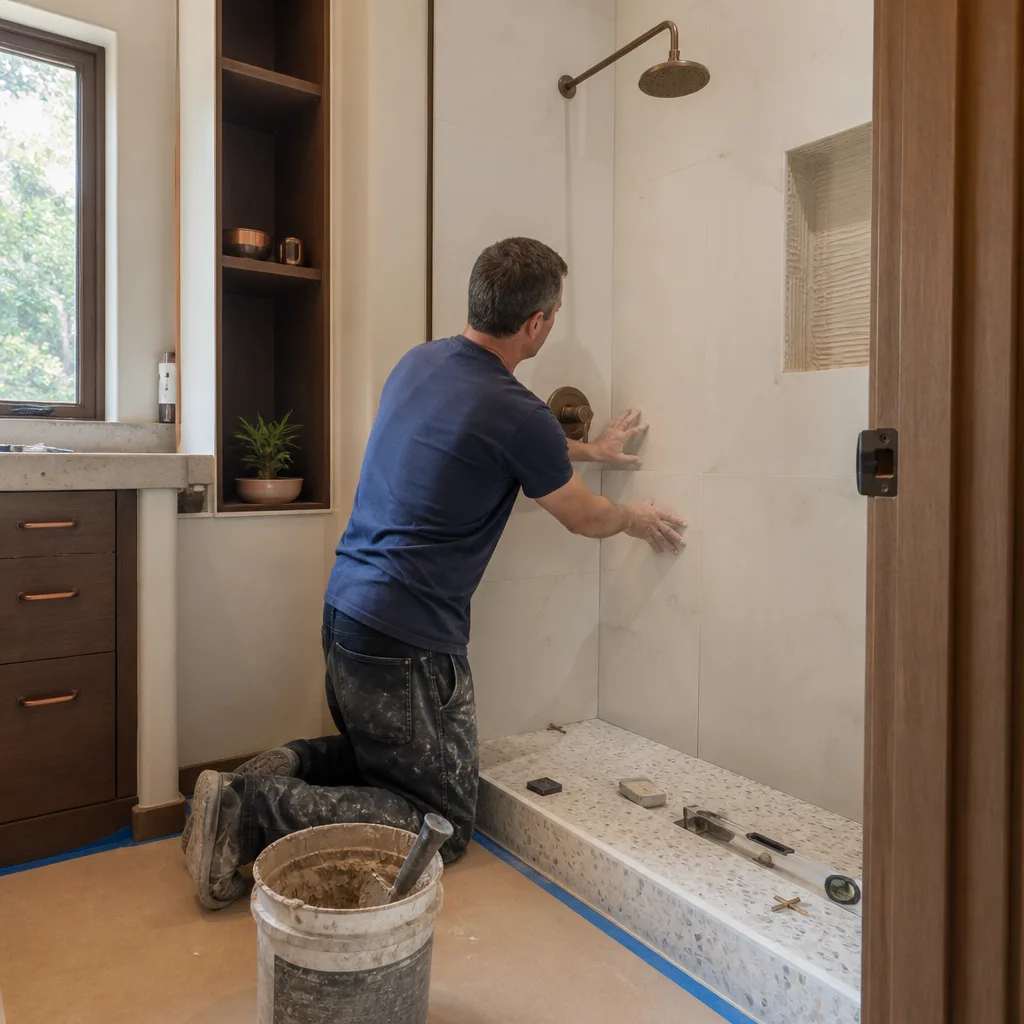
Yes, if the tasks you keep are genuinely low-risk: paint, demo, accessory installation, and simple fixture swaps. Doing those yourself typically saves 20% to 30% off a full professional remodel without compromising the parts of the job that matter. Call (888) 329-9414 for a free professional estimate so you can confirm exactly which line items belong in your DIY scope.
We don’t recommend it. Waterproofing is the single task where “looks fine” is meaningless – a poorly applied membrane looks correct and fails quietly behind the tile. In a Spring Valley bathroom, dry ambient air hides the moisture signature for months. Leave waterproofing and pan construction with a trained, permitted pro.
Yes, for any work that touches plumbing inside a wall, electrical circuits, structure, or layout. Cosmetic-only work – paint, tile over sound substrate, vanity swap, faucet swap – generally doesn’t require a permit. Confirm with the county before you start, and don’t let a contractor talk you out of pulling one.
That’s normal and expected. A pro can’t warrant work they didn’t perform. The fix is a written handoff plan that documents who did what, plus a professional walkthrough before any DIY layer is covered. If a contractor offers to warrant your DIY work without seeing it, ask them why.
Usually longer than a fully professional remodel, sometimes by weeks. DIY trades typically take 2 to 4 times as long as an equivalent professional crew, and the handoff points add delay. Budget for the extra time up front, not as a surprise in month two. Call (888) 329-9414 to talk through timing with us before you commit a schedule.
The biggest three: undocumented handoffs, uncovered DIY substrate that the pro then can’t warranty, and missing permits on the pro side because the homeowner pulled them instead. All three are preventable with one document – a written scope with task owners, warranty coverage, and permit responsibility called out line by line.
The Bottom Line
DIY vs professional bathroom remodeling isn’t a skill question. It’s a “what happens if this goes wrong” question. Paint, demo, vanity swaps, mirror hanging, and accessory installation are safe DIY work that saves real money in a Spring Valley bathroom, and plumbers, tile setters, and permits don’t need to be involved for those tasks. Waterproofing, mortar beds, valve rough-ins, drain work, and anything requiring a Clark County permit belong with a trained professional every time – because a small mistake hides for years and then becomes expensive. Plan the scope in writing, get the handoff on record, and pull the permits. That’s the whole difference between a remodel that saves you money and one that hides a check behind the wall.
Written by the team at Groundwork Construction Co. of Spring Valley.